





















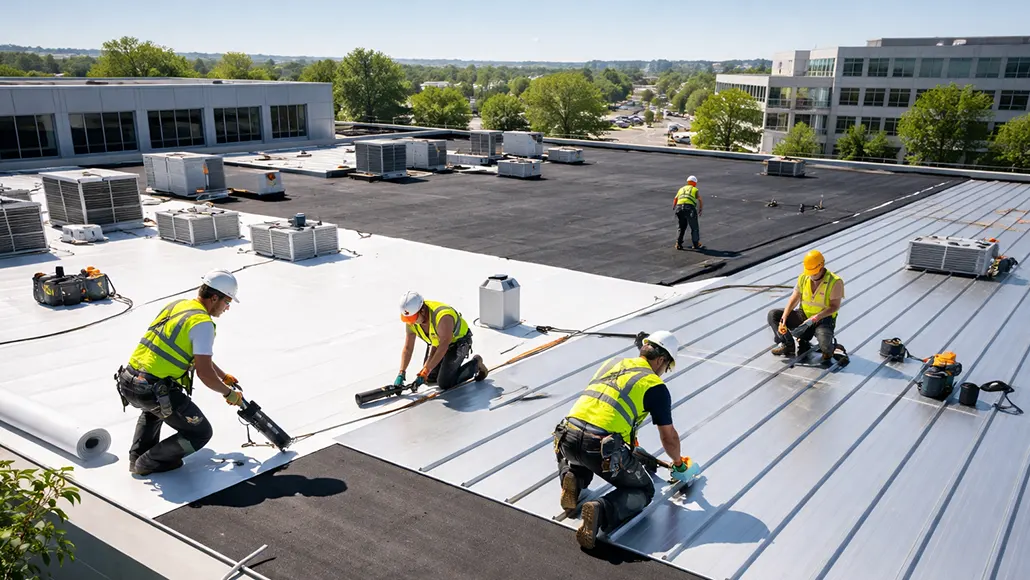

When it comes to maintaining a business, one of the most important elements is the roof. A sound roof protects your investment from the elements and gives a solid appearance to your property.
In commercial roofing, picking the right solution matters. It can mean lasting durability or endless repairs. Various roofing materials are available that not only focus on functionality but also enhance aesthetic appeal, making your business premises more inviting.
Let’s explore diverse options and benefits associated with durable roofing systems.
The Importance of Choosing the Right Roofing Material
Choosing the right roofing material is crucial for your business. Different materials offer various advantages, such as longevity, maintenance ease, and eco-friendliness. Some of the most popular choices for commercial buildings include:
TPO Roofing
TPO, or Thermoplastic Olefin, is a single-ply roofing membrane. It is very reflective and energy-efficient. This roofing type is resistant to UV rays, making it a durable option for businesses.
Its light weight doesn’t add extra stress to the building structure. Moreover, TPO is eco-friendly since it can be recycled, aligning with sustainability goals.
EPDM Roofing
EPDM stands for Ethylene Propylene Diene Monomer. It’s a rubber roofing option that resists extreme weather well.
This system can last over 30 years and requires minimal maintenance. Thanks to its flexibility, EPDM can easily adapt to the building’s movement over time.
Metal Roofing
Metal roofing is famous for its durability and strength. It can withstand harsh weather conditions and has a lifespan of 40 years or more.
Metal can also be coated for added protection against corrosion and UV rays. Additionally, metal roofs are lightweight and offer excellent energy efficiency. They can help to lower heating and cooling costs, giving businesses potential savings in the long run.
Benefits of Durable Commercial Roofing
Investing in durable roofing solutions has many benefits beyond just protecting your roof. Here are some of the significant advantages:
Enhanced Protection
Durable commercial roofing provides strong protection against harsh weather conditions such as heavy rain, strong winds, snow, and extreme heat. It acts as a reliable barrier that shields the building from environmental damage.
A well-constructed roof helps prevent leaks that could lead to costly repairs. It also protects valuable equipment, inventory, and interior structures. With enhanced protection, businesses can operate with fewer disruptions caused by weather-related issues.
Longevity
Durable roofing materials are designed to last for many years without significant deterioration. This extended lifespan reduces the frequency of replacements and major repairs.
Although the upfront cost may be higher, it often results in long-term savings. Fewer maintenance requirements mean less downtime for the business. Investing in longevity ensures stability and reliability for commercial properties.
Energy Efficiency
Energy-efficient roofing systems help regulate indoor temperatures more effectively. Reflective materials can reduce heat absorption, keeping buildings cooler during hot seasons. This leads to lower energy consumption, especially in air conditioning use.
As a result, any type of business can experience reduced utility costs over time. Energy-efficient roofs also support environmental sustainability efforts.
Aesthetic Appeal
A durable commercial roof can greatly improve the visual appearance of a building. High-quality materials offer a clean, modern, and professional look. This can make a strong first impression on customers and clients.
An attractive exterior can enhance brand image and credibility. Over time, improved aesthetics can contribute to increased business opportunities and customer trust.
Low Maintenance Requirements
Durable commercial roofing systems typically require less frequent maintenance compared to lower-quality options. Strong materials are less prone to damage, reducing the need for constant inspections and repairs. This helps business owners save both time and maintenance costs.
Fewer issues also mean less disruption to daily operations. Overall, low maintenance contributes to a more efficient and stress-free property management experience.
Improved Safety
A high-quality, durable roof enhances the safety of a commercial building. It reduces the risk of structural failures, leaks, and accidents caused by weakened roofing materials.
Properly installed roofing systems can also improve fire resistance. This added protection helps ensure the safety of employees, customers, and assets. Investing in durable roofing supports a safer working environment.
Choosing an Eco-Friendly Roofing Option
Not only do modern roofing options support durability, but many also promote eco-friendly practices. Companies today increasingly seek ways to reduce their carbon footprint, and roofing solutions can contribute to that effort. For instance:
Reflective Roofs
Reflective roofs are designed to bounce sunlight away instead of absorbing it. This helps keep the building cooler, especially during hot weather. As a result, less energy is needed for air conditioning, lowering both costs and environmental impact.
Recyclable Materials
Many roofing materials, such as TPO and metal, can be recycled after their lifespan. This reduces waste and supports environmentally responsible construction practices. Choosing recyclable options helps promote a more sustainable, circular economy.
Green Roofs
Green roofs involve growing vegetation on the roof surface. They provide natural insulation and help improve air quality around the building. In addition, they support biodiversity and assist in managing rainwater effectively.
Solar-Ready Roofing
Solar-ready roofing systems are designed to support the installation of solar panels. These roofs make it easier to transition to renewable energy in the future.
By using solar power, businesses can significantly reduce their dependence on nonrenewable energy sources. This helps lower electricity costs over time while reducing carbon emissions. Investing in solar-ready roofing supports long-term sustainability goals.
Cool Roofing Materials
Cool roofing materials are specifically engineered to reflect more sunlight and absorb less heat. These materials help maintain lower roof temperatures compared to traditional options.
As a result, buildings stay cooler even during hot weather. This reduces the need for excessive air conditioning and saves energy. Cool roofs are a practical choice for improving energy efficiency and environmental impact.
Expert Installation for Optimal Performance
Investing in quality materials is only part of the process. For a roof to perform optimally, expert installation is essential. Working with a reliable commercial roofing contractor ensures that your roofing solution is installed correctly and according to industry standards.
Importance of Professional Installation
Professional contractors have the training and experience to handle various roofing systems. Their expertise can lead to cost savings by minimizing leaks and preventing damage early in the project. Additionally, they have access to the right tools and materials needed for a successful installation.
Warranty and Maintenance
Many roofing products come with warranties that protect your investment. Professional contractors provide workmanship warranties that ensure they take responsibility for any issues arising post-installation. Routine maintenance carried out by experts can extend the lifespan of your roof, keeping it in excellent condition.
Cost Considerations for Commercial Roofing
Understanding the factors influencing roofing costs is essential when planning a commercial roofing project. Key considerations include:
Roof Size
The size of a commercial roof plays a major role in determining the overall cost of a project. Larger roofs require more materials, which directly increases expenses. In addition, more labor is needed to complete the installation on a bigger surface area.
Equipment and time requirements also grow with the size of the roof. Because of these factors, accurately measuring roof dimensions is essential for proper budgeting.
Material Choice
The type of roofing material selected significantly affects the total project cost. Premium materials such as metal or high-quality membranes tend to have higher upfront prices.
However, these materials are often more durable and require less maintenance over time. Choosing the right material can lead to long-term savings despite initial expenses. It is important to balance cost, performance, and lifespan when making a decision.
Labor Expenses
Labor costs are another important consideration in commercial roofing projects. Hiring experienced and skilled contractors may come with higher rates. However, their expertise can lead to better workmanship and fewer mistakes.
Efficient work can reduce project timelines and prevent costly repairs in the future. Investing in qualified labor often results in better overall value.
Location
The location of a building can influence the overall cost of roofing. Different regions may have varying prices for materials due to supply and demand.
Labor rates can also differ depending on the local market and availability of skilled workers. Transportation and delivery costs may increase if materials need to be sourced from far away. Additionally, local climate conditions may require specific materials, further impacting expenses.
Maintaining Your Commercial Roof
Routine maintenance is vital for the longevity of any roofing system. Here are tips on how to maintain your commercial roof effectively:
Regular Inspections
Inspecting your roof at least twice a year is essential for maintaining its condition. Regular checks help identify small issues before they become major problems.
Look for signs of damage such as cracks, blisters, or missing materials. Early detection allows for timely repairs and prevents further deterioration. Consistent inspections can significantly extend the lifespan of your commercial roof.
Clearing Debris
Keeping your roof free from debris is an important part of maintenance. Leaves, branches, and dirt can trap moisture and lead to mold or mildew growth. Over time, this buildup can weaken roofing materials and cause damage.
Regular cleaning helps maintain proper drainage and prevents unnecessary wear. A clean roof is more durable and performs more efficiently.
Maintain Gutters and Drains
Properly functioning gutters and drains are crucial for directing water away from the roof. When they become clogged, water can accumulate and cause leaks or structural damage.
Regular cleaning ensures that rainwater flows freely and does not pool on the surface. It is also important to check for any signs of damage or blockages in the drainage system. Maintaining gutters and drains helps protect the entire roofing structure from water-related issues.
Check for Roof Leaks
Regularly checking for leaks helps prevent serious water damage. Even small leaks can worsen over time if left unattended. Look for water stains, damp spots, or unusual odors inside the building.
Addressing leaks early can save money on repairs and protect interior assets. Consistent monitoring ensures your roof remains watertight and reliable.
Inspect Flashing and Seals
Flashing and seals protect vulnerable areas such as vents, chimneys, and edges. Damaged or loose flashing can allow water to seep into the structure.
Regular inspections help ensure these components remain intact and effective. Repairing or replacing faulty seals prevents leaks and structural issues. Properly maintained flashing contributes to overall roof durability.
Schedule Professional Maintenance
Hiring professionals for routine maintenance ensures a thorough inspection and care. Experts can identify hidden issues that may not be visible to untrained eyes. They also use specialized tools and techniques for proper maintenance.
Regular professional servicing helps prevent major problems and costly repairs. Investing in expert maintenance keeps your commercial roof in optimal condition.
Future Trends in Commercial Roofing
The commercial roofing industry is evolving with technological advancements, focusing on sustainability and efficiency. Here are a few noticeable trends that are shaping the future of commercial roofing:
Smart Technology Integration
Smart technology is transforming how commercial roofs are monitored and maintained. Advanced systems can track roof conditions in real time and detect issues such as leaks or temperature changes. These technologies allow building owners to address problems before they become severe.
Early detection reduces repair costs and extends the life of the roofing system. As innovation continues, smart roofing solutions are expected to become more accessible and widely adopted.
Increased Use of Sustainable Materials
The demand for sustainable roofing materials is steadily increasing across industries. Many companies are now choosing materials made from recycled or environmentally friendly sources. These options help reduce waste and minimize the overall environmental impact of construction.
Sustainable materials are also often designed for durability and long-term performance. This trend supports both ecological responsibility and cost efficiency for businesses.
Energy-Efficient Designs
Energy-efficient roofing designs are becoming a top priority in modern construction. These roofs are built to improve insulation and reduce heat transfer into buildings.
As a result, they help lower energy consumption, especially for heating and cooling systems. Businesses benefit from reduced utility costs and improved indoor comfort. Over time, energy-efficient designs contribute to both financial savings and environmental sustainability.
The Value of Expert Commercial Roofing Solutions
Choosing the right commercial roofing system brings numerous benefits, from enhanced protection to aesthetic appeal. It’s essential to work with a trusted roofing contractor who understands the specific needs of your building. Whether you opt for TPO, EPDM, metal, or sustainable solutions, investing in durable roofing is vital for the longevity and sustainability of your commercial property.
Don’t wait until issues arise; take the step to ensure your roof is built for performance today.
Want to hear more tips? Please look at our page for more informative and helpful blog posts.
