























Close
WORLD OF CONCRETE
Saturday, December 20, 2025
JEC WORLD 2026

By 2024, Construction Upswing In Europe Will Have Stalled

Note* - All images used are for editorial and illustrative purposes only and may not originate from the original news provider or associated company.

Subscribe

- Never miss a story with notifications

- Gain full access to our premium content

- Browse free from any location or device.

Media Packs

Expand Your Reach With Our Customized Solutions Empowering Your Campaigns To Maximize Your Reach & Drive Real Results!

– Access the Media Pack Now

– Book a Conference Call

Leave Message for Us to Get Back

Related stories

How To Choose Trailer GPS Units That Actually Work for UK Fleets

You know the drill. A trailer van goes missing...

Lifecycle Focused Construction Practices for Sustainable Infrastructure

Sustainable infrastructure development requires extending construction thinking beyond initial project completion to encompass the entire building lifecycle spanning decades of operation, maintenance, and eventual decommissioning. By integrating lifecycle cost analysis, selecting durable materials, designing for operational efficiency, planning for maintenance accessibility, and anticipating end-of-life material recovery, construction professionals create assets that deliver long-term value while minimizing environmental impact. This holistic approach transforms infrastructure from cost centers requiring perpetual maintenance into resilient assets that serve communities sustainably across generations.

Improving Construction Efficiency Without Compromising Quality

Achieving construction efficiency requires process-focused improvements that enhance productivity while maintaining or improving quality standards. Through workflow optimization, enhanced coordination mechanisms, quality management practices, and strategic technology integration, construction organizations deliver projects faster and more cost-effectively without sacrificing structural integrity or compliance. Balancing speed with excellence transforms construction management from a trade-off exercise into a synergistic approach where efficiency and quality reinforce one another.
- Advertisement -
Achema Middleeast

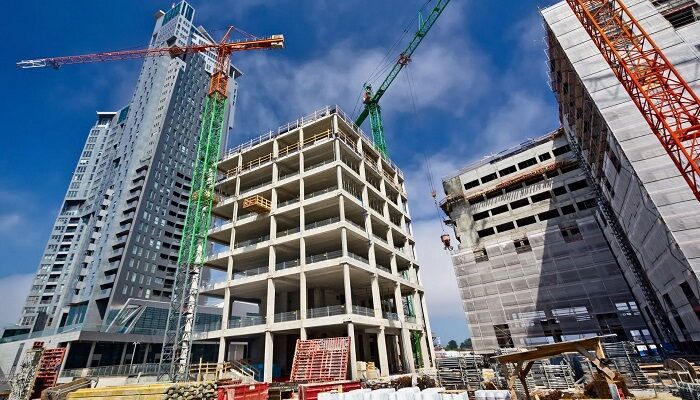
World Construction Today – Economic data compiled by the pan-European research organisation Euroconstruct indicates that the next two years will be challenging for the European construction industry, with growth projections falling from 2% to 0.2% in 2023 and from 2% to a flat 0% in 2024.

Construction output is expected to be less than initially expected, with no recovery anticipated until 2025, according to Euroconstruct, despite a more optimistic forecast for 2022 of a 3.0% rise. The numbers were made public at the 94th Euroconstruct Economic Forecast Event in London, when experts from Experian and Barbour ABI delivered their most recent findings.

Mohammed Chaudhri, the head economist at Experian UK, said:

Over the past six months, Europe has seen significant changes that have affected the construction industry’s economic operating environment.

Increased interest rates, the restriction of the financial market, the Ukraine crisis and the myriad effects and uncertainties it has, as well as the continued issues with building material costs and availability, all play a big role. Nearly all elements that drive construction demand are negative, according to Euroconstruct’s November projection, such as the economy, prices for consumers, interest rates, and consumer confidence. Before the business resumes growth in 2024, it appears that the industry will go through a difficult phase of adjustment.

A large portion of the gloomy forecast comes from the residential new-build and renovation industries. In Europe, new-build housing saw a boom during the period of low lending rates, but the study finds that things have significantly shifted during the last six months.

Consumer confidence has decreased, housing sales have dropped, and there is now an overstock in many nations. As a result, the growth prognosis for new residential buildings for the coming year has changed and is now expected to decline by 3.4%.

With a growth rate of 12.1%, Italy is the top performer in Europe, thanks in part to EU subsidies. Along with Germany, which will have negative or zero growth until 2025 (-0.4%), the UK, one of the worst-performing economies in Europe today, will experience a downward construction production growth cycle in 2023 (-0.4%).

According to Euroconstruct, construction will also experience a decline in eight nations, with Sweden and Finland experiencing the worst declines. Due to excessive building outputs in both of these nations, the fall in volume somewhat anticipates a return to more typical construction levels.

Achema Middleeast

Latest stories

Related stories

How To Choose Trailer GPS Units That Actually Work for UK Fleets

You know the drill. A trailer van goes missing...

Lifecycle Focused Construction Practices for Sustainable Infrastructure

Sustainable infrastructure development requires extending construction thinking beyond initial project completion to encompass the entire building lifecycle spanning decades of operation, maintenance, and eventual decommissioning. By integrating lifecycle cost analysis, selecting durable materials, designing for operational efficiency, planning for maintenance accessibility, and anticipating end-of-life material recovery, construction professionals create assets that deliver long-term value while minimizing environmental impact. This holistic approach transforms infrastructure from cost centers requiring perpetual maintenance into resilient assets that serve communities sustainably across generations.

Improving Construction Efficiency Without Compromising Quality

Achieving construction efficiency requires process-focused improvements that enhance productivity while maintaining or improving quality standards. Through workflow optimization, enhanced coordination mechanisms, quality management practices, and strategic technology integration, construction organizations deliver projects faster and more cost-effectively without sacrificing structural integrity or compliance. Balancing speed with excellence transforms construction management from a trade-off exercise into a synergistic approach where efficiency and quality reinforce one another.

Training Strategies for Operating Advanced Construction Equipment

Modern construction equipment demands operator skills that extend far beyond basic machinery operation. Comprehensive training programs combining classroom instruction, simulator practice, and hands-on field experience prepare operators to safely and efficiently manage increasingly sophisticated equipment. Through structured certification approaches, ongoing skill development, and commitment to continuous learning, construction organizations develop operator competency that enhances project safety, productivity, and equipment longevity.

Subscribe

- Never miss a story with notifications

- Gain full access to our premium content

- Browse free from any location or device.

Media Packs

Expand Your Reach With Our Customized Solutions Empowering Your Campaigns To Maximize Your Reach & Drive Real Results!

– Access the Media Pack Now

– Book a Conference Call

Leave Message for Us to Get Back

Translate »