



























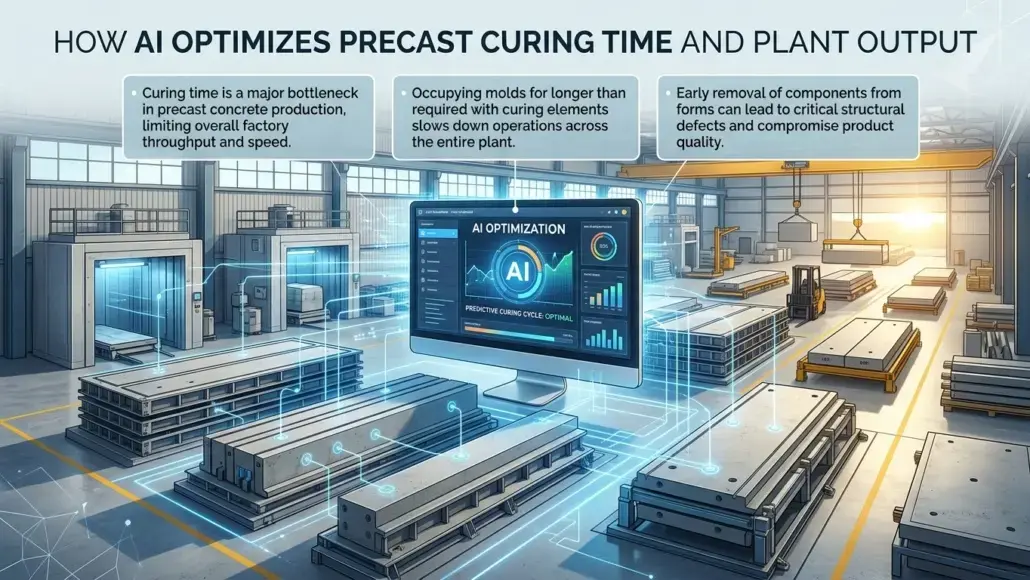


The industrial production of concrete components within a factory setting offers a level of precision and quality control that is difficult to achieve on a traditional construction site. However, the throughput of a precast plant is fundamentally limited by the time required for each piece to cure. If a mold is occupied by a curing beam or panel for longer than necessary, it creates a bottleneck that slows down the entire facility. Conversely, removing a piece too early can lead to structural defects and costly rework. The introduction of artificial intelligence into the factory environment is resolving this tension, and it is becoming clear that AI optimizes precast curing time by providing a predictive window into the strength development of every unit.
Precast manufacturing is a game of logistics and timing. The goal is to cycle the molds as many times as possible within a twenty-four-hour period. Traditionally, this has relied on standard curing charts and conservative safety margins that do not account for the specific thermal dynamics of the factory floor. Artificial intelligence allows for a more responsive approach, where the curing process is monitored in real-time and the results are used to adjust the production schedule dynamically. This shift from “schedule-based” to “performance-based” manufacturing is a key driver for the documented increase in plant output across the sector.
Real-Time Monitoring and Predictive Analytics
The core of this technological shift is the integration of embedded sensors with a centralized AI platform. These sensors capture high-fidelity data on the internal temperature and humidity of the concrete as it cures. AI optimizes precast curing time by analyzing this data in the context of the specific mix design and the ambient conditions of the factory. The machine learning algorithms can predict with extreme accuracy when a specific unit will reach the required strength for demolding. Instead of waiting for a predetermined number of hours, the factory team receives a notification the moment the piece is ready, allowing for an immediate turnover of the equipment.
The predictive capabilities of the system also allow the plant manager to optimize the use of accelerated curing techniques, such as steam or radiant heating. The AI can manage the heating cycles to ensure that the concrete reaches its target strength as quickly as possible without causing thermal cracking or other quality issues. This level of control ensures that the energy consumed by the factory is used as efficiently as possible, reducing operational costs and the carbon footprint of the production process. The ability to see “inside” the curing process provides a level of operational oversight that was previously unattainable.
Quality Control and Structural Integrity Verification
Beyond the speed of production, the use of artificial intelligence is focused on ensuring the absolute consistency of the final product. Every precast unit must meet rigorous structural engineering standards, and any variation in the curing process can affect the long-term performance of the piece. AI optimizes precast curing time by providing a verified digital record of the strength development for every single unit produced in the factory. This data serves as a permanent quality assurance record, providing the contractor and the structural engineer with confidence that every component meets the as-designed specifications.
The system can also identify anomalies in the curing process that might indicate a problem with the mix or the equipment. If a specific mold is consistently producing units that cure slower than expected, the AI can flag this for investigation. This early warning system allows for proactive maintenance and process adjustment, preventing the production of defective units. In an industry where a single failure can lead to significant project delays and liability, the value of this empirical verification is immense. The transition to data-driven quality control is a hallmark of the modern move toward more accountable and professionalized manufacturing.
Maximizing Plant Output and Labor Efficiency
The impact of artificial intelligence on the overall efficiency of a precast facility is profound. When the curing time is optimized, the entire production workflow becomes more predictable and fluid. Labor can be scheduled with greater certainty, as the team knows exactly when the next set of molds will be ready for cleaning and re-assembly. Because AI optimizes precast curing time, the downtime between cycles is minimized, leading to a significant increase in the total volume of product that can be shipped from the plant each week. This increased throughput allows manufacturers to handle larger projects and more aggressive schedules with ease.
The intelligence of the system also extends into the management of the factory’s inventory and logistics. By predicting when finished units will be ready for transport, the AI can coordinate with the logistics team to ensure that trailers are available and that the loading process is as efficient as possible. This integrated approach to management ensures that the facility does not become cluttered with finished stock, which can be a significant operational challenge in a busy plant. Every aspect of the operation, from the initial pour to the final delivery, is synchronized through a single, data-driven interface.
Future Horizons in Automated Precast Production
The continued evolution of artificial intelligence will likely lead to even more automated and intelligent precast facilities. We are already seeing the emergence of “closed-loop” manufacturing systems where the AI not only monitors the curing process but also automatically adjusts the mix design and the water-to-cement ratio based on the raw material data and the factory environment. This level of autonomy represents the next frontier in construction manufacturing, promising a future where concrete components are produced with a level of precision and efficiency that matches the aerospace or automotive industries.
As the industry moves toward more sustainable materials, such as geopolymer concrete or carbon-sequestering mixes, the role of artificial intelligence will be even more critical. These new materials often have complex curing characteristics that require precise management to achieve optimal results. AI optimizes precast curing time by providing the tools necessary to master these innovative materials without increasing the risk to the manufacturer or the end user. The combination of improved production speed and the ability to utilize greener materials makes the adoption of this technology a logical step for any forward-thinking firm.
The integration of artificial intelligence into the precast factory is a natural progression for a sector that is increasingly defined by its technical requirements. By replacing traditional, conservative safety margins with real-time, verified data, manufacturers can achieve levels of efficiency that support the modern needs of the construction industry. It is clear that the precast plant of the future will be a place where human ingenuity and machine intelligence work together to deliver high-quality, sustainable structures with unprecedented speed and precision.
The transition to data-driven manufacturing is not just an upgrade to a single process; it is a fundamental reorganization of the entire production workflow. By providing the tools to manage complexity and prioritize quality, artificial intelligence is enabling a new era of excellence in the built environment. Those firms that embrace these tools today will be the leaders of the industry tomorrow, providing the reliable and efficient services that our rapidly urbanizing world demands.