








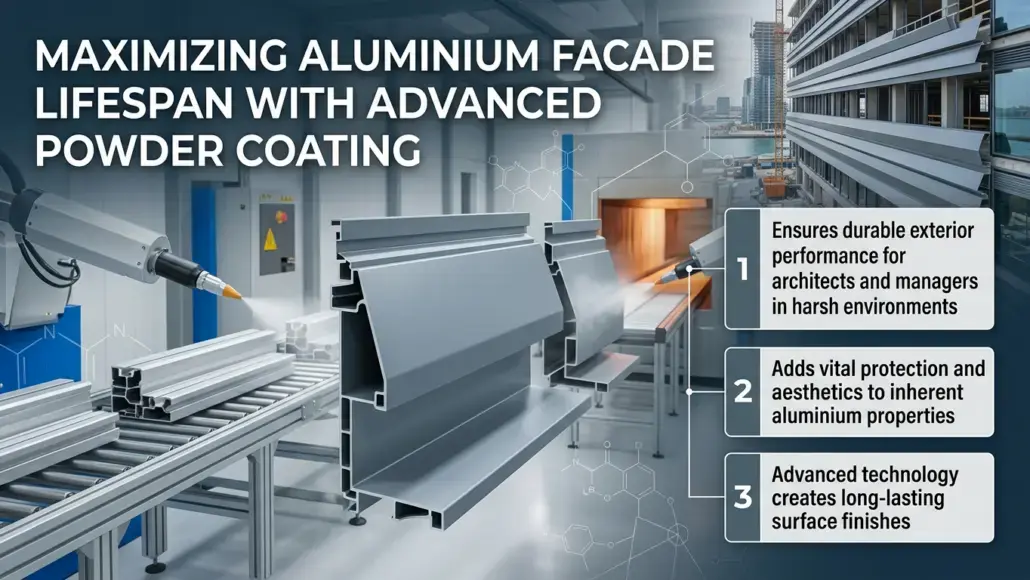

The long-term performance of building exteriors is a critical consideration for architects and facility managers, particularly when dealing with the high-exposure environments typical of urban and coastal settings. Aluminium has long been a favored material for facade systems due to its strength-to-weight ratio and inherent corrosion resistance. However, the protective and aesthetic role of the surface finish cannot be overlooked. The application of advanced powder coating technology has become the industry standard for enhancing the longevity of these systems, providing a durable barrier against ultraviolet radiation, atmospheric pollutants, and physical abrasion. Unlike traditional liquid paints, powder coatings are applied as a dry powder that is electrostatically charged and then cured under heat to form a hard, continuous film. This process results in a finish that is significantly more durable and environmentally friendly than solvent-based alternatives.
The shift towards more sustainable construction practices has further accelerated the adoption of powder coating technology. Because the process does not require solvents, it eliminates the emission of volatile organic compounds (VOCs) that are associated with liquid coatings. Additionally, the overspray in a powder coating booth can be collected and recycled, resulting in nearly 100 percent material utilization. This efficiency, combined with the superior performance of the final finish, makes powder coating an ideal choice for high-end architectural projects where both environmental impact and long-term durability are paramount. The ability to achieve a wide range of colors and textures, from high-gloss to ultra-matte and metallic finishes, allows designers to realize their vision without compromising on the protective qualities of the building envelope.
Chemistry and Application of High-Performance Powders
The durability of a powder-coated finish is largely determined by the resin system used in the formulation. For architectural applications, polyester and fluoropolymer resins are the most common choices. Polyester powder coating technology is widely used for residential and commercial buildings where standard durability is required. These coatings offer good weather resistance and are available in an almost limitless array of colors. However, for projects in extreme environments or where a lifespan of several decades is expected, hyper-durable polyesters or fluoropolymer powders are specified. Fluoropolymer coatings, often based on FEVE or PVDF resins, provide the highest level of gloss and color retention, making them suitable for landmark structures and high-rise developments where maintenance access is limited.
The application process itself is a multi-stage operation that begins with rigorous surface preparation. Before the powder is applied, the aluminium substrate must be cleaned and pre-treated to ensure maximum adhesion. Traditionally, chrome-based pre-treatments were used, but these have largely been replaced by chrome-free alternatives that offer comparable performance without the environmental drawbacks. These zirconium-based or silane-based pre-treatments provide a microscopic conversion layer that is essential for long-term bond stability. This pre-treatment layer creates a chemical bond between the metal and the coating, preventing filiform corrosion and ensuring that the finish does not peel or blister over time. Filiform corrosion is a particular concern in coastal environments where chloride ions can penetrate the coating at cut edges or scratches. By utilizing a high-quality pre-treatment, manufacturers can effectively seal the substrate against these corrosive agents.
Once the substrate is properly prepared and dried, the powder is applied using specialized electrostatic spray guns. These guns impart a negative charge to the powder particles as they are propelled towards the grounded aluminium components. The resulting electrostatic attraction ensures that the powder reaches all surfaces of the profile, including internal recesses and hidden corners, a phenomenon known as the Faraday cage effect. To overcome this effect in complex extrusions, skilled operators or automated reciprocating systems must be used to ensure an even film thickness across the entire geometry. Maintaining a consistent film thickness is vital, as overly thick coatings can become brittle, while thin coatings may not provide adequate protection against the elements. Advancements in sensor technology now allow for real-time monitoring of film thickness during the application phase, further enhancing the reliability of the process.
Advancements in Curing and Quality Control
The curing stage is where the powder particles melt, flow, and chemically react to form a cross-linked polymer network. The temperature and duration of the curing cycle are critical to the final properties of the finish. Modern powder coating technology utilizes advanced convection and infrared ovens that provide precise temperature control, ensuring that the coating reaches its full hardness and adhesion potential. Over-curing can lead to brittleness and color shifts, while under-curing results in a soft finish that is susceptible to damage. By monitoring the oven temperature profiles in real-time, coaters can guarantee a consistent quality across every batch of material produced.
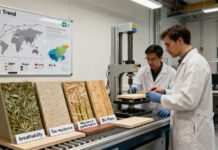
Quality control in the powder coating industry is governed by international standards such as Qualicoat or GSB International. These standards define the testing procedures for color consistency, gloss levels, film thickness, and resistance to impact and chemicals. A key aspect of maintaining high standards is the use of precision aluminium extrusions improving façade system integration, which provide a consistent substrate for the coating process. When the underlying metal is of high quality, the likelihood of surface defects is greatly reduced, allowing the powder coating to perform at its best. Regular laboratory testing, including accelerated weathering and salt spray tests, is conducted to verify that the finished products will withstand the rigours of their intended environment.
Sustainability and Environmental Benefits
One of the most compelling arguments for the use of powder coating technology is its environmental profile. In an era where building certifications like LEED and BREEAM are increasingly important, the choice of finish can have a significant impact on a project’s sustainability rating. The absence of solvents means that the process is inherently safer for workers and the surrounding community. Additionally, the longevity of powder-coated finishes reduces the need for frequent repainting or replacement, thereby lowering the life-cycle carbon footprint of the building. This durability is especially important for aluminium facade systems, which are intended to remain in service for thirty years or more.
The following points summarize the primary environmental and performance advantages of powder systems:
- Zero or near-zero VOC emissions during application, protecting air quality.
- High material efficiency through the reclamation and reuse of overspray powder.
- Exceptional resistance to UV degradation, preventing chalking and fading over time.
- Superior hardness and abrasion resistance compared to most liquid coating systems.
- Simplified maintenance requirements, usually involving only periodic cleaning with mild detergent.
- Wide availability of specialized powders that mimic other materials like wood or stone.
Maintenance and Long-Term Performance Management
While integrated building components provides an extremely durable finish, the longevity of the system is also dependent on regular maintenance. In urban environments, atmospheric pollutants and salts can accumulate on the surface of the facade, potentially leading to localized corrosion if not addressed. Industry guidelines typically recommend a cleaning schedule based on the severity of the environment. For example, buildings in coastal areas may require cleaning every three to six months, while those in rural settings might only need attention once a year. This maintenance is relatively simple, requiring only water and a neutral cleaning agent to remove surface contaminants and restore the original appearance of the coating.
The transition to super-durable and hyper-durable powders has also changed the way maintenance is approached. These high-performance coatings are designed to resist the accumulation of dirt and are more resilient to the cleaning process itself. By investing in a high-quality powder finish at the outset, building owners can significantly reduce their long-term operating costs and ensure that the structure maintains its aesthetic appeal for its entire design life. As technology continues to advance, we can expect to see the development of self-cleaning powders and even more resilient resin systems that will further extend the boundaries of what is possible in architectural finishing.
The economic implications of choosing high-performance powder finishes should also be considered. While the initial cost of premium fluoropolymer or super-durable powders may be higher than standard architectural coatings, the long-term savings in maintenance and replacement costs are substantial. For high-rise buildings where scaffolding or cradle access is required for cleaning and repair, the ability to extend the maintenance interval by several years can save building owners hundreds of thousands of dollars over the life of the structure. Additionally, the preservation of the building’s aesthetic value is a key factor in maintaining high occupancy rates and property valuations. A facade that looks as good as new after twenty years is a powerful testament to the quality of the original construction and the wisdom of investing in superior finishing technology.
The role of high-performance components in the construction industry is well-established but continues to evolve with new innovations in chemistry and application techniques. By providing a combination of aesthetic flexibility, exceptional durability, and environmental responsibility, it remains the preferred choice for protecting and enhancing aluminium facade systems. The synergy between high-quality substrates and advanced coating processes ensures that modern buildings can withstand the elements while meeting the highest standards of design and sustainability. As the industry moves forward, the continued refinement of these technologies, including the potential for smart coatings that can repair themselves or provide additional thermal insulation, will play a vital role in creating a more resilient and beautiful built environment. The commitment to technical excellence in the finishing sector ensures that aluminium will continue to be a leading material for the facades of tomorrow, offering a perfect blend of form and function.