




















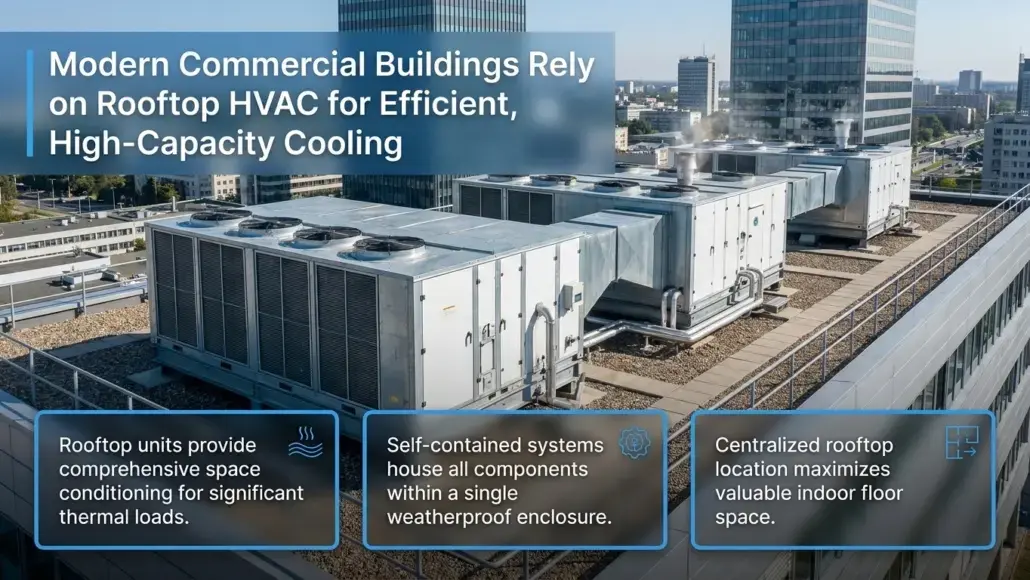


The cooling requirements of modern commercial buildings demand systems that are both highly efficient and capable of handling significant thermal loads. Centrally located rooftop HVAC units have long been a staple of the industry due to their ability to provide comprehensive space conditioning while minimizing the use of valuable indoor floor area. These self-contained systems house all necessary components, including compressors, coils, and fans, within a single weatherproof enclosure. As building standards evolve, the design of these units has shifted to prioritize seasonal energy efficiency and precise temperature control. The ability to concentrate cooling capacity in a single location simplifies installation and maintenance, making these units the preferred choice for a wide range of facilities from retail centers to office complexes.
Component Design and Space Optimization for Commercial Roofs
The physical configuration of these cooling systems is a primary advantage in the construction sector. By placing the equipment on the roof, developers can maximize the rentable square footage within the building. These units are typically mounted on a structural curb, which provides a secure foundation and a weather-tight seal for the ductwork penetrations. The internal layout of the unit is carefully engineered to optimize airflow through the evaporator and condenser coils, ensuring maximum heat transfer efficiency. Modern designs utilize microchannel heat exchangers, which offer superior thermal performance and reduced refrigerant volume compared to traditional copper-tube and aluminum-fin designs. This reduction in refrigerant charge is a key factor in meeting environmental regulations and reducing the overall weight of the equipment.
Access for maintenance is also a critical design consideration. Large access doors with heavy-duty latches allow technicians to inspect and service internal components without the need for specialized tools. The inclusion of hinged panels and slide-out blower assemblies further simplifies tasks such as filter changes and belt inspections. By ensuring that all components are easily reachable, manufacturers help facility managers maintain the equipment at peak performance levels throughout its operational life. The concentration of all cooling components in one location also reduces the complexity of the refrigerant piping, minimizing the risk of leaks and simplifying the troubleshooting process during system failures.
Beyond space savings, the aesthetic impact of the building is also improved. By hiding the mechanical equipment on the roof, architects can maintain clean building lines and reduce the noise impact on the surrounding ground-level environment. The use of low-profile designs and sound-attenuating enclosures helps these units blend into the building’s architecture while meeting local noise ordinances. This consideration is particularly important in urban areas where proximity to residential zones or outdoor public spaces is a concern. The durability of the outer casing, often constructed from galvanized steel with high-performance coatings, ensures that the internal components are protected from the harshest weather conditions, including high winds and extreme solar radiation.
Variable Speed Technology and Part Load Efficiency Metrics
One of the most significant advancements in rooftop HVAC units is the integration of variable speed technology for compressors and fans. Traditional systems often operated at a constant speed, cycling on and off to maintain the desired indoor temperature. This approach leads to significant energy waste and fluctuations in comfort levels. In contrast, variable speed units can modulate their capacity to match the actual cooling load of the building. By operating at lower speeds during periods of partial load, these systems achieve much higher seasonal efficiency ratings. The use of variable frequency drives allows for precise control over motor speeds, reducing electrical consumption and extending the life of the mechanical components by avoiding frequent starts and stops.
The shift toward part-load efficiency is reflected in the industry’s adoption of the Integrated Energy Efficiency Ratio (IEER). This metric provides a more accurate representation of a unit’s performance over an entire cooling season, accounting for the fact that commercial buildings operate at full load only a fraction of the time. High-performance units often feature multi-stage or truly variable compressors that can turn down to as low as twenty percent of their rated capacity. This flexibility is essential for maintaining comfort during mild weather when only a small amount of cooling is required to offset internal heat gains from lights, computers, and occupants.
Beyond this, the implementation of AI HVAC controls improving commercial building operations can significantly enhance the effectiveness of variable speed systems. By analyzing historical load patterns and weather forecasts, these intelligent systems can optimize the compressor and fan speeds in real time, ensuring that the cooling output perfectly matches the building’s needs. This proactive approach to thermal management reduces energy waste and provides a more consistent indoor environment for building occupants. The combination of advanced hardware and intelligent controls represents the next frontier in commercial cooling efficiency, providing a clear path to lower operational costs and reduced carbon emissions.
Integration of Air-Side Economizers for Free Cooling
Economizers are a vital feature for improving the cooling performance of rooftop HVAC units, particularly in climates with significant diurnal temperature swings. These systems utilize a set of dampers and sensors to introduce outdoor air into the building when the external conditions are favorable. When the outdoor air is cooler and drier than the indoor air, the economizer can provide free cooling, reducing or even eliminating the need for mechanical refrigeration. This process not only saves energy but also improves indoor air quality by introducing a high volume of fresh air into the facility. The logic for economizer operation is integrated into the unit’s controller, ensuring a smooth transition between free cooling and mechanical cooling modes.
The effectiveness of an economizer depends on the accuracy of the sensors used to monitor the outdoor and return air conditions. Enthalpy-based controls are the most sophisticated, as they account for both temperature and humidity. By calculating the total heat content of the air, the system can make more informed decisions about when to open the outdoor air dampers. This prevents the introduction of air that may be cool but contains excessive moisture, which would otherwise increase the latent cooling load on the system. High-quality dampers with low-leakage seals are essential to ensure that the economizer does not inadvertently introduce unconditioned air when the system is operating in full mechanical cooling or heating modes.
Maintenance of the economizer assembly is critical to ensuring its long-term benefits. Damper actuators and linkages should be regularly inspected for smooth operation and signs of binding or wear. A stuck damper can lead to significant energy waste or the failure to provide adequate fresh air to the building. Technicians should also verify the calibration of the outdoor air sensors to ensure that the economizer is operating within the intended temperature and humidity ranges. By maintaining the economizer in peak condition, facility managers can capitalize on the energy-saving opportunities provided by the local climate, significantly reducing the annual cooling costs of the building.
Structural Considerations and Vibration Isolation Techniques
Installing large-scale cooling equipment on a building’s roof introduces unique structural challenges. The weight of these units can be substantial, requiring the building’s structural frame to be designed or reinforced to handle the localized loads. Structural engineers must account for both the static weight of the units and the dynamic forces generated by moving parts like fans and compressors. The placement of the units is often coordinated with the building’s column grid to ensure that the loads are transferred efficiently to the foundation. In retrofit scenarios, a thorough structural analysis is essential to determine if the existing roof can support the new, often heavier, high-efficiency equipment.
Vibration isolation is another critical factor in a successful rooftop installation. The operation of compressors and fans can generate significant mechanical vibrations that, if not properly managed, can be transmitted through the building’s structure and manifest as intrusive noise in the spaces below. The use of vibration isolation curbs and spring isolators helps to decouple the mechanical equipment from the building’s structure. These devices are designed to absorb and dampen the vibrations, ensuring a quiet indoor environment. The selection of the correct isolators depends on the weight of the unit and the operating frequencies of the mechanical components, requiring a specialized understanding of acoustics and mechanical resonance.
Proper sealing of the roof penetrations is also vital to prevent water leaks and maintain the integrity of the building envelope. The roof curb must be correctly flashed into the roofing system, creating a permanent, weather-tight barrier. Any failure in the sealing system can lead to significant water damage to the building’s interior and the mechanical equipment itself. Regular inspections of the curb flashing and ductwork connections are essential to identify potential issues before they lead to costly repairs. By addressing both the structural and environmental aspects of the installation, contractors can ensure the long-term reliability and performance of the cooling system.
Digital Monitoring and Remote Diagnostic Capabilities
The integration of advanced electronics into rooftop HVAC units has enabled a new era of digital monitoring and remote diagnostics. Modern units are equipped with a suite of sensors that track everything from refrigerant pressures and temperatures to fan motor currents and damper positions. This data is collected by the unit’s onboard controller and can be transmitted to a central management platform or a cloud-based monitoring service. This connectivity allows facility managers and service providers to monitor the health of the equipment in real time, identifying potential issues before they lead to system failure.
Remote diagnostics can significantly reduce the time and cost associated with service calls. When a fault occurs, the system can send an alert with a specific error code, allowing the technician to arrive onsite with the necessary parts and tools. In many cases, the service provider can log in to the system remotely to analyze performance data and determine the root cause of the problem without ever setting foot on the roof. This proactive approach to maintenance ensures that the cooling system is always operating at peak efficiency, minimizing downtime and maximizing the comfort of building occupants. The ability to track performance trends over time also provides valuable insights for long-term capital planning and energy management.
Beyond this, the data collected from these units can be used to optimize the entire building’s energy profile. By integrating the cooling data with other building systems, such as lighting and occupancy sensors, the building automation system can make more informed decisions about how to allocate thermal resources. For example, if the system detects that a large area of the building is unoccupied, it can automatically reduce the cooling output of the corresponding mechanical unit. This holistic approach to building management represents the pinnacle of modern HVACR technology, providing a clear path to achieving the highest levels of operational efficiency and sustainability.