



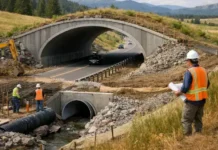























The right clothing on a construction site depends on the type of work, the hazards involved and the rules for that particular site.
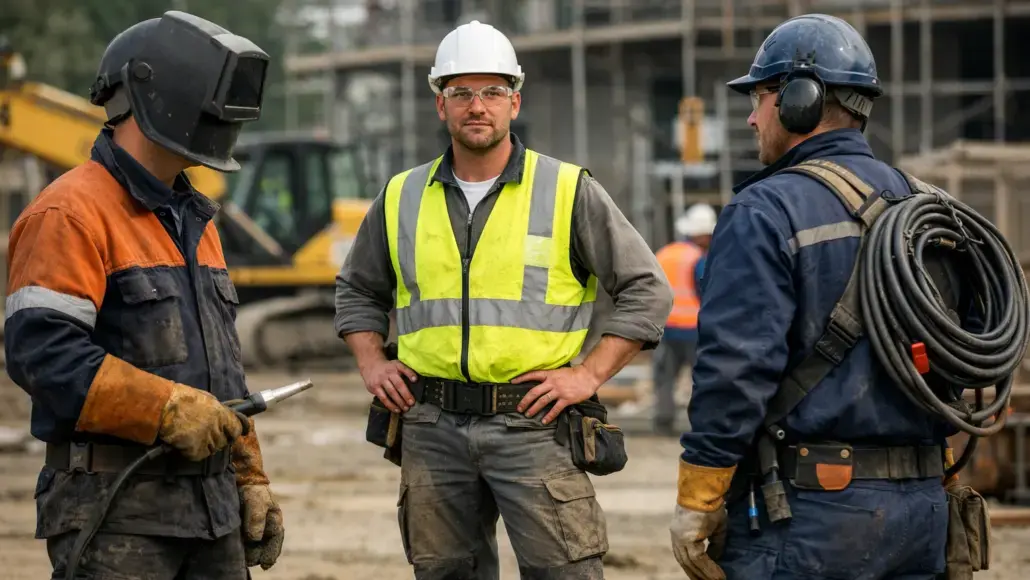
Basic construction clothing will usually include safety boots, work trousers, a suitable shirt or jacket, high-visibility clothing and other personal protective equipment (PPE). However, workers doing welding, electrical work, road construction or work involving fire may need specialist protective clothing, including flame-resistant garments.
Construction sites can be dangerous places. In Great Britain, there were 35 fatal injuries to construction workers in 2024/25, with falls from height accounting for 53% of worker deaths over the previous five years.
What should you wear on a general construction site?
For most construction work, clothing should be practical, comfortable and strong enough to protect you from common site hazards.
Work trousers should cover the legs and be made from a durable material. Long sleeves may also be useful where there is a risk of cuts, dust, splashes or contact with materials.
Safety boots with suitable toe protection and soles are also important. Gloves may be needed for handling materials, while safety glasses should be worn where there is a risk of dust, flying particles or splashes.
A hard hat or safety helmet is required on most construction sites where there is still a risk of head injury.
High-visibility clothing
High-visibility clothing is particularly important on sites where vehicles, cranes, forklifts or other plant are being used.
A simple hi-vis vest may be suitable for some jobs. Workers who are close to moving traffic or working in poor visibility may need a higher level of protection, such as a hi-vis jacket and trousers.
The Health and Safety Executive (HSE) says clothing should be selected according to the risks, lighting and working conditions. Employers must provide required hi-vis clothing free of charge where there is a significant risk.
Does fire-resistant clothing matter?
Yes, but it does not mean every construction worker needs to wear flame-resistant clothing.
The correct clothing depends on the work being carried out. Workers involved in welding, cutting, hot work, certain electrical tasks or working around flammable materials may face a greater risk from flames, sparks or electric arcs.
In these situations, ordinary workwear may not be enough. Flame-resistant or arc-rated clothing may be required.
It is important to understand that some synthetic fabrics can melt or ignite when exposed to high heat. According to Fireball Safety Workwear, in the US, OSHA rules specifically prohibit certain clothing that could melt onto the skin or continue burning when workers are exposed to flames or electric arcs.
Clothing for different types of construction work
Different jobs can require different clothing. A bricklayer or general builder may need durable work trousers, safety boots, gloves, eye protection and hi-vis clothing.
A road worker may need high-visibility trousers and jackets because they can be working close to moving traffic.
An electrician may require specialist clothing where there is a risk of electrical arcs. Flame-resistant and arc-rated clothing can be particularly important in these situations.
A welder will normally need clothing designed to protect against heat, sparks and molten metal, along with specialist eye and face protection.
Workers dealing with chemicals may also need chemical-resistant clothing, gloves and eye protection.
For house builders carrying out general work such as bricklaying, roofing, plastering, carpentry and general repairs, clothing should be practical, durable and suitable for the risks on site.
Workers would commonly be expected to wear safety boots with protective toe caps and suitable soles, durable work trousers, a T-shirt, polo shirt or work shirt, and hi-vis clothing where required.
A safety helmet may be needed where there is a risk of falling or moving objects, while gloves and safety glasses can help protect against cuts, dust and flying particles. Hearing protection may also be needed when using loud machinery.
Clothing should fit properly and allow workers to move safely. Loose clothing, jewellery and anything that could become caught in machinery should be avoided.
UK construction clothing regulations
In the UK, employers must assess workplace risks and provide suitable PPE where it is needed. The Personal Protective Equipment at Work Regulations place duties on employers to make sure PPE is suitable, properly maintained and used correctly. The rules were extended in 2022 to cover limb (b) workers as well as employees.
This means there is no single outfit that is legally correct for every construction site. The clothing should be based on the risks involved.
UK and US rules are not identical
Construction clothing requirements in the UK and US are similar in principle, but the regulations and standards are different.
In the US, OSHA’s construction PPE rules require employers to ensure PPE is suitable for the work and fits the worker properly. A rule that came into effect in January 2025 made the fit requirement explicit.
The US construction industry is also large: OSHA estimated that around 5.88 million construction workers used some form of PPE in 2022.
Choosing the right construction clothing
The safest approach is to start with the job and its hazards rather than simply choosing standard workwear.
Check the site’s risk assessment and PPE requirements before starting work. Clothing should fit properly, allow you to move safely and be suitable for the conditions.
Most importantly, do not assume that ordinary workwear will protect you from fire, electrical hazards, chemicals or other specialist risks. Where the job creates a particular hazard, the correct specialist clothing should be provided and worn.