


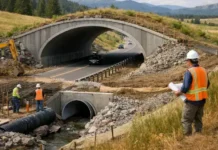























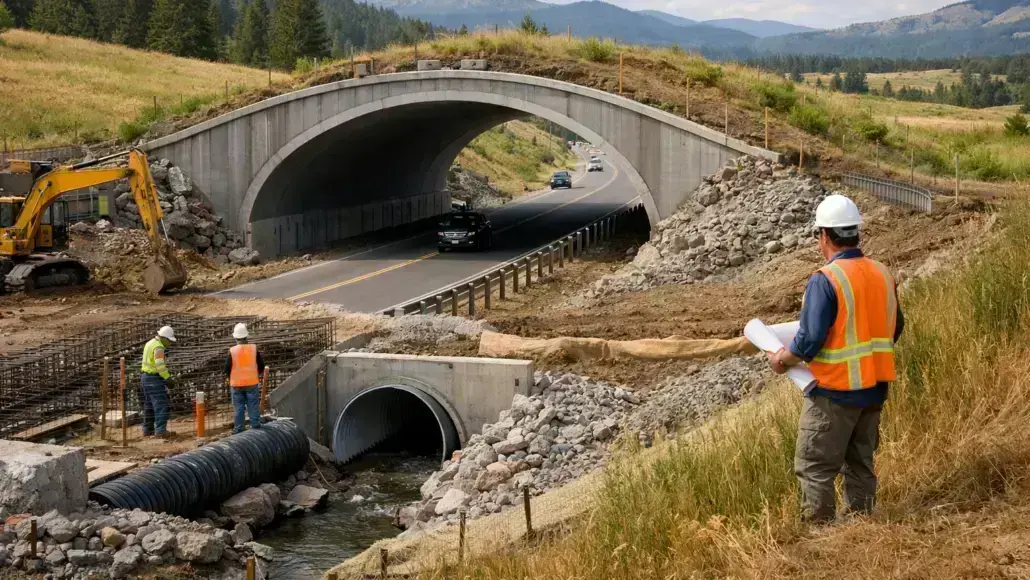


Wildlife crossings are having a major moment thanks to recent federal funding, with structures appearing nationwide to reduce collisions and protect animals. Conservation goals often grab the headlines, but the real measure of success depends on the soil, drainage and foundation holding it all together.
The Federal Funding Boom and the Long-Term Engineering Standard
The 2021 Bipartisan Infrastructure Law transformed wildlife crossing construction by creating the Wildlife Crossings Program. It provides grant funding to state and Tribal governments, creating new opportunities for installations nationwide. Wildlife crossings are associated with a 97% reduction in wildlife-motorist collisions, making them one of the most effective safety interventions in roadway design when they are thoughtfully placed, engineered and maintained.
However, long-term performance depends on more than securing construction funding. A crossing expected to serve wildlife and protect motorists for decades must be engineered for permanent loads, changing weather patterns, groundwater movement and ongoing maintenance. Reaching that lifespan requires rigorous planning from day one, starting with the geotechnical work underneath.
Assessing Foundation Stability Before the First Pour
Wildlife crossings support massive dead loads consisting of earth, vegetation and water. These loads sit, saturate and stress the foundation year after year without shifting the way traffic does. The weight is permanent, and the risk compounds over time. Subsurface movement stays hidden until cracks appear in the concrete, settlement warps the structure or the whole thing fails catastrophically.
The roads wildlife crossings are built upon are frequently located in high-risk areas such as slopes, cut sections, or near water bodies. They run the risk of damage from heavy rainfall, earthquakes, and freeze-thaw cycles. Fallout from unstable crossings can severely impact lives and services, causing transportation delays, compromise emergency response capabilities, and contaminate local water sources.
By that point, emergency work costs more than early mitigation. Addressing foundation instability and other geohazard concerns before they escalate is a baseline requirement for any installation built to last decades.
Soil testing, slope stability analysis and subsurface investigation determine whether the ground can support the structure. These assessments can reveal load-bearing capacity, settlement risk and groundwater behavior. Skipping this phase leaves agencies relying on assumptions instead of engineering data for a multimillion-dollar infrastructure investment.
Protecting Structural Integrity With Advanced Drainage Systems
Effective water management separates installations that survive for decades from those that fail prematurely. A report on structural deterioration identified water ingress as a root cause of the higher rate of deterioration in concrete structures, highlighting how waterlogged dead loads can threaten both concrete and steel. Drainage is an essential form of structural protection that must be engineered in from the start.
Researchers are also redesigning roadway bridges and culverts to handle greater amounts of rainfall without flooding while directing wildlife beneath. This dual functionality demands precision in both hydraulic and biological design.
For example, the Annenberg Wildlife Crossing in California uses a specialized drainage system with a waterproof lining and nine to 30 inches of clay shale to prevent water accumulation on the structure. This solution costs significantly less than replacing a compromised structure halfway through its intended lifespan.
Designing Approach Embankments for Animal Usability
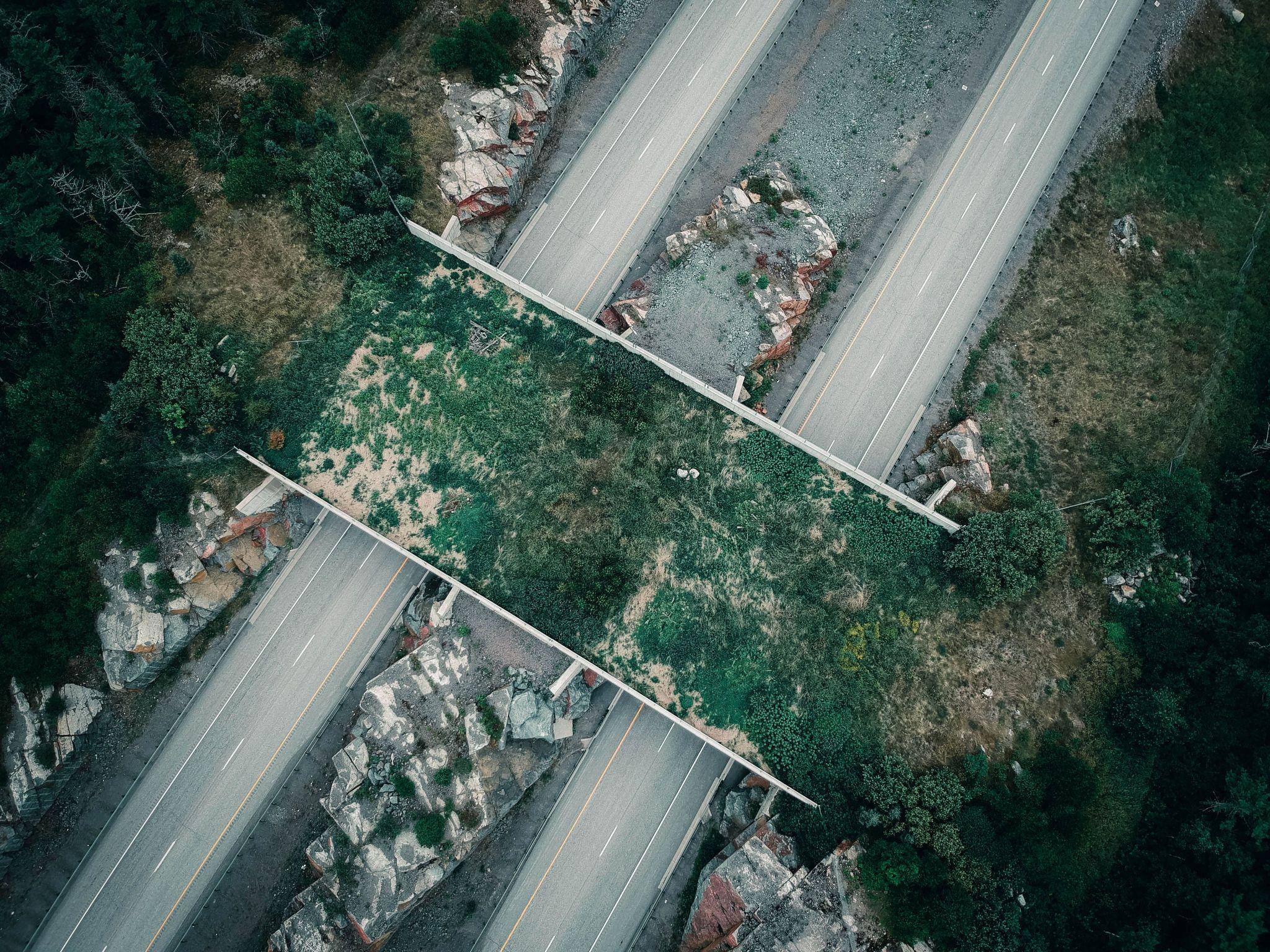
A structurally sound bridge serves no purpose if animals refuse to use it. Approach embankments must mimic natural habitats to encourage animal crossings while maintaining the slope stability required for highway infrastructure. The design approach determines whether wildlife will actually use the structure.
Engineers often specify thousands of cubic yards of manufactured soil to achieve this balance. They create precise mixes of sand, silt and clay that replicate the biological makeup of native substrates. The manufactured material must be contoured at varying depths, often one to four feet deep, to blend the passage naturally into the surrounding hills.
Topography manipulation matters as much as substrate composition. Animals need gradual approaches that mimic natural terrain and signal safety. Getting this right means geotechnical engineers and wildlife biologists need to work together from the start. Soil specialists account for slope performance while biologists account for the movement patterns, visibility needs and habitat preferences of target species.
Common Wildlife Crossing Failures to Avoid
When wildlife crossings fail to deliver on their conservation and safety promises, the cause usually traces back to a handful of preventable engineering oversights. Fence repairs, culvert debris clearing and irrigation for new plantings must receive proper attention and funding to protect multimillion-dollar investments.
Improper Fencing Termination
When fencing ends abruptly or degrades over time, it traps animals on the highway side rather than guiding them safely across. Effective fencing must extend well beyond the structure itself and include maintenance protocols to prevent deterioration.
Inadequate Dead Load Calculations
Engineers must calculate load capacity based on worst-case saturation scenarios, not average conditions. Failing to account for the massive weight of saturated substrates after heavy rains leads to severe structural stress. Extreme weather events often reveal whether a structure was designed with enough resilience.
Ignoring Species-Specific Needs
Small culverts will not accommodate large herd animals, while dark, confined passages deter species that need visibility and space. A one-size-fits-all approach results in animals rejecting the passage entirely, so design specifications must reflect the biology and behavior of the target species.
Erosion and Slope Destabilization
Without proper retaining walls or early geohazard mitigation, embankments can wash out onto roadways below. Erosion control serves as structural protection, preserving the integrity of approach slopes that carry thousands of cubic yards of engineered material.
Securing Long-Term Maintenance Post-Construction
A wildlife passage that reaches its intended lifespan requires consistent monitoring, rapid response to emerging issues and dedicated funding streams. The streams must survive budget cycles and administration changes. Without this commitment, even carefully engineered structures can degrade prematurely.
The conservation value of wildlife crossings is undeniable, but it is only achievable when technical and financial fundamentals align. The Wildlife Crossings Program has opened significant new resources, and lasting success depends on getting the engineering right from soil testing through decades of maintenance. The structures built today will either validate or undermine the promise of safer roads and protected wildlife for generations to come.