































If your rented home has serious problems that your landlord has failed to fix after you have reported them, you may be able to claim compensation or a rent reduction.
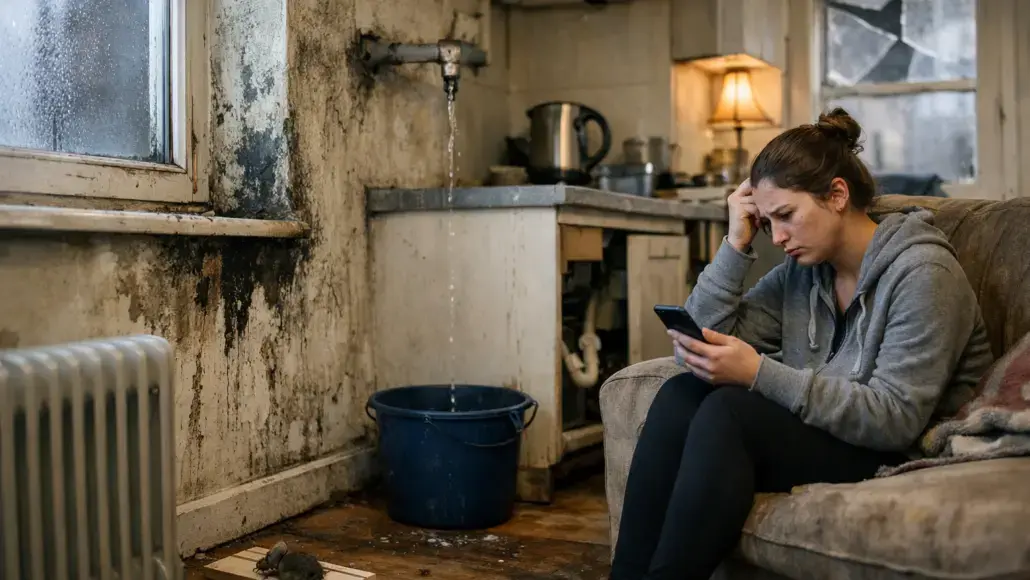
This can include damp and mould, a lack of hot water or heating, bad smells, pest infestations such as ants and mice, poor ventilation, leaks, broken windows, unsafe electrics and other serious repair issues. The amount you could receive depends on the problem, how long it lasted and how much it affected you.
Damp and mould
Damp and mould are among the most common housing problems that can lead to a compensation claim, particularly when the landlord has failed to deal with the cause.
This could include leaks, penetrating damp, rising damp, condensation caused by poor ventilation or mould that keeps returning after being cleaned.
The latest English Housing Survey found that 1.4 million homes in England had a problem with damp in 2025. Damp was also more common in privately rented homes, affecting 10% of them.
If damp or mould has damaged your belongings or affected your health, these effects may also be taken into account when compensation is considered.
No heating or hot water
A broken boiler, heating system or hot water supply can make a home difficult or unsafe to live in, especially during colder months.
If you have repeatedly told your landlord about the problem and they have not arranged repairs within a reasonable time, you may have grounds to seek compensation.
You could also potentially recover extra costs caused by the problem, such as increased electricity bills from using portable heaters. Keeping copies of bills and receipts can help support your claim.
Lack of daylight and poor ventilation
A home with very little natural light can be unpleasant to live in. Poor ventilation can also contribute to condensation, damp and mould.
Not every problem with daylight will automatically result in compensation. However, if there are serious issues with the property that the landlord is responsible for or if your daylight is affected by a neighbour’s property, this may form part of a wider disrepair claim.
Broken windows, blocked ventilation systems or other defects that reduce the quality and safety of the property can also be relevant.
Bad smells
Persistent bad smells should not simply be something you have to put up with.
The cause could be a plumbing problem, sewage issue, damp, mould, faulty drains or another defect within the property.
If you have reported the problem and the landlord has failed to investigate or repair the underlying cause, it may be possible to include the issue in a compensation claim.
Ants, mice and other pests
Pest infestations can also be a housing problem, particularly where they are caused by defects or poor conditions that the landlord should address. This could include mice, rats, cockroaches, ants, bedbugs or other pests.
For example, holes, damaged walls, broken drains or gaps around pipes could allow pests into the property. Whether the landlord is responsible will depend on the cause of the infestation and the circumstances.
Other problems you may be able to claim for
Other housing problems that could potentially form part of a compensation claim include:
- Leaking roofs or ceilings
- Broken windows or doors
- Water leaks
- Faulty plumbing
- Unsafe electrical wiring
- Broken toilets or baths
- Poor security
- Structural problems
- Damaged flooring or stairs
- Poor ventilation
- Excessive cold
- Problems with communal areas
The key issue is usually whether the landlord was responsible for the repair and whether they knew, or should reasonably have known, about the problem.
How much compensation could you receive?
There is no single fixed amount. Compensation can depend on how serious the problem was, how long it continued and how much it affected your use of the property.
You may also be able to claim for financial losses and damage to belongings. For example, damp could damage clothing, furniture or a mattress. You may also be able to claim certain additional expenses caused by the poor condition of your home.
The English Housing Survey found that 13% of households in 2024 reported being unable to keep warm during winter. It also found that 58% of households who could not keep warm reported a damp problem, compared with 27% of households who could keep warm.
Keep evidence of the problems
If you believe you may have a claim, keep photographs and videos of the problems and make a note of when they started.
Keep copies of emails, messages and letters sent to your landlord or letting agent, along with repair reports, receipts and bills.
You should normally give your landlord the opportunity to fix the problem before taking further action. If they fail to do so, you may be able to make a formal complaint, use an appropriate redress scheme or take legal action.