
























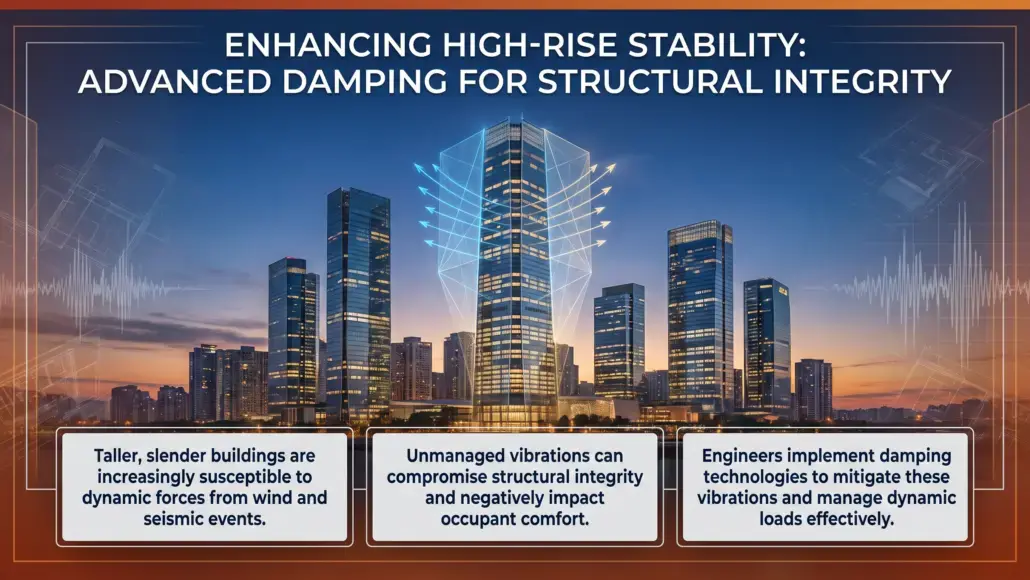


The construction of modern high rise structures presents a unique set of engineering challenges, primarily centered around the management of dynamic forces. As buildings grow taller and more slender, they become increasingly susceptible to structural vibrations induced by wind loading and seismic events. These vibrations, if left unmanaged, can compromise the structural integrity of the building and negatively impact the comfort of its occupants. To address these issues, engineers have turned to a variety of damping technologies designed to absorb and dissipate kinetic energy. The primary goal of these systems is to reduce the amplitude of oscillations, ensuring that the building remains stable and within safe operating limits even during extreme weather conditions. This focus on dynamic mitigation is essential for the continued evolution of the urban skyline, where land scarcity drives the demand for ever taller structures.
The interaction between a building and the atmosphere is a complex phenomenon that requires sophisticated modeling and analysis. Wind does not just exert a static pressure on a building; it creates dynamic vortices that can cause the structure to sway in multiple directions. This phenomenon, known as vortex shedding, can lead to resonant vibrations that are particularly difficult to control. By integrating damping technologies into the early stages of design, engineers can create a more resilient structural system that is naturally tuned to resist these forces. This proactive approach is far more effective than trying to retrofit a building with vibration control measures after it has been constructed. The use of advanced computational fluid dynamics allows for a precise understanding of how wind will interact with the building, providing the data needed to select the most appropriate damping solution for the specific site and structure. This level of analytical depth is necessary to account for the unique aerodynamic properties of each building, which can vary significantly based on its shape and the surrounding urban context. By simulating these interactions, engineers can optimize the placement and capacity of vibration control systems, ensuring that the structural response is both predictable and efficient. This focus on data driven design is the cornerstone of modern high rise construction, enabling the creation of buildings that are as safe as they are visually spectacular.
Engineering Precision in Tuned Mass Damper Systems
One of the most recognizable and effective forms of vibration control in tall buildings is the tuned mass damper. This system consists of a massive weight, often hundreds of tons of steel or concrete, suspended near the top of the building. The damper is tuned to the natural frequency of the structure, allowing it to move in opposition to the building sway. When the building begins to oscillate due to wind or seismic activity, the mass damper moves in the opposite direction, effectively cancelling out a significant portion of the vibration. The engineering precision required to design and install these systems is immense, as the tuning must be exact for the damper to function correctly. Any slight deviation in the frequency could render the system ineffective or even exacerbate the structural vibrations.
The implementation of tuned mass dampers has allowed for the construction of some of the world’s most iconic skyscrapers. These systems are not just about safety; they are also about economic viability. By reducing the sway of a building, developers can build taller structures on smaller footprints, maximizing the value of the land. In addition, the presence of a mass damper can reduce the overall amount of structural steel required in the building frame, as the damper takes on a portion of the dynamic load. This efficiency in design is a key driver of innovation in the high rise sector. Modern mass dampers are often integrated into the architectural design of the building, sometimes serving as a visual centerpiece that highlights the engineering excellence of the project. This integration demonstrates that functional structural elements can also contribute to the aesthetic and symbolic value of a building. When the technical mechanisms of stability are made visible, they provide a sense of security and a testament to the sophistication of contemporary engineering. For developers, this visibility can be a powerful marketing tool, emphasizing the commitment to safety and innovation that defines the development. As the technology continues to evolve, we can expect to see even more creative applications of mass damping that blend without disruption into the fabric of the building. The continued refinement of these systems, including the use of active control mechanisms, will further enhance their effectiveness in managing complex dynamic loads.
Implementing Viscoelastic Materials for Passive Vibration Control
In addition to large scale mass dampers, many tall buildings utilize passive damping systems based on viscoelastic materials. These materials are designed to deform under stress and then return to their original shape, dissipating energy as heat in the process. When integrated into the joints and connections of a building frame, viscoelastic dampers can significantly reduce structural vibrations by providing a layer of internal friction. This form of passive control is highly reliable, as it does not require external power or complex sensors to operate. The selection of the specific viscoelastic material is critical, as its properties must be matched to the expected temperature range and load conditions of the building.
The use of viscoelastic damping technologies is particularly effective for controlling high frequency vibrations and noise transmission within a building. These systems are often used in combination with other forms of vibration control to create a comprehensive mitigation strategy. For example, a building might use a tuned mass damper to manage low frequency wind sway and viscoelastic dampers to reduce the impact of mechanical equipment or occupant activity. This multi layered approach ensures a high level of performance across a wide range of operating conditions. The durability of modern viscoelastic materials also means that these systems require minimal maintenance over the life of the building, providing a cost effective solution for long term vibration management. As material science continues to advance, new polymers with even higher energy dissipation capacities are being developed, further expanding the possibilities for passive vibration control in the construction industry.
Enhancing Occupant Comfort through Advanced Oscillatory Control
While structural safety is the primary concern for engineers, the comfort of the building’s occupants is equally important. Even small amounts of sway can cause discomfort, motion sickness, and anxiety for people living or working on the upper floors of a skyscraper. To address this, damping technologies are increasingly focused on enhancing occupant comfort by minimizing the perception of movement. Advanced oscillatory control systems use sensors to monitor the building’s motion in real time and adjust the damping characteristics accordingly. This active approach allows for a more responsive and precise management of vibrations, ensuring a stable and comfortable environment regardless of the external conditions.
The perception of vibration is subjective and can vary based on the frequency and duration of the movement. Therefore, engineers must design damping systems that target the specific ranges of motion that are most noticeable to humans. This requires a deep understanding of human physiology and psychology, as well as structural engineering. By providing a stable environment, developers can attract high quality tenants and command higher rents for the upper floors of their buildings. The focus on occupant comfort is a key differentiator in the competitive high rise market, where the quality of the indoor experience is a major factor in the success of a project. As urban populations grow and more people live and work in tall buildings, the importance of effective oscillatory control will only increase, driving further research and development in this critical field.
Long Term Structural Health and Seismic Resilience
The long term health of a building is directly linked to its ability to manage vibrations over time. Continuous exposure to structural vibrations can lead to fatigue in the structural elements and connections, potentially shortening the lifespan of the building. Damping technologies play a vital role in preserving structural health by reducing the cumulative stress on the building frame. By absorbing the energy from wind and seismic events, these systems prevent the build up of damage that could eventually lead to costly repairs or even structural failure. This focus on longevity is essential for creating sustainable urban environments where buildings are expected to remain functional for a century or more.
Seismic resilience is another critical aspect of vibration control, especially in regions prone to earthquakes. During a seismic event, the energy released into a building can be massive, causing violent shaking and potential collapse. Advanced vibration control systems, such as base isolation and energy dissipating braces, are designed to decouple the building from the ground motion or absorb the seismic energy before it reaches the primary structure. These systems are essential for protecting both the building and its occupants during an earthquake. The integration of seismic damping into the design of tall buildings represents a major advancement in public safety and infrastructure resilience. As our understanding of seismic behavior improves and new damping materials are developed, the ability to build safe and stable structures in earthquake zones will continue to improve, ensuring the continued growth and prosperity of our cities. The ongoing investment in vibration control systems is a testament to the industry’s commitment to protecting lives and infrastructure. By prioritizing seismic resilience, construction firms are building a legacy of safety that will benefit generations to come. The move toward more resilient and intelligent vibration control is not just a technical requirement; it is a fundamental responsibility for all those involved in shaping the built environment. As we look to the future, the role of these technologies in urban development will only become more prominent and essential.