



























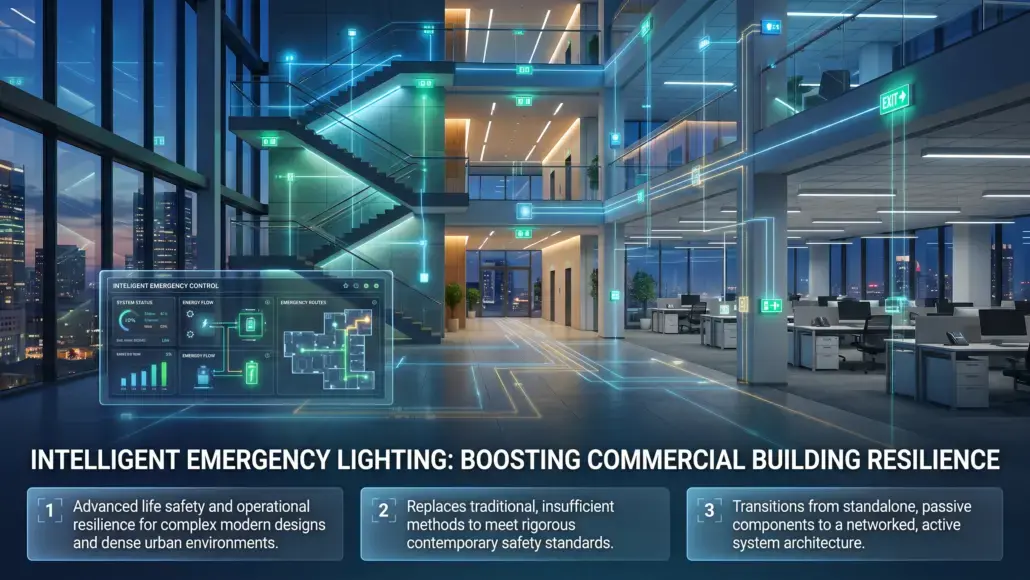


The implementation of intelligent emergency lighting within commercial building projects represents a critical advancement in life safety and operational resilience. As architectural designs become more complex and urban environments more dense, the traditional approach to emergency illumination is no longer sufficient to meet the rigorous safety standards of the modern era. Intelligent systems transition away from standalone, passive components toward a networked architecture that provides continuous monitoring and automated reporting. This evolution ensures that the building is always prepared for a power outage or an emergency egress scenario, minimizing the risks to occupants and the potential liabilities for building owners. For construction professionals, the integration of these systems involves coordinating with electrical engineers, fire safety consultants, and facility managers to create a cohesive and reliable safety infrastructure. By prioritizing intelligent emergency lighting, developers can enhance the overall resilience of their assets while simplifying the ongoing burden of regulatory compliance.
The technical backbone of intelligent emergency lighting relies on sophisticated communication protocols that allow every fixture and exit sign to report its status to a centralized management platform. This bidirectional data flow enables the system to perform automated self tests and report failures in real time, eliminating the need for labor intensive manual inspections. In a large scale commercial development, where hundreds or even thousands of emergency units are installed, the ability to monitor the entire network from a single interface is a significant operational advantage. The system can track battery health, lamp status, and driver performance, providing facility managers with a clear picture of the system’s readiness at all times. This proactive approach to maintenance ensures that any issues are identified and resolved before they can compromise the safety of the building during a critical event. The shift toward intelligence in life safety systems is a fundamental component of the move toward more responsive and resilient building environments.
Automated Testing and Compliance Reporting Standards
One of the primary drivers for the adoption of intelligent emergency lighting is the ability to automate the rigorous testing and reporting required by local fire codes and safety standards. Traditional emergency systems require manual monthly and annual testing, where a technician must physically visit every unit to verify its operation. This process is not only time consuming and expensive but also prone to human error and incomplete documentation. Intelligent systems perform these tests automatically, simulating a power failure and monitoring the duration and intensity of the light output from each unit. The results are then recorded in a digital logbook, providing a verifiable and tamper proof record of compliance for fire marshals and building inspectors. This level of transparency significantly reduces the administrative burden on facility managers and ensures that the building remains in constant compliance with safety regulations.
The automated testing protocols can be scheduled to run during off peak hours, minimizing disruption to the building’s occupants. If a unit fails a test, the system immediately generates an alert, identifying the specific fixture and the nature of the fault. This precision allows for more targeted maintenance and ensures that repairs are carried out promptly. In addition to meeting minimum safety requirements, the detailed data generated by these tests can be used to identify trends and predict the end of life for batteries and other components. This forward looking perspective allows for more effective budgeting and procurement, as facility managers can plan for replacements rather than reacting to unexpected failures. By embracing automated testing through intelligent emergency lighting, the construction industry can deliver a higher standard of safety and reliability for all stakeholders.
Dynamic Wayfinding for Enhanced Occupant Egress
The integration of intelligent emergency lighting also supports the development of dynamic wayfinding systems that improve the efficiency of occupant egress during a crisis. In large, multi story buildings or complex commercial centers, traditional static exit signs may be insufficient for guiding people toward the safest exit, particularly if the primary path is blocked by smoke or fire. Dynamic systems can adjust the direction of illuminated arrows or change the color of the light to indicate the most appropriate route based on real time data from the fire alarm system. This adaptive response helps to reduce confusion and panic, allowing for a more orderly and rapid evacuation. The use of high visibility LED arrays and programmable indicators ensures that the emergency message is clear and unambiguous even in low visibility conditions.
Engineering these dynamic systems requires close coordination between the lighting controls and the building’s fire detection network. The communication between these systems must be instantaneous and highly reliable, with multiple layers of redundancy to ensure operation during a failure. The design of the wayfinding logic must account for various emergency scenarios, ensuring that occupants are never directed toward a hazardous area. Beyond the technical requirements, the psychological impact of clear, active guidance is a significant factor in the success of an evacuation strategy. By providing a more intuitive and responsive egress environment, intelligent emergency lighting enhances the overall safety profile of the building. This focus on the occupant experience during an emergency is a hallmark of modern, human centric safety design, where technology is used to support and protect the people within the built environment.
Centralized Monitoring vs. Standalone Emergency Units
The choice between a centralized monitoring architecture and standalone emergency units is a critical decision for construction teams during the design phase. Standalone units are often perceived as simpler and less expensive to install, but they lack the connectivity and intelligence required for modern high performance buildings. Each standalone unit must be individually tested and maintained, leading to significant long term operational costs. In contrast, a centralized system connects all emergency assets into a single, managed network, providing a comprehensive view of the entire building’s safety status. While the initial capital expenditure for a networked system may be higher, the long term savings in labor and the improvements in safety and compliance provide a compelling return on investment.
Centralized monitoring also allows for more sophisticated power management strategies. For example, a central battery system can provide emergency power to multiple fixtures from a single, high capacity location, simplifying the maintenance of batteries and improving the overall reliability of the system. This approach also allows for the integration of the emergency lighting with the building’s wider energy management system, supporting more coordinated responses to power outages or demand response triggers. The move toward centralized intelligence is particularly beneficial for large scale projects where the complexity of managing disparate standalone units becomes unmanageable. By prioritizing a networked architecture for intelligent emergency lighting, developers can ensure that their building’s safety infrastructure is scalable, efficient, and easy to maintain over its entire lifecycle.
Resilience Strategies for Power Outage Scenarios
Building resilience is a key priority for modern construction, and intelligent emergency lighting is at the heart of this effort. Resilience refers to the building’s ability to maintain essential functions and recover quickly from unexpected disruptions, such as a prolonged power outage or a major utility failure. Intelligent systems are designed with multiple layers of redundancy, including local battery backup in individual fixtures and centralized emergency power supplies. This diverse approach ensures that if one part of the system fails, others remain operational to provide critical illumination. The use of low power LED technology also extends the duration of the emergency lighting, providing a longer window for safe egress or for the restoration of primary power.
Beyond simple illumination, these systems can also support other critical functions during an outage, such as emergency communications and the operation of essential security systems. The data connectivity of the lighting network can be used to transmit emergency alerts or to provide location data for first responders. The ability to monitor the status of the building’s environment in real time, even when the main power is down, provides valuable situational awareness for facility managers and emergency personnel. This integrated approach to resilience turns the lighting network into a multi functional safety asset that protects the building and its occupants during the most challenging circumstances. By embedding these resilience strategies into the core of the building’s design, construction professionals can create assets that are truly prepared for the uncertainties of the future. The commitment to resilience is not just a safety requirement but a strategic investment in the long term viability and value of the commercial property.
Battery Technology Advancements and Safety Protocols
The performance of intelligent emergency lighting is fundamentally linked to the quality and reliability of its battery technology. Recent advancements in lithium iron phosphate (LiFePO4) and other high performance chemistries have significantly improved the energy density, safety, and lifespan of emergency batteries. These modern batteries offer superior thermal stability and a higher number of charge discharge cycles compared to traditional lead acid or nickel cadmium options. This improvement in performance directly translates into more reliable emergency illumination and a lower frequency of battery replacements. The integration of intelligent battery management systems (BMS) within each unit ensures that the batteries are charged correctly and monitored for any signs of degradation or failure.
Implementing these advanced battery technologies also requires a focus on safety protocols and environmental responsibility. Proper disposal and recycling of old batteries are essential components of a sustainable building operation. Manufacturers are increasingly providing detailed information on the material composition of their batteries and offering recycling programs to minimize their environmental impact. From a construction perspective, the selection of battery technology must also account for local fire safety regulations regarding the storage and use of high energy density components. The coordination between the lighting manufacturer, the electrical engineer, and the local fire authority ensures that the emergency system meets all technical and safety requirements. By staying at the forefront of battery technology, the construction industry can continue to improve the performance and sustainability of intelligent emergency lighting systems. The ongoing evolution of these components will drive further innovations in life safety, creating even safer and more resilient commercial environments for everyone.