





























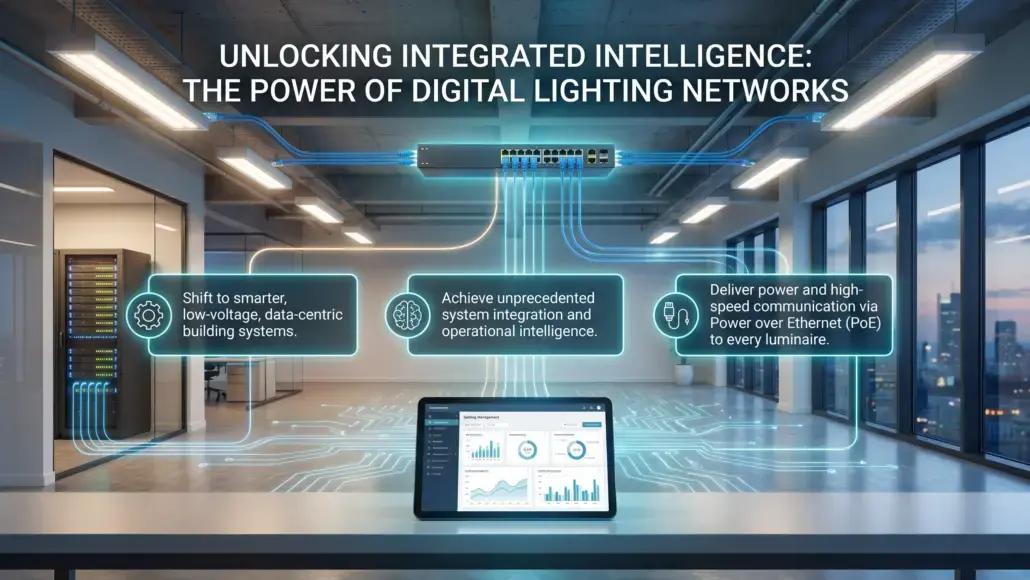


The emergence of digital lighting networks within the commercial construction sector marks a definitive shift in the way building infrastructure is designed, installed, and managed. By transitioning from traditional AC powered electrical circuits to low voltage, data centric systems, developers can achieve unprecedented levels of integration and operational intelligence. These networks utilize Power over Ethernet (PoE) technology to deliver both power and high speed communication to every luminaire through standard Category cables. This convergence of lighting and IT infrastructure simplifies the construction process, reduces material requirements, and provides a platform for advanced building analytics. As the demand for smart building capabilities continues to rise, digital lighting networks are becoming the primary vehicle for delivering a truly integrated management environment. This technical evolution empowers facility managers to treat lighting not just as a utility, but as a sophisticated software driven asset that enhances the performance of the entire building.
The adoption of digital lighting networks requires a fundamental rethinking of the coordination between electrical and IT contractors during the construction phase. In a traditional project, these two disciplines operate largely in isolation, but the implementation of PoE systems necessitates a unified approach to cabling and infrastructure deployment. The design of the network must account for the power limits of the PoE standards, the strategic placement of network switches, and the overall bandwidth requirements of the sensory data being harvested. From an engineering perspective, the benefits are significant, including the elimination of costly conduit and high voltage wiring for individual light points. This reduction in physical infrastructure not only lowers the initial capital expenditure but also aligns with sustainability goals by minimizing the use of copper and other raw materials. The result is a more efficient, flexible, and future proof building skeleton that can adapt to the changing needs of its occupants over many decades.
Power over Ethernet as a Primary Delivery Method
The utilization of Power over Ethernet as the primary delivery method for digital lighting networks offers a range of technical and economic advantages for modern developments. By consolidating power and data onto a single cable, construction teams can drastically simplify the installation of lighting assets in complex architectural spaces. The use of RJ45 connectors allows for a plug and play approach that reduces the risk of wiring errors and speeds up the commissioning process. In addition, the inherent safety of low voltage systems eliminates the need for specialized electrical permits for many aspects of the installation, potentially accelerating the project timeline. For facility managers, the ability to monitor the power consumption of every individual fixture in real time provides a level of transparency that was previously impossible to achieve with standard electrical meters.
Beyond the immediate installation benefits, PoE technology enables advanced control strategies that optimize energy use based on real time data. Each luminaire becomes an intelligent node on the building network, capable of responding to commands from a centralized controller or local sensors with millisecond latency. This high speed communication supports sophisticated dimming profiles and color tuning sequences that enhance the occupant experience while maintaining strict energy performance targets. The ability to aggregate power at the network switch also allows for more efficient backup power solutions, such as centralized Uninterruptible Power Supplies (UPS), ensuring that critical lighting remains operational during power outages. As the standards for PoE continue to evolve, with higher power delivery capabilities, the range of devices that can be supported by digital lighting networks will continue to expand, further cementing their role as the backbone of the smart building.
The Convergence of Lighting and IT Infrastructure
The integration of lighting into the broader IT infrastructure of a building represents a significant milestone in the journey toward fully integrated building management. By utilizing common networking standards and protocols, digital lighting networks can share data with other essential systems such as HVAC, security, and room scheduling platforms. This convergence allows for the creation of coordinated automation sequences that improve the efficiency and comfort of the building environment. For example, when a tenant badges into the building, the lighting and climate control systems in their specific workspace can be automatically activated, ensuring a welcoming and productive environment from the moment they arrive. This level of responsiveness is made possible by the seamless flow of data between the lighting network and the building’s central management server.
From an operational perspective, the convergence of lighting and IT simplifies the management of building assets by providing a single interface for monitoring and control. Facility managers no longer need to manage multiple proprietary software platforms to oversee different systems, reducing the complexity of their daily tasks. The use of standardized IT security protocols ensures that the lighting network is protected from unauthorized access, maintaining the integrity of the building’s digital infrastructure. Additionally, the ability to collect and analyze environmental data through the lighting network provides valuable insights into the performance of other building systems. For instance, temperature sensors integrated into the luminaires can identify cold spots or imbalances in the HVAC distribution, allowing for more targeted maintenance and optimization efforts. This collaborative approach to building management maximizes the utility of the data generated by the lighting network, turning it into a strategic asset for the building owner.
Maintenance Optimization through Predictive Digital Twins
One of the most powerful applications of digital lighting networks is the creation of predictive digital twins that mirror the physical state of the building’s lighting assets. By continuously monitoring the performance of every luminaire, driver, and sensor, the system can identify early signs of failure before they impact the occupant experience. Predictive analytics can forecast when a specific component is likely to reach the end of its operational life based on its usage patterns and environmental conditions. This shift from reactive to proactive maintenance allows facility managers to schedule repairs during off peak hours, minimizing disruption and reducing the costs associated with emergency service calls. The digital twin provides a comprehensive historical record of every asset, supporting more informed decisions regarding replacement cycles and technology upgrades.
The integration of the lighting network with the building’s computerized maintenance management system (CMMS) automates the generation of work orders and the tracking of spare parts inventory. When a fixture reports an issue, the system can automatically identify the specific model, its location on the floor plan, and the necessary tools for the repair. This level of detail improves the efficiency of maintenance teams and ensures that issues are resolved quickly and accurately. Over time, the data collected by the digital twin can be used to identify systemic issues with specific product models or installation methods, allowing for more effective quality control and procurement strategies. The result is a more reliable and cost effective lighting infrastructure that consistently meets the needs of its users. By prioritizing maintenance optimization through digital lighting networks, construction professionals can deliver a project that offers superior long term performance and a lower total cost of ownership.
Bandwidth Requirements for Integrated Sensory Networks
As digital lighting networks evolve to include a wider range of sensors and interactive features, the bandwidth requirements for these systems are increasing significantly. Beyond simple occupancy and light level data, modern networks may support high resolution environmental sensors, indoor positioning systems, and even video based occupancy counting. Designing an infrastructure that can handle this volume of data without compromising the responsiveness of the lighting controls is a critical engineering challenge. The network architecture must be carefully planned to include sufficient capacity at the switch and gateway levels, with appropriate segmentation to prevent data congestion. This requires a deep understanding of the specific data profiles generated by different types of sensors and the impact of varying sampling rates on network performance.
The management of bandwidth is also essential for ensuring the security and reliability of the system. High traffic volumes can potentially introduce latency into control commands, which can lead to a degraded occupant experience, such as delayed response times for motion sensors. Engineers must implement quality of service (QoS) protocols to prioritize lighting control packets over less time sensitive sensory data. Additionally, the use of edge processing can help to reduce the overall bandwidth load by performing data aggregation and analysis at the local level before sending only the most relevant information to the central server. This approach not only improves the efficiency of the network but also enhances the privacy of the data by minimizing the amount of raw information that is transmitted. By addressing the bandwidth requirements of integrated sensory networks, the construction industry can ensure that digital lighting networks continue to provide a stable and scalable platform for future innovation.
Future Proofing Building Assets with Software Defined Lighting
The shift toward software defined lighting represents the final stage in the digital transformation of building illumination. In this model, the behavior and functionality of the lighting system are determined by software rather than physical hardware configurations. This flexibility allows building owners to update the appearance and performance of their assets without requiring expensive and disruptive physical modifications. For example, a space that was originally designed for a traditional office layout can be easily reconfigured for a collaborative, activity based environment through simple software adjustments to the lighting zones and control sequences. This ability to adapt to changing tenant needs is a significant advantage in the competitive commercial real estate market, as it extends the relevant life of the building infrastructure.
Software defined lighting also enables the rapid deployment of new features and capabilities as they are developed by technology providers. Over the air updates ensure that the building always has access to the latest energy saving algorithms, user interface enhancements, and security patches. This continuous improvement cycle protects the long term value of the investment and ensures that the lighting infrastructure remains a cutting edge asset for many years. The move toward open APIs and standardized data models will further accelerate this trend, allowing third party developers to create innovative applications that utilize the data generated by the digital lighting networks. By embracing a software centric approach, the construction industry can deliver buildings that are not only more efficient and integrated today but also more resilient and adaptable to the challenges of tomorrow. The ongoing evolution of digital lighting networks will continue to redefine the boundaries of what is possible in building management, creating environments that are truly intelligent and responsive to the needs of their inhabitants. This focus on software driven adaptability ensures that the building remains a high performance asset throughout its entire lifecycle.