



























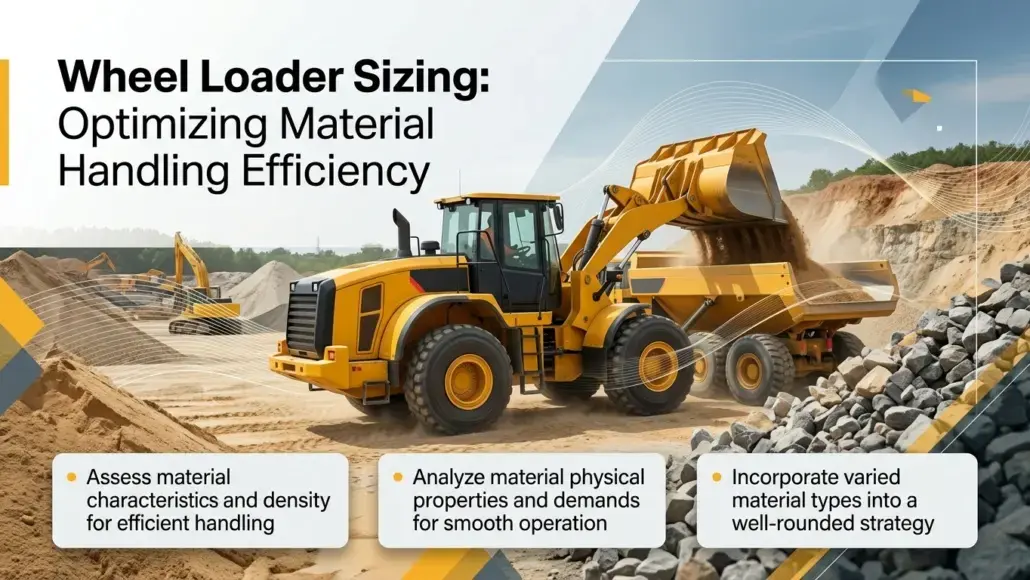


Selecting the correct wheel loader capacity requires a comprehensive evaluation of the specific material types and the daily volume of work expected on a construction site. Project managers must first determine the density of the materials being moved, as this directly affects how the machine performs under load. For instance, handling loose sand involves different physical demands than moving wet clay or blasted rock. When construction firms overlook these density variations, they often end up with machines that are either underpowered for the task or unnecessarily large, leading to wasted capital and higher operating costs. Accurate calculations of material density per cubic yard allow for the selection of a loader that maintains stability while maximizing the amount of material moved in each cycle.
Efficiency in material handling is not just about the size of the bucket but how that bucket interacts with the target vehicle or hopper. If a wheel loader is used to charge a screening plant or load on-road trucks, the dump height and reach become critical factors. A machine that is too small might struggle to clear the sideboards of a high-sided truck, forcing operators to build ramps or take longer paths, which slows down the entire operation. Conversely, a machine that is too large for the site footprint can cause congestion and increase the risk of accidents in tight working environments. Properly balancing machine physical dimensions with the required lift height ensures that wheel loader sizing optimizing material handling efficiency remains a central focus of the equipment procurement strategy.
Project planners should also account for the frequency of cycles and the distance the loader must travel between the stockpile and the discharge point. Long travel distances favor machines with higher travel speeds and better ride control systems to prevent material spillage. If the machine is stationary or moves very little, the focus shifts almost entirely to the breakout force and hydraulic speed. Understanding these nuances helps in defining the technical specifications needed before a purchase or rental agreement is finalized. By aligning the machine’s power curve with the actual work intensity, companies avoid the common pitfall of paying for horsepower that remains idle or underutilized during the majority of the workday.
Bucket Selection and Its Impact on Cycle Consistency
The bucket is the primary interface between the machine and the material, making its selection as important as the loader itself. Standard general-purpose buckets are versatile but might not be the most efficient choice for specialized tasks like handling light aggregates or heavy granite. A bucket that is too wide for the machine’s lifting capacity can lead to premature wear on the hydraulic cylinders and front-axle components. On the other hand, a bucket that is too small forces the operator to perform extra cycles to meet production targets, which increases fuel consumption and engine hours. Selecting a bucket that matches the rated operating capacity of the loader ensures that the machine operates within its ideal performance envelope.
Wear protection and bucket edge configurations also play a role in maintaining consistent performance over time. In abrasive environments, using bolt-on cutting edges or teeth can improve penetration and protect the structural integrity of the bucket. If the material is sticky or prone to clumping, specialized bucket shapes or liners can help ensure a clean dump, reducing the time spent shaking the bucket to clear debris. These small technical adjustments contribute significantly to the overall goal of ensuring that wheel loader sizing optimizing material handling efficiency is achieved through hardware that is fit for purpose. Consistency in load size also allows site managers to predict production timelines with greater accuracy, which is vital for maintaining the schedule of large-scale construction projects.
Site managers must also consider the weight of the bucket itself when calculating the total load on the loader’s arms. Heavier, reinforced buckets provide durability in harsh conditions but reduce the net amount of material that can be carried before reaching the tipping load. This trade-off requires a careful analysis of the expected service life versus the daily production requirements. In many cases, a slightly lighter bucket made from high-strength steel can offer the best balance of durability and payload capacity. Ensuring that the operator is trained to recognize the limits of the bucket and the machine prevents overloading, which is a leading cause of mechanical failure and safety incidents in material handling operations.
Integration with Haulage Fleets and Site Infrastructure
A wheel loader does not operate in a vacuum; it is part of a larger ecosystem that includes haul trucks, conveyors, and various processing units. The most efficient operations are those where the loader can fill a haul truck in an even number of passes, typically three to four. If a loader requires five and a half passes to fill a truck, the final pass is inefficient, and the truck is forced to wait longer at the loading point. This mismatch creates bottlenecks that ripple through the entire site, affecting the productivity of the haulage fleet and any downstream equipment. By matching the loader’s bucket capacity to the truck’s box volume, construction firms can synchronize their workflow and reduce idle time for all assets involved.
Infrastructure constraints also influence the selection of loader size. Bridge weight limits, narrow access roads, and the load-bearing capacity of the soil at the loading site can restrict the use of the largest available models. If a loader is too heavy for the ground conditions, it will create deep ruts, increasing the rolling resistance for both itself and the trucks it serves. This leads to higher fuel consumption and requires frequent road maintenance, adding hidden costs to the project. Evaluating the site’s physical limitations alongside the production goals ensures that the chosen equipment can perform reliably without damaging the surrounding environment or requiring expensive infrastructure upgrades.
Communication between the loader operator and the truck drivers is another factor that enhances the efficiency of the loading process. Using on-board scales and payload monitoring systems allows the loader operator to fill each truck to its maximum legal capacity without overshooting. This precision prevents fines for overweight vehicles and ensures that each haul is as profitable as possible. When integrated with site-wide management software, these data points provide a clear picture of how wheel loader sizing optimizing material handling efficiency impacts the bottom line. The ability to monitor production in real-time allows for quick adjustments if site conditions change or if equipment starts to show signs of decreased performance.
Economic Factors and Total Cost of Ownership
The initial purchase price of a wheel loader is only a fraction of the total cost of ownership over its service life. Larger machines generally have higher acquisition costs, but they also have higher fuel requirements, more expensive tires, and more complex maintenance schedules. If a project can be completed with a smaller loader by optimizing the site layout or improving operator technique, the savings in operating expenses can be substantial. Construction companies must conduct a life-cycle cost analysis that includes projected fuel consumption, preventative maintenance, and the eventual resale value of the machine. This financial perspective ensures that the sizing decision is based on long-term profitability rather than just immediate production needs.
Fuel efficiency has become a dominant concern in modern construction, with manufacturers introducing advanced engine modes and hydraulic systems to reduce consumption during idle and low-load periods. Selecting a machine with a power-management system that matches the engine output to the hydraulic demand can result in significant fuel savings without compromising on performance. In applications where the loader is frequently used at partial capacity, these systems are particularly beneficial. By choosing a machine that offers the right balance of power and economy, fleet managers can ensure that wheel loader sizing optimizing material handling efficiency remains a viable financial strategy even as fuel prices fluctuate.
Insurance and regulatory compliance also vary based on machine size and weight. Larger machines may require special permits for transport between sites or additional operator certifications. These administrative costs and logistical hurdles should be factored into the overall evaluation. Additionally, the availability of parts and service for a specific model in a given region can influence the total downtime experienced during the machine’s life. Choosing a machine size and brand that is well-supported by local dealers ensures that repairs are handled quickly, maintaining the continuity of material handling operations. A holistic view of economic factors prevents surprises and ensures that the equipment remains a productive asset for the duration of its service.
Future-Proofing Fleet Capabilities and Versatility
As construction projects become more complex and timelines more compressed, the demand for versatile equipment increases. A wheel loader that can be equipped with various attachments, such as forks, grapples, or snow pushers, offers greater utility beyond simple bucket work. This versatility allows a company to use a single machine for multiple tasks, potentially reducing the total number of assets required on a site. When sizing a loader, it is beneficial to consider the potential for future projects that might require different attachments. A slightly larger machine with a quick-coupler system might provide the flexibility needed to take on a wider range of contracts in the coming years.
Environmental regulations are also steering the industry toward machines with lower emissions and quieter operation. Electric and hybrid wheel loaders are becoming more common, offering a solution for projects in urban areas or indoor environments where noise and exhaust are major concerns. While these machines currently occupy specific niches, their performance characteristics are rapidly improving. When evaluating wheel loader sizing optimizing material handling efficiency, firms should consider if these emerging technologies align with their sustainability goals or the requirements of future government contracts. Investing in cleaner technology today can provide a competitive advantage as environmental standards become stricter across the construction industry.
Finally, the role of data in equipment management cannot be ignored. Telematics systems provide insights into how a loader is being used, highlighting areas where sizing might be suboptimal. If a loader is consistently operating at its maximum limit or spending too much time at idle, the data will clearly show the need for a different size or a change in operational strategy. Using this information to refine future equipment acquisitions ensures that the fleet evolves in step with the actual demands of the work. By combining technical expertise with data-driven decision-making, construction companies can maintain a high level of efficiency and remain leaders in the competitive field of material handling.