
























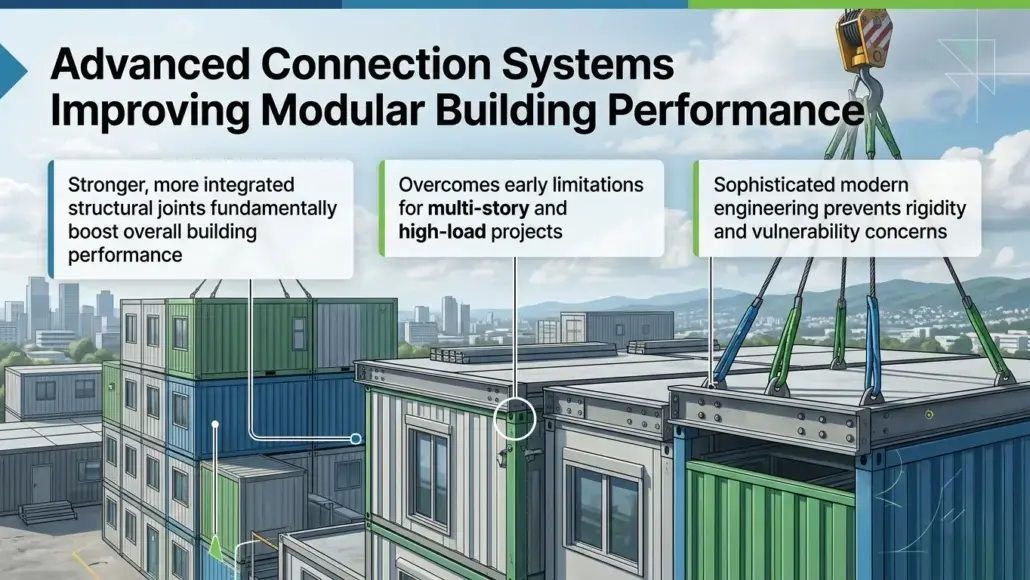


The structural performance of modular developments is fundamentally dependent on the integrity of the junctions between individual units. In the early days of offsite construction, the methods used to join modules were often seen as a limiting factor, particularly for multistory or high-load applications. There was a concern that the accumulation of joints could lead to a lack of overall rigidity or a vulnerability to environmental forces. However, the introduction of sophisticated engineering solutions is changing this perception. The implementation of advanced connections for stronger modular buildings is providing the industry with the mechanical precision and structural resilience required to compete with traditional site-cast concrete and structural steel systems in even the most demanding environments.
Strategic structural management now relies on the development of specialized inter-module joints that can handle complex force distributions. Unlike a monolithic building where the load paths are continuous, a modular building must transfer forces across thousands of discrete connections. These junctions must not only provide the necessary strength but also account for the tolerances and the variations inherent in factory manufacturing. Modern engineering platforms now allow for the creation of high-fidelity digital models that simulate the behavior of these connections under a wide range of conditions, from high-wind loads to extreme seismic events. This technical precision is essential for ensuring the long-term safety and stability of the modular built environment.
High-Strength Inter-Module Joints and Structural Resilience
The design of a modular connection system must balance the need for high-strength with the requirement for rapid and efficient installation. In a mid-rise or high-rise context, the inter-module joints at the lower levels are subject to immense vertical and horizontal forces. Advanced connections often utilize high-tension bolts, specialized locking mechanisms, or even structural adhesives to create a secure and rigid bond between the units. These systems are engineered to provide a level of structural resilience that exceeds national building codes, ensuring that the modular building can withstand the same stresses as a conventional structure. The shift toward a more engineered and data-driven approach to joint design is a hallmark of the modern construction sector.
Furthermore, the integration of these connections into the factory production line ensures that they are installed with extreme accuracy. In a controlled environment, robotic machinery can ensure that every bolt is torqued to the exact required specification and that every weld is of the highest professional quality. This level of consistency is difficult to achieve in the field, where weather and human error can impact the performance of the connections. By prioritizing the structural integrity of the joint during the manufacturing phase, developers can ensure that the final building is as strong and as durable as possible. The move toward more professional and standardized fabrication practices is what will define the leaders of the modular sector in the coming years.
Seismic Damping and Building Safety Innovation
For modular buildings located in high-seismic zones, the design of the connections becomes even more critical. Traditional rigid joints can be vulnerable to the immense energy released during an earthquake, leading to structural failure. Advanced connections for stronger modular buildings now incorporate seismic damping and energy-dissipating features that allow the structure to absorb and dissipate this energy safely. This might involve the use of flexible joints, friction dampers, or specialized lead-rubber bearings that are integrated into the inter-module junctions. These systems ensure that the building can move slightly during an event without compromising its overall structural integrity.
The advancement of these safety features is a vital component of the move toward more resilient urban infrastructure. By utilizing computational modeling to simulate the seismic response of the modular system, engineers can optimize the placement and the properties of these damping connections. This data-driven approach ensures that the resulting building provides the highest possible level of safety for its occupants. The ability to verify and record the performance of every connection provides a level of accountability that is essential for modern project delivery. The commitment to technical excellence in seismic engineering is a testament to the power of modular innovation in protecting human life and property in some of the world’s most vulnerable regions.
Engineering Standards and the Verification of Structural Integrity
The success of any modular project depends on the ability to demonstrate that the final structure meets all of the required engineering standards. In the context of advanced connections, this involves a rigorous process of testing and verification. Manufacturers often subject their joint systems to destructive testing in the laboratory to determine their ultimate strength and failure modes. The data from these tests is then used to refine the digital models and to provide the necessary justification for the use of the system in a specific project. This professional approach to engineering ensures that the modular industry can provide a level of certainty that is equal to or greater than traditional construction.
Furthermore, the use of sensors and monitoring technology in the finished building can provide real-time data on the health of the structural connections. This move toward “smart” buildings allows for the early detection of any issues, such as bolt loosening or corrosion, before they can impact the performance of the structure. This proactive approach to structural monitoring is a defining characteristic of the modern industrial sector, where the focus is on achieving the highest possible levels of building safety and longevity. The ability to manage complex structural requirements with the same speed and precision as a simple assembly task is a major goal for both researchers and developers. The ongoing commitment to technical innovation and operational excellence is what will define the success of these programs in the decades to come.
The Future Strategic Landscape of Modular Connections
As the construction industry continues to evolve toward a more autonomous and data-driven model, the role of intelligent connection systems will only grow in importance. We are already seeing the development of self-aligning and self-locking joints that can be installed by robotic systems on the physical construction site. This move toward more automated and integrated assembly represents the next frontier in construction productivity. The role of advanced connections in supporting this evolution is essential, as they provide the physical interface through which the building is assembled.
In the coming years, the integration of new materials, such as high-strength composites and shape-memory alloys, will further enhance the performance of modular junctions. These materials could allow for the creation of connections that are lighter, stronger, and more resistant to fire and corrosion than traditional steel systems. The ability to manage complex structural requirements with professional precision will remain a key challenge for engineers and manufacturers alike. The ongoing evolution of connection technology is a testament to the power of technical innovation in the service of construction productivity, ensuring that the next generation of modular buildings is both strong and reliable for every organization that needs it.
The transition toward a more connected and data-driven approach to structural engineering is a defining characteristic of the modern industrial sector. By prioritizing the use of advanced connections, developers can achieve levels of structural resilience and safety that were once considered unattainable in offsite construction. The benefits of this approach extend beyond the building itself, contributing to a more responsive and resilient construction industry that is better equipped to handle the challenges of a global market. The commitment to technical excellence and professional collaboration is what will define the success of these programs in the coming years.
As the industry moves forward, the focus will remain on the refinement of mechanical properties and the continued improvement of structural outcomes. The ability to handle the increasing complexity of new building designs and regulatory requirements will remain a key challenge for engineers and developers alike. The ongoing evolution of modular connections is a vital component of the effort to improve the productivity and the sustainability of the built environment, ensuring that the next generation of construction is both safe and efficient for every community around the world.