


























The commercial real estate sector is currently undergoing a significant shift in its approach to building materials and structural design. For decades, the industry was dominated by a choice between structural steel and reinforced concrete, materials that offered immense strength but also carried a significant carbon footprint. As the global commitment to sustainability grows, developers and architects are searching for ways to reduce the environmental impact of their projects without compromising on performance or cost. The introduction of mass timber has provided a partial solution, but its application in large-scale commercial buildings is often limited by structural constraints. The implementation of hybrid timber-steel systems for commercial buildings is providing the industry with a way to combine the benefits of both materials, creating a more sustainable and structurally efficient path forward.
Strategic project management now involves the use of these hybrid systems to optimize the physical and the environmental performance of the building. By utilizing a steel frame for the primary load-bearing structure and mass timber for the floors and the internal walls, developers can achieve a high level of structural efficiency. This capability ensures that the building remains light and flexible while still meeting the rigorous safety and stability requirements of modern commercial developments. The move toward a more integrated and material-sensitive approach to construction is a hallmark of the modern industrial sector, where the focus is on achieving the best possible balance between operational speed and environmental responsibility.
Mass Timber and Structural Steel Synergy in Modern Design
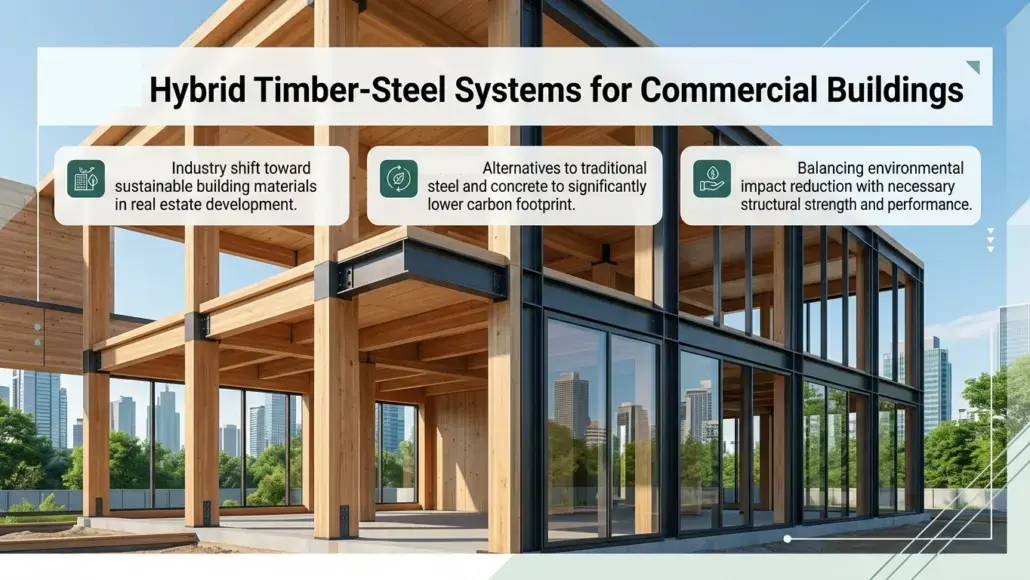
The primary benefit of utilizing a hybrid model is the synergy created by the combination of different material properties. Structural steel provides the necessary strength for long spans and high vertical loads, which is essential for the open-plan layouts required in modern office spaces. Mass timber, on the other hand, offers a high strength-to-weight ratio and a natural aesthetic that is increasingly valued by tenants and investors. Hybrid timber-steel systems allow for the creation of buildings that are lighter than conventional structures, which can lead to significant savings on foundation costs and a reduced risk of seismic damage. This technical precision is what allows for the successful delivery of high-performance commercial buildings in a fraction of the time required by conventional methods.
Furthermore, the integration of these materials into a unified structural system requires a sophisticated level of engineering and coordination. Modern design platforms now allow for the creation of digital models that simulate the interaction between the steel and the timber components under a wide range of conditions. This capability ensures that the connections between the different materials are executed with professional precision, providing a secure and durable bond. The shift toward a more engineered and data-driven approach to material selection is a defining characteristic of the modern construction sector, ensuring that every component is utilized to its full potential.
Improving Sustainability and Reducing the Carbon Footprint
The reduction of the carbon footprint is perhaps the most significant driver for the adoption of hybrid systems in the commercial market. Mass timber is a renewable resource that sequesters carbon, effectively turning the building into a carbon sink. By replacing a significant portion of the concrete and the steel with timber, developers can dramatically reduce the embodied energy of their projects. Hybrid timber-steel systems provide a way to achieve these sustainability goals while still maintaining the structural advantages of a steel frame. This focus on environmental responsibility is what will define the leaders of the real estate industry in the coming years, as institutional investors increasingly prioritize environmental, social, and governance (ESG) criteria.
Furthermore, the use of timber in commercial spaces has been shown to improve the health and the well-being of the occupants. Biophilic design, which incorporates natural elements into the built environment, is a vital component of a modern workspace. The presence of exposed timber provides a warm and inviting atmosphere that can enhance productivity and reduce stress. This commitment to the user experience is what earns the trust of premium tenants, providing a clear competitive advantage in the global market. The ability to provide a sustainable and a high-quality environment is a fundamental requirement for the success of any modern development project.
Structural Efficiency and the Economics of Hybrid Construction
The optimization of the structural system also has a direct impact on the economic viability of the project. Because timber is lighter than concrete, the total weight of the building is significantly reduced, which can lead to a more efficient use of materials and a faster construction cycle. Hybrid timber-steel systems are often designed for offsite fabrication, where the steel components and the timber panels are manufactured in a controlled environment and then assembled quickly on the physical site. This move toward more industrialised and modular construction ensures that the project can be delivered with professional precision and a reduced risk of delays.
Furthermore, the speed of assembly associated with hybrid systems can lead to a faster return on capital for the developer. By reducing the time required for the structural frame and the floor installation, the building can be enclosed and fitted out much sooner. This acceleration of delivery is essential for maintaining the sustainability of the commercial market, especially as the costs of land and labor continue to rise. The ability to provide a clear and data-driven justification for the use of hybrid systems is what earns the trust of the scientific and financial communities. The focus remains on achieving the best possible balance between operational throughput and the environmental impact of the building.
The Future Strategic Frontier of Commercial Real Estate
As the construction industry continues to evolve, the role of material innovation will only grow in importance. The successful implementation of hybrid timber-steel systems for commercial buildings requires a fundamental shift in the culture and the operations of design and construction organizations. This involves the integration of timber specialists and structural engineers into the heart of the project team from the earliest stages of the design. The focus is no longer just on the physical structure of the building, but on the ability to turn that biological information into actionable therapeutic designs.
Looking ahead, the coordination of global supply chains and the adoption of shared digital platforms will be essential for further improving the productivity of the sector. By breaking down the silos that have traditionally separated the timber and the steel industries, the sector can leverage a much larger pool of data to identify new opportunities and avoid redundant work. The commitment to transparency and professional collaboration is a key factor in the long-term success of the effort to advance hybrid construction. The ultimate goal is the creation of a global construction ecosystem that can deliver on the promise of sustainable and high-quality commercial spaces for every community. By prioritizing the use of data-driven insights and sustainable materials, developers can address the challenges of cost and climate change with a level of precision that was once considered unattainable. The future of medicine lies in the ability to turn complex structural and biological information into life-saving therapeutic interventions, providing a sustainable foundation for the continued advancement of human health around the world.