


























Unplanned downtime threatens productivity and profitability, going beyond inconveniences. Your company needs heavy-duty machinery with durable engines to facilitate seamless performance.
Among the most proven technologies for this purpose are water-cooled engines, designed to withstand the rigors of constant industrial use. Here is a guide to gauging their reliability and choosing the right partner.
How to Determine the Reliability of Water-Cooled Engines for Industrial Applications
As an experienced professional, you understand the correlation between time and profit. Reliable components ensure essential machinery is ready to perform, making water-cooled engines a cornerstone of operational success in industrial applications. They maintain stable operating temperatures, which, according to industrial engine manufacturer Yanmar Industrial Engines, is key to maintaining consistent engine performance and emissions.
However, gauging reliability can be challenging and costly. A thorough evaluation is necessary during the procurement process to ensure continuous production. Long-term durability requires looking beyond the basic specifications and scrutinizing key indicators of engineering quality. Here are seven factors used in gauging the reliability of water-cooled engines for industrial applications.
1. Manufacturer Reputation and History
Evaluating reliability starts with the manufacturer’s reputation. This indicator is built on decades of engineering and customer experiences, making it a nonnegotiable factor. Companies with long and respected histories have navigated design challenges, refined manufacturing processes and demonstrated product durability.
Longevity is essential for a company producing high-quality water-cooled engines. Manufacturers with five or more decades of experience have institutional knowledge that others try to replicate. If the organization specializes in these industrial engines, it will have a deep understanding of specific demands. For example, it should be aware of torque requirements and harsh environments.
2. Engine Block and Head Construction
The most reliable water-cooled engines for industrial applications rely on the block and cylinder head. From the cylinders to the pistons, these components are critical to sealing the combustion chamber. As the backbone of the engine, they endure intense forces due to the high volume of combustion events. Therefore, the manufacturer must use reliable materials to prevent total failures.
Cast iron is among the top choices for engine builders. Industry professionals prefer this material because it prolongs operational lifespans and offers strength. Resistance to the cyclical stresses of heating and cooling is essential to preventing warping and cracking over its service life. Aluminum is another viable option, considering it is almost three times less dense than iron and weighs less.
3. Cooling System Efficiency
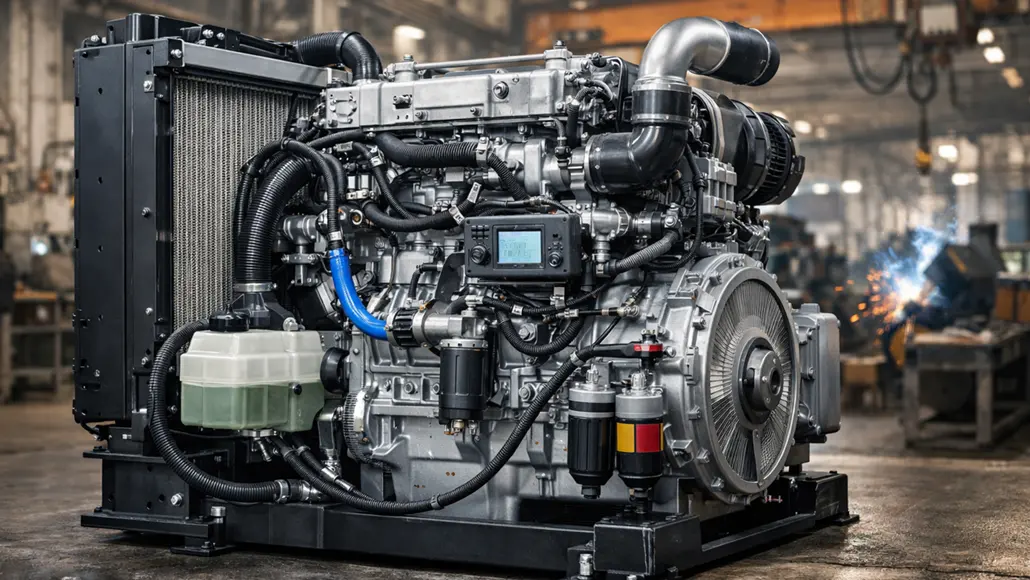
Cooling systems maintain stable operating temperatures for liquid-cooled engines by absorbing heat. Start by examining the radiator, which should efficiently dissipate heat from the coolant. Reliable components have a high fin density to maximize the surface area for heat to escape. Manufacturers should use aluminum because it is lighter than copper and typically more economical.
Beyond simply dissipating heat at peak operation, experts at Yanmar Industrial Engines also point out that an efficient liquid-cooled system provides the additional benefit of warming up quickly. For applications where speed is a factor right from a cold start, this is a major plus.
Efficient water engines also rely on a water pump to circulate throughout the block, head and radiator. If this component fails, rapid overheating could begin due to the lack of cooling. Gauging the reliability requires examining the bearing and seal assembly. This common failure point should be reinforced with a heavy-duty assembly to withstand rotational stress.
4. Gasket, Seal and Fastener Quality
Your team likely focuses on the engine block and crankshaft because of their size. However, tiny gaskets and seals could be points of failure in water-cooled engines. These components contain fluids and high-pressure gases and endure constant temperature cycles. A singular mishap could lead to engine-killing problems and costly replacements.
High-quality engines contain a multilayered steel (MLS) gasket to keep coolant and oil separate. Older composite gaskets can compress or blow out, whereas MLS gaskets contain embossed steel. They handle high combustion pressures from powerful industrial engines and resist heat warping. Reputable manufacturers equip their engines with MLS heads to prioritize long-term durability.
5. Emissions Certification Standards
Sustainability requirements have become paramount due to increasingly strict standards. Environmental credentials indicate advanced engineering, so modern manufacturers gain credibility with emissions certifications. Following the EPA’s Tier 4 rules for industrial and off-road engines means the engine complies with emission standards regardless of the horsepower rating. Other essential regulations include the EU’s Stage V, outlining rules for non-road mobile machinery.
Regardless of your location, the engine must have a sound combustion process. Reliable water-cooled engines use a high-pressure common rail fuel system to promote more complete combustion. This mechanism is preferable because it produces a finer spray and enhances combustion. With electronic controls, you can more precisely control fuel injection timing and duration.
6. Integrated Engine Diagnostics
The engine control unit significantly affects the reliability of water-cooled engines for industrial applications. This system provides real-time health assessments that prevent failures. While older engines are less equipped with technologies, sophisticated diagnostic systems go the extra mile by providing a comprehensive picture of circuit health.
Reputable manufacturers have multiple coolant sensors to evaluate system health. Their diagnostic equipment should evaluate coolant temperature, level and pressure to determine when the engine needs service. Predictive fault analysis is another pillar of modern software. This shift toward advanced, software-centric control demonstrates trends across sectors, including industrial machinery.
7. Replacement Part Availability
Some measure engine reliability based on how long it runs before its first failure. However, it is also essential to consider its performance over the operational life cycle. Industrial professionals must be able to mitigate downtime by sourcing high-quality replacement parts. The ease and speed significantly affect the total cost of ownership and the equipment’s reliability.
While finding replacements is necessary, these parts must be genuine OEM parts. These components have the same specifications and tolerances as the engine. They also include a background of rigorous testing for durability and resilience. If a non-genuine part is used, it could compromise the system and void the manufacturer’s warranty.
Best Practices for Water-Cooled Engines
True operational reliability in water-cooled engines also extends to maintenance best practices. For example, Yanmar Industrial Engines advises a systematic approach for equipment that has been idle, such as after winter storage. It recommends that, before starting, operators should not only check fluid levels but also specifically look for moisture accumulation in the oil and replace fuel filters. Skipping those steps can lead to preventable damage and a shorter engine life.
Methodology to Evaluate Water-Cooled Engines for Industrial Applications
The demanding manufacturing environment makes evaluating manufacturers paramount. Relying on brand reputation alone can mask the truth about long-term costs and performance risks. Here are five criteria used to evaluate an engine’s true value.
| Power density | The brand’s engines should offer consistent power under varying loads, whether for pumps or generators. |
|---|---|
| Fuel consumption | Efficient engines under typical load scenarios can reduce the total cost of ownership. |
| B-life rating | High B-life ratings indicate a robust design with long-term reliability. |
| Mean time between maintenance and serviceability | Good serviceability ensures quick and correct maintenance, thus minimizing out-of-service time. |
| Component and build quality | The engines must have high-quality components to withstand the stress of continuous industrial use. |
Frequently Asked Questions
Q: Are modern engines water-cooled?
A: Modern industrial engines are water-cooled, especially when high horsepower or heavy-duty applications are required.
Q: Do liquid-cooled engines last longer?
A: Liquid-cooled engines last longer because they absorb heat from engine components and manage thermal conditions more effectively.
Q: What are the advantages of a water cooler?
A: Water-cooled engines offer consistent thermal management, enhanced fuel efficiency and longer engine lives.
Using Water-Cooled Engines to Enhance Industrial Operations
The demanding manufacturing and industrial landscapes require a comprehensive ecosystem with high quality. Water-cooled engines stand out because of their long-term performance and durability.
Reliable products stem from a manufacturer’s deep-seated commitment to engineering excellence. High-quality materials, efficient cooling design and meticulous compliance are critical to modern companies.