





























The construction industry has long been defined by its physical intensity and its reliance on the manual dexterity of its workforce. However, we are currently witnessing a transformation as robotics in construction begins to reshape the fundamental nature of building sites. Having spent more than fifteen years navigating the complexities of large-scale projects, I have seen the transition from skeptical curiosity about “automated machines” to a growing realization that robotics is essential for the industry’s survival. Faced with a chronic shortage of skilled labor, rising costs, and a demand for extreme precision, the integration of robotic systems is no longer a futuristic dream; it is an immediate operational necessity. This shift is not about replacing human craft but about augmenting it, allowing us to build faster, safer, and with a level of quality that was previously unattainable.
The impact of robotics on site efficiency is most visible in the execution of repetitive and high-precision tasks. Traditionally, activities like bricklaying, rebar tying, and drywall finishing were time-consuming and prone to human error or physical strain. Today, specialized robotic systems are performing these tasks with tireless consistency. These machines do not get tired, they do not suffer from repetitive strain injuries, and they maintain a level of accuracy measured in millimeters throughout a twenty-four-hour cycle. This consistency allows project managers to schedule work with unprecedented certainty, reducing the delays that often ripple through a project when manual tasks fall behind.
Specialized Robotics for High-Intensity Tasks
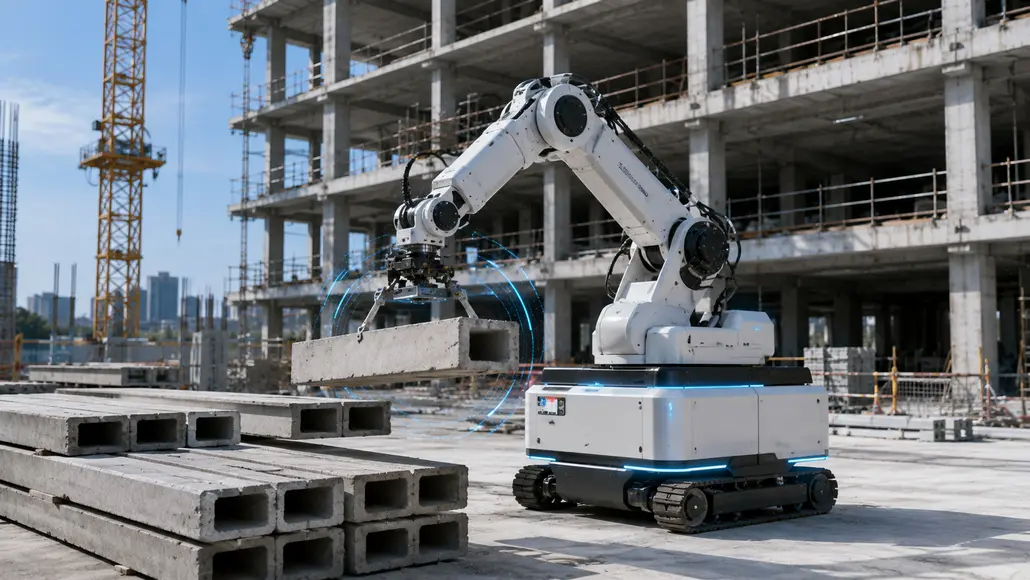
One of the most successful applications of robotics in construction is the development of semi-autonomous masonry systems. These robots can lay bricks at a rate several times faster than a human mason while ensuring that every mortar joint is perfect and every course is perfectly level. The role of the human mason then shifts from the grueling labor of lifting and placing to the high-value tasks of quality control, site management, and handling complex architectural details. This synergy between human expertise and robotic speed is a hallmark of the modern high-efficiency site.
Autonomous Earthmoving and Grading
The heavy-duty side of construction is also being transformed by robotics. We are now seeing the deployment of autonomous excavators and bulldozers that can perform complex grading and trenching based on digital 3D models. These machines use high-precision GPS and LiDAR to navigate the site and execute their tasks with minimal human intervention. This not only speeds up the earthmoving phase of a project but also reduces the risk of over-excavation, which can lead to significant material waste and structural issues. By automating the “rough” work, we are ensuring that the foundation of our buildings is laid with the utmost precision.
Robotic Fabrication of Structural Components
Beyond the job site, robotics is playing a crucial role in the prefabrication of structural elements. Robotic arms in factories are being used to weld steel, cut timber, and assemble complex components with a degree of complexity that would be prohibitively expensive to do by hand. These prefabricated parts are then shipped to the site and assembled like a high-precision puzzle. This “industrialized” approach to building, powered by robotics in construction, is significantly reducing the time it takes to go from foundation to roof, allowing developers to see a return on their investment much sooner.
Enhancing Site Safety and Risk Management
Construction has historically been one of the most dangerous occupations, but robotics is helping to change that by taking over the “Dull, Dirty, and Dangerous” tasks. For instance, robotic demolition units allow operators to dismantle structures from a safe distance, removing the risk of being struck by falling debris. Similarly, drones and walking robots (such as the four-legged “dogs” now common on advanced sites) can perform inspections in hazardous or hard-to-reach areas, such as high-rise elevator shafts or unstable tunnels. These robots can carry sensors that detect gas leaks, structural weaknesses, or electrical faults, identifying risks before they can cause an accident.
Precision Monitoring and Site Mapping
The ability of robots to continuously map and monitor a site is a key driver of efficiency. Autonomous rovers can patrol a site at the end of each shift, using 3D laser scanners to create a “point cloud” that represents the current state of the build. This data is then automatically compared against the Building Information Modeling (BIM) files to identify any deviations. This “real-time” quality control prevents small errors from compounding into major problems, saving countless hours and millions of dollars in potential rework. The level of transparency provided by this robotic monitoring is transforming how project managers and stakeholders track progress.
Wearable Robotics and Exoskeletons
Not all robotics in construction are independent machines; some are designed to be worn by the workers themselves. Exoskeletons are beginning to appear on sites, providing mechanical support to the legs, back, and shoulders of the workforce. These devices reduce the physical effort required to lift heavy loads or hold tools for extended periods, significantly decreasing the risk of musculoskeletal disorders. By protecting the long-term health of our most experienced workers, wearable robotics are helping to retain the vital human knowledge and craft that is the heart of the construction industry.
Overcoming the Barriers to Adoption
Despite the clear benefits, the widespread adoption of robotics in construction faces several challenges. The initial capital investment is significant, and there is a steep learning curve associated with integrating these systems into traditional workflows. Furthermore, the industry must develop new standards and protocols for how humans and robots interact safely on a crowded and dynamic site. However, the costs of these technologies are falling, and the software is becoming more intuitive. As more projects demonstrate the massive efficiency gains and safety improvements that robotics offer, the momentum will continue to build.
The Role of Software and AI Integration
The true power of construction robotics is unlocked when it is paired with Artificial Intelligence (AI). AI allows a robot to adapt to the unpredictable environment of a building site recognizing an unexpected obstacle or adjusting its movements based on changing weather conditions. This “intelligence” is what moves a machine from being a simple automaton to a truly collaborative partner. As we continue to refine the algorithms that drive these machines, we will see robots that can perform increasingly complex and nuanced tasks, further blurring the line between manual labor and high-tech manufacturing.
Future Horizons: Swarm Robotics and 3D Printing
Looking further ahead, the potential of robotics in construction is even more transformative. We are experimenting with “swarm robotics,” where a group of small robots works together to complete a large-scale task, much like a colony of ants. We are also seeing the rise of large-scale 3D printing, where giant robotic arms extrude concrete to “print” entire houses in a matter of hours. These technologies have the potential to democratize high-quality housing and infrastructure, making it possible to build in remote or disaster-stricken areas with minimal human labor.
The integration of robotics in construction represents the most significant change to our industry since the introduction of steam power. By embracing these tools, we are not just improving efficiency; we are fundamentally elevating the standard of what we can build. The future site will be a symphony of human expertise and robotic precision, working together to create a built environment that is safer, more sustainable, and more beautiful. The journey toward this robotic future is already underway, and for those of us who have lived through the era of manual struggle, the promise of this new digital age is nothing short of revolutionary.