

























The gap between design intent and market-ready communication is one of the more persistent challenges in real estate development. A project may have strong fundamentals well-located, competitively priced, well-designed and still struggle to generate pre-sales or investor confidence simply because prospective buyers and stakeholders cannot adequately picture what they are committing to.
Construction drawings, phasing plans, and site documentation serve critical functions in the delivery process. They are not, however, effective communication tools for non-technical audiences. The floor plan that accurately specifies room dimensions and structural elements does not communicate, to an investor or a prospective tenant, how the lobby will feel or how the amenity floor relates to the units above it. As a result, many development teams enter commercial negotiations or pre-sales campaigns with a significant visual gap between what the project is and what they can credibly show.
Digital property visualization has become a standard response to this gap across residential, commercial, and mixed-use development.
The Communication Problem With Unbuilt Assets
A completed asset can be photographed, toured, and evaluated directly. An asset under construction or in the planning phase cannot. This creates a structural disadvantage for pre-construction marketing: the team must persuade buyers, tenants, and investors to commit based on technical documentation and verbal description rather than direct experience of the finished product.
The challenge is compounded by the diversity of stakeholders involved in most development decisions. A residential buyer evaluates a project on emotional as much as financial grounds they want to know what living there will feel like. An institutional investor is evaluating risk, exit potential, and asset quality. A prospective commercial tenant is assessing whether the space will function for their business and how it will present to their own clients and staff. Each of these audiences requires a different framing of the same project, and none of them reads construction drawings fluently.
Research across the development sector consistently shows that the quality of marketing materials in the pre-construction phase directly affects both the volume of qualified enquiries and the speed of commercial decision-making. When potential buyers or investors can clearly understand what they are evaluating, the due-diligence conversation becomes more productive and moves toward conclusion more efficiently.
Digital Models as a Stakeholder Communication Tool
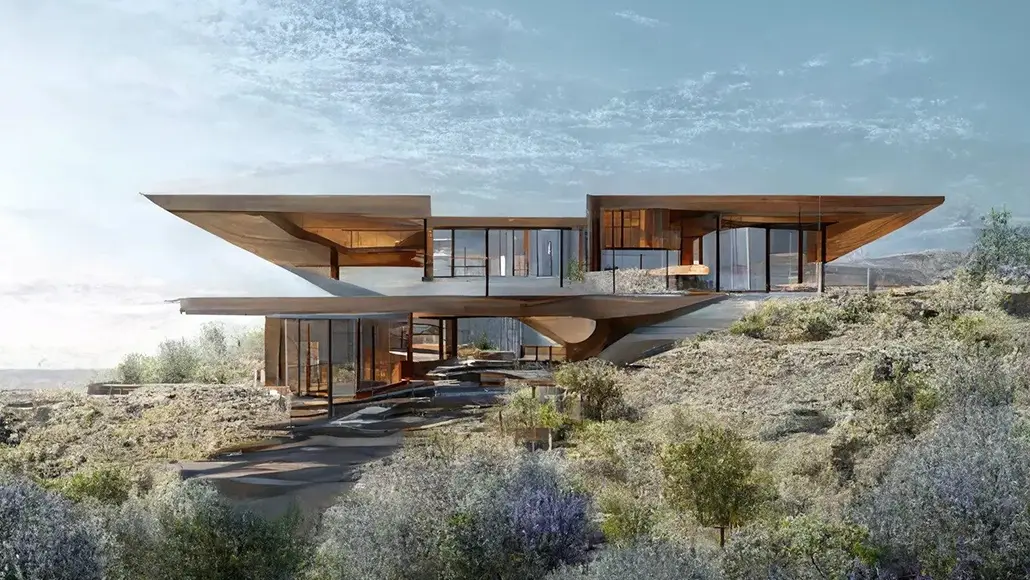
At the early presentation stage, a real estate 3D model can help investors and buyers understand layout, massing, and overall project intent before the asset exists physically. Unlike static plan drawings, a navigable or interactive model allows stakeholders to understand the spatial relationships between elements how the lobby connects to the main vertical circulation, how units on upper floors relate to amenity spaces, how the building’s external form reads in its urban context.
This is particularly relevant for mixed-use developments and commercial projects where the relationship between different use types, and the quality of shared and public spaces, is central to the project’s value proposition. A retail component adjacent to residential amenities, or a commercial floor plate that incorporates collaborative zones and private offices, is significantly easier to evaluate when stakeholders can navigate the proposed layout rather than reconstruct it from elevations and schedules.
The practical impact on the development process is measurable. Development teams that are able to present a credible, spatially coherent visualization of their project at the stakeholder alignment stage before construction commences report fewer revision cycles, more productive investor discussions, and better alignment between commercial commitments and final delivery.
Integrating Visualization Into the Developer Marketing Stack
Digital visualization assets generate the most commercial value when they are integrated systematically into the project’s marketing and sales infrastructure rather than treated as one-off presentation materials.
Project Websites and Digital Landing Pages
A development website that relies on text description, plan drawings, and construction site photography is limited in its ability to communicate project quality or generate qualified enquiry. Digital visuals rendered exterior views, interior walkthroughs, and amenity space presentations are the primary mechanism through which prospective buyers and tenants form initial impressions of unbuilt projects online.
For a commercial development marketed to corporate tenants, the website needs to communicate the building’s positioning, the quality of the working environment, and the relevance of the location all before a site visit is possible. For a residential development in pre-sales, the website is frequently the primary decision-support tool for buyers who may be purchasing remotely or in a competitive market that requires rapid commitment.
Investor Presentations and Leasing Decks
Institutional investors conducting due diligence on a development opportunity require a different level of visual specificity than the general market. An investor presentation needs to communicate not only the finished aesthetic but also the spatial logic of the asset how the floor plates are configured, how amenities are distributed, how the building’s form responds to the site context. This level of detail supports the financial modelling and risk assessment that drives investment decisions.
For launch campaigns and pre-completion marketing, real estate rendering services are often used to build clearer visual materials across websites, decks, and sales collateral. A leasing deck for a commercial development, supported by high-quality renders of the lobby, typical floor plates, and building exterior, communicates the project’s market positioning more credibly than text specification alone. For a mixed-use project seeking anchor tenants in advance of completion, the ability to show prospective occupiers exactly what their space will look like including fit-out options and adjacency to public amenities can accelerate lease-up significantly.
Pre-Sales and Pre-Leasing Campaigns
Pre-sales performance is one of the most important metrics in residential development finance, affecting drawdown conditions, lender confidence, and project viability. Building a pre-sales pipeline requires communicating project quality to buyers who are making decisions months or years before handover.
The development teams that achieve strongest pre-sales results in competitive markets tend to invest proportionately in visual communication during the sales campaign. Buyers presented with photorealistic interior views, rendered communal spaces, and navigable digital models of the project are better positioned to make purchasing decisions than those working from plan drawings and developer descriptions alone.
Pre-leasing in commercial and mixed-use development follows similar logic. A prospective tenant committing to a space that has not yet been built is extending significant trust in the developer’s delivery capability. High-quality visualization combined with accurate specification and credible delivery timelines is a critical component of the package that supports that trust.
Aligning Visualization Assets With Project Value Drivers
Not all visualization assets serve all audiences equally, and development teams achieve better commercial outcomes when they match the visual content to the specific factors that drive decision-making for each stakeholder group.
For residential buyers, the most commercially effective visuals tend to be interior views of living spaces at human scale demonstrating natural light, spatial quality, and finish standard combined with communal and amenity spaces that support the project’s lifestyle positioning. Exterior views play a secondary role in residential pre-sales, though they remain important for communicating neighbourhood character and building quality.
For institutional and private equity investors, massing models and site context visualizations that demonstrate the asset’s physical relationship to surrounding infrastructure, transport links, and comparable developments are often more relevant than detailed interior views. The investor audience is evaluating asset class and market positioning as much as finish quality.
For commercial tenants, the most decision-relevant visuals show the functional relationship between private workspace, collaborative zones, and building amenities along with the building’s street presence and approach, which affects how the tenant’s own clients will experience arrival.
The Position of Visualization Within the Digital Construction Workflow
As the construction sector continues its trajectory toward digitised project delivery with BIM adoption expanding, digital twin frameworks maturing, and integrated data platforms becoming standard on large-scale projects the connection between construction-phase digital assets and market-facing communication is becoming more direct.
In a fully integrated workflow, the three-dimensional models developed for design coordination and construction planning can serve as the source data for the photorealistic visualizations used in stakeholder communication and sales. This convergence reduces duplication, improves the accuracy of market-facing visuals relative to the built asset, and shortens the lead time required to produce new visualization content as design decisions are refined.
For development teams operating in markets where pre-construction sales performance is critical to project viability, the ability to produce credible, detailed, and accurate visual communication of the proposed asset rapidly and at each stage of the design process is becoming a meaningful competitive differentiator.
Closing the Gap Between Technical Design and Market Communication
The most persistent inefficiency in pre-construction property marketing is the distance between the information that exists within the development team accurate, detailed, and comprehensive and what can be clearly communicated to the buyers, investors, and tenants whose decisions determine project viability.
Technical documentation serves its function in the delivery process. It is not designed to persuade non-specialist audiences, communicate spatial quality, or support commercial negotiations. Digital property visualization fills the space between what the development team knows and what the market needs to understand.
For developers managing complex, multi-stakeholder projects in competitive markets, investing in the systematic integration of visualization into the project communication strategy across investor presentations, pre-sales campaigns, leasing collateral, and digital marketing channels is not a peripheral concern. It is a core component of project delivery and commercial performance.