


























The global push toward net-zero emissions has placed the construction industry under intense scrutiny. As one of the largest contributors to global carbon emissions, the sector is being forced to fundamentally rethink its relationship with the environment. Central to this transition is the implementation of robust carbon accounting in construction projects. This process involves the systematic measurement, reporting, and management of greenhouse gas emissions throughout the entire lifecycle of a building from the extraction of raw materials to the eventual demolition and disposal of the structure. This is no longer just a “green” initiative; it is a core business requirement in an era of strict environmental regulations and socially conscious investment.
Understanding the Two Pillars: Embodied and Operational Carbon
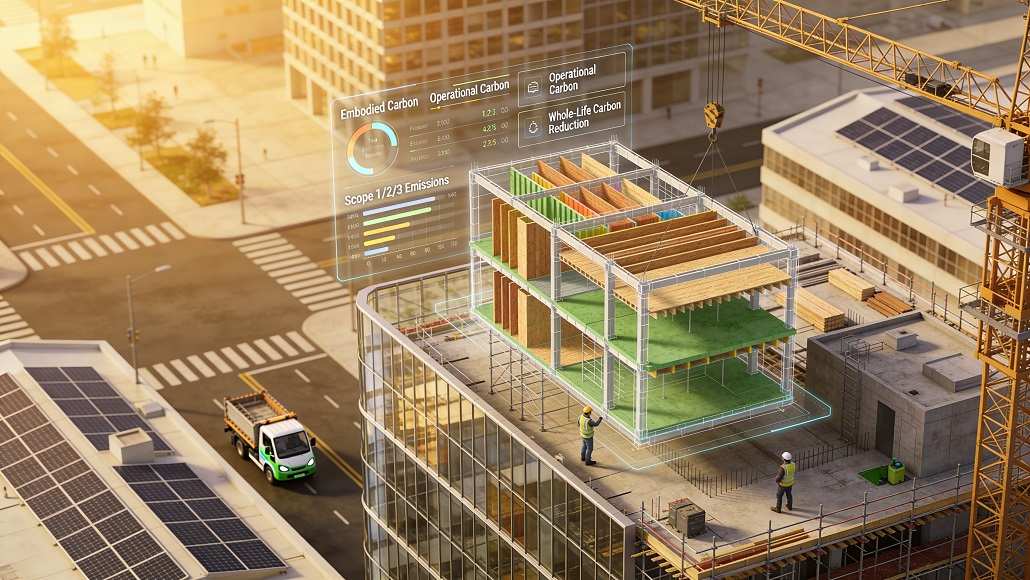
To effectively implement carbon accounting in construction projects, it is crucial to distinguish between two primary types of emissions. Operational carbon refers to the emissions generated by a building’s day-to-day functions, such as heating, cooling, lighting, and power. For decades, the industry has focused on reducing this figure through energy-efficient appliances and better insulation. However, embodied carbon the emissions associated with the manufacturing, transportation, and assembly of building materials like steel, concrete, and glass often represents more than half of a new building’s total lifecycle emissions. As our power grids become cleaner, the “front-loaded” impact of embodied carbon becomes the most significant hurdle in achieving true sustainability.
The Lifecycle Assessment (LCA) Framework
A comprehensive approach to carbon accounting in construction projects relies on Life Cycle Assessment (LCA). This standardized methodology allows project teams to quantify the environmental impact of their choices at every stage. An LCA typically follows a “cradle-to-grave” or “cradle-to-cradle” model, covering material extraction, manufacturing, transport, construction, operation, maintenance, and end-of-life. By conducting an LCA early in the design phase, architects and engineers can compare different material options and structural designs to identify the most carbon-efficient path forward. This early-stage intervention is vital, as the ability to influence a project’s carbon footprint is greatest before the first shovel hits the ground.
The Importance of Environmental Product Declarations (EPDs)
One of the key challenges in carbon accounting in construction projects is the availability of accurate data for specific materials. Environmental Product Declarations (EPDs) are becoming the “nutrition labels” of the construction world, providing verified information about the environmental impact of a product. By requiring suppliers to provide EPDs, developers can make more informed procurement decisions. This market-driven demand for transparency is encouraging manufacturers to innovate and produce lower-carbon versions of traditional building materials. The industry is moving toward a future where every bag of cement and every steel beam comes with a digital “carbon passport” that feeds directly into the project’s accounting software.
Navigating the Complexity of Scope 1, 2, and 3 Emissions
In the context of carbon accounting in construction projects, it is essential to understand the different “scopes” of emissions as defined by the Greenhouse Gas Protocol. Scope 1 emissions are direct emissions from sources owned or controlled by the construction company, such as on-site fuel combustion by heavy machinery. Scope 2 emissions are indirect emissions from the generation of purchased electricity or heating. Scope 3 emissions are all other indirect emissions that occur in the company’s value chain, including the embodied carbon of purchased materials and the transportation of workers. Managing Scope 3 is often the most difficult but also the most impactful part of a construction carbon strategy, requiring a high degree of supply chain collaboration and data transparency.
Strategic Material Selection and Low-Carbon Innovation
Once the measurement framework is in place, the focus of carbon accounting in construction projects shifts to mitigation. This often involves the selection of alternative materials with lower embodied carbon. For instance, the use of mass timber as a structural element can sequester carbon rather than emitting it, unlike traditional steel or concrete. Furthermore, innovations in “green” concrete which uses recycled aggregates or carbon-capture technology during the curing process are providing new ways to reduce the footprint of the world’s most widely used building material without sacrificing structural integrity. We are seeing a renaissance in material science, driven by the mathematical necessity of the carbon budget.
On-Site Logistics and Operational Efficiency
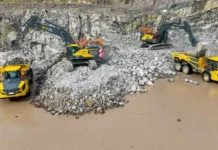
Carbon accounting in construction projects also extends to the actual building site. On-site logistics, such as the idling of heavy machinery and the transport of waste, can contribute significantly to a project’s Scope 1 emissions. By optimizing site layouts, implementing just-in-time material delivery, and transitioning to electric or hydrogen-powered construction equipment, firms can make immediate reductions in their operational footprint. This not only improves environmental performance but also often leads to cost savings through reduced fuel consumption and improved productivity. The “silent” electric construction site is becoming a symbol of the modern, responsible contractor.
Integrating Carbon with BIM and Digital Tools
The digital transformation of the construction industry is a powerful ally for carbon accounting in construction projects. Modern Building Information Modeling (BIM) software can now integrate carbon data directly into the 3D model. This allows design teams to see the carbon implications of their decisions in real-time. If a designer chooses to increase the thickness of a concrete slab, the software can instantly recalculate the total embodied carbon for that component. This integration makes sustainability a core part of the design process rather than an after-the-fact calculation. It enables “carbon-led design,” where the environmental impact is weighted as heavily as cost or aesthetics.
Regulatory Compliance and Green Financing
The move toward mandatory carbon accounting in construction projects is being driven by both regulation and finance. Governments around the world are introducing stricter building codes and carbon disclosure requirements. Simultaneously, investors and lenders are increasingly using Environmental, Social, and Governance (ESG) criteria to evaluate project risk and performance. Projects that can demonstrate a low carbon footprint are more likely to secure “green” financing at more favorable rates. This financial incentive is a powerful motivator for developers to prioritize carbon accounting as a core business strategy, as the cost of “carbon blindness” becomes a significant financial risk.
Carbon Offsetting vs. In-Sector Reductions
A critical debate within carbon accounting in construction projects is the role of offsetting. While carbon offsets can help a project reach “net-zero” on paper, the industry’s priority is shifting toward genuine, in-sector reductions. Offsetting is increasingly seen as a temporary measure rather than a long-term solution. The focus is now on “inseting” investing in carbon-reduction projects within the firm’s own supply chain. This might mean funding a concrete supplier’s transition to renewable energy or investing in a local reforestation project that also provides timber for future builds. This approach ensures that the environmental benefits are tangible and directly linked to the construction activity.
The Role of AI in Real-Time Emissions Monitoring
The next frontier for carbon accounting in construction projects is the use of AI and IoT for real-time monitoring. Instead of relying on monthly fuel receipts or estimated transport distances, AI systems can track every liter of fuel burned and every ton of material moved in real-time. This level of granularity allows for dynamic carbon management, where the site manager can receive an alert if the project’s daily emissions are exceeding the target. This real-time feedback loop is essential for staying within the strict carbon budgets that are increasingly being mandated by both city planners and corporate boards.
The Role of Circular Economy and Waste Management
A truly effective strategy for carbon accounting in construction projects must also address the end-of-life phase. The traditional “take-make-waste” model of construction is being replaced by a circular economy approach. This involves designing buildings for deconstruction rather than demolition, allowing materials to be recovered and reused in future projects. By accounting for the potential “avoided emissions” that come from material reuse, developers can gain a more accurate picture of their project’s long-term environmental value. A building becomes a “material bank,” holding valuable assets that will reduce the carbon footprint of the next generation of structures.
Stakeholder Engagement and Collaborative Responsibility
Finally, carbon accounting in construction projects is a team sport. It requires the active participation of every member of the project ecosystem. Developers must set clear carbon targets, architects must design for efficiency, contractors must manage site emissions, and suppliers must provide transparent data. This collaborative approach ensures that carbon goals are not lost in the complex web of subcontracting and procurement. By fostering a culture of shared responsibility, the industry can move more quickly toward its goal of a sustainable, net-zero built environment. The “Carbon Champion” is becoming as essential a role on a project team as the Project Manager or the Lead Architect.