
























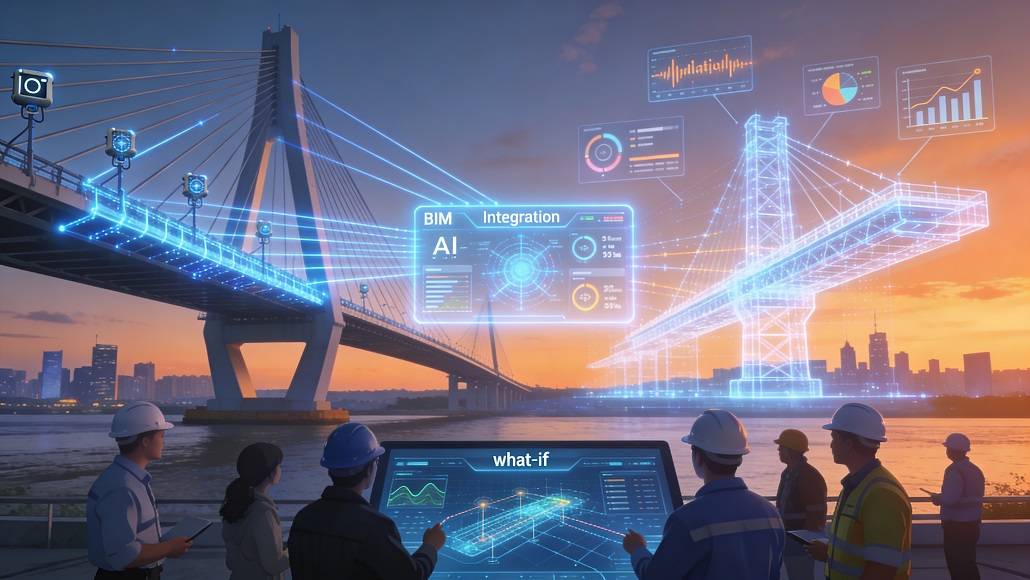

The infrastructure sector is currently undergoing a radical digital transformation, primarily driven by the implementation of virtual replicas that mirror physical assets in real-time. By utilizing digital twins in infrastructure lifecycle management, engineers and facility managers are gaining a level of visibility into their assets that was previously considered science fiction. This dynamic relationship between the physical and the digital does not just represent a static model but a living, breathing dataset that evolves as the physical structure ages and adapts to its environment. This bi-directional flow of information ensures that the digital world is not just a reflection but a predictor of the physical world’s future state, allowing for a level of control and optimization that was once impossible.
The Foundation of Real-Time Data and Connectivity
At its core, a digital twin is more than just a 3D model; it is an integrated ecosystem of sensors, data analytics, and historical information. When applying digital twins in infrastructure lifecycle management, the physical asset is embedded with IoT sensors that transmit data on everything from structural vibration and temperature to occupancy levels and energy consumption. This continuous stream of information is then mapped onto the digital model, allowing for a precise understanding of the asset’s current state. This connectivity ensures that stakeholders are not relying on outdated blueprints but on a high-fidelity representation of the actual conditions. This “live” connection is what separates a true digital twin from a standard Building Information Model (BIM), providing a temporal dimension that tracks changes over seconds, days, and decades.
Enhancing the Design and Construction Phase
The utility of this technology begins long before the first shovel hits the ground. During the design phase, digital twins in infrastructure lifecycle management allow for the simulation of construction sequences, helping to identify potential logistical bottlenecks or safety hazards. This proactive approach minimizes rework and ensures that the final build aligns perfectly with the intended specifications. As construction progresses, the digital twin is updated with “as-built” data, providing a seamless transition from the builder to the owner, which is often a point of information loss in traditional handovers. The ability to simulate “what-if” scenarios during construction allows project managers to test the impact of weather delays or material shortages on the virtual model before they affect the physical site.
Operational Excellence and Asset Monitoring
Once a project enters its operational phase, the true value of the digital twin becomes apparent. Facility managers can use digital twins in infrastructure lifecycle management to monitor the performance of critical systems such as HVAC, electrical grids, and structural supports. By analyzing the data coming from the physical asset, the digital twin can predict when a component is likely to fail, allowing for “condition-based maintenance” rather than the traditional “fix-it-when-it-breaks” approach. This shift dramatically reduces downtime and extends the overall lifespan of the infrastructure. For example, a digital twin of a pump station can analyze vibration patterns to detect a failing bearing weeks before a human operator would notice a problem, preventing a catastrophic and expensive system failure.
Predictive Maintenance and Structural Health
Structural integrity is a paramount concern for bridges, dams, and high-rise buildings. The use of digital twins in infrastructure lifecycle management enables continuous structural health monitoring. If a sensor detects a minute crack or an unusual shift in a support beam, the digital twin can simulate the potential consequences of this anomaly under various load conditions. This allows engineers to intervene early, preventing catastrophic failures and ensuring public safety. The ability to “see” inside the material through data is a game-changer for long-term infrastructure resilience. In seismic zones, a digital twin can instantly report the structural status of a bridge after an earthquake, informing emergency responders whether it is safe for heavy traffic or requires immediate closure for repair.
Integration with Building Information Modeling (BIM)
While BIM provides the static geometric and data-rich framework of a building, the digital twin adds the dimension of time and real-time behavior. By integrating digital twins in infrastructure lifecycle management with existing BIM workflows, the industry can create a “golden thread” of information that spans the entire project timeline. This integration ensures that the wealth of data generated during the design and construction phases continues to provide value throughout the decades that the asset remains in service, creating a circular data economy within the built environment. This synergy allows for the automatic updating of architectural records based on real-world wear and tear, ensuring that the “as-built” and “as-operated” records never diverge.
Sustainability and Environmental Impact
The global push toward net-zero emissions has placed infrastructure under intense scrutiny. Digital twins in infrastructure lifecycle management offer a powerful tool for optimizing energy efficiency. By simulating different occupancy patterns and weather conditions, the digital twin can suggest the most efficient ways to heat, cool, and light a building. This data-driven optimization can lead to significant reductions in carbon emissions, making it an essential component of any modern sustainability strategy. The ability to model the “what-if” scenarios for energy use allows for more ambitious environmental goals, such as achieving carbon neutrality in complex, multi-use urban environments.
Integration with Legacy Infrastructure
A common challenge in the industry is managing assets that were built decades before digital tools existed. Modern applications of digital twins in infrastructure lifecycle management include the use of reality capture technologies, such as LiDAR and photogrammetry, to create digital replicas of existing structures. By “retro-fitting” these legacy assets with a digital twin and a suite of sensors, owners can bring older infrastructure into the modern era of data-driven management. This is particularly vital for aging bridges and rail networks, where understanding the remaining structural life is essential for prioritizing limited public maintenance budgets.
The Role of AI and Machine Learning in Twins
As the volume of data generated by these digital replicas grows, the role of artificial intelligence becomes increasingly critical. AI algorithms can sift through petabytes of sensor data to find patterns that a human observer might miss. In the context of digital twins in infrastructure lifecycle management, machine learning can be used to refine predictive models, making them more accurate over time as more data is collected. This self-improving nature of the digital twin means that the longer an asset is monitored, the better the insights become, leading to ever-increasing levels of efficiency. The AI doesn’t just report data; it learns the “personality” of the building how it reacts to heat, how it vibrates under load, and how its systems age over time.
Standardization and Data Ethics in Infrastructure
As digital twins become the standard, the industry is moving toward global data standards like the Digital Twin Definition Language (DTDL). This standardization is crucial for ensuring that different twins say, a twin of a power grid and a twin of a hospital can share data and interact with one another. Furthermore, the use of digital twins in infrastructure lifecycle management brings up important questions regarding data security and ethics. Protecting the “digital blueprint” of critical infrastructure from cyberattacks is a top priority. Establishing robust governance frameworks for who owns, accesses, and uses this data is essential for maintaining public trust in these smart infrastructure systems.
The Economic Impact of Reduced Life-Cycle Costs
From a financial perspective, the ROI of these systems is found in the reduction of total life-cycle costs. While the initial setup of digital twins in infrastructure lifecycle management requires an investment in software and sensors, the long-term savings are immense. By preventing major repairs through predictive maintenance and reducing energy bills through real-time optimization, owners can see a significant reduction in operational expenditure (OPEX). In some cases, the data generated by the twin can even be monetized or used to secure better insurance rates, as the owner can prove the high quality of their asset’s maintenance and structural health.
Scaling to the Smart City Level
The future of this technology lies in the interconnectivity of individual digital twins. Imagine a city where every bridge, road, and building has its own digital counterpart, all connected into a centralized urban twin. This macro-level application of digital twins in infrastructure lifecycle management would allow city planners to optimize traffic flow, manage emergency responses, and plan for future growth with unprecedented accuracy. The city becomes a programmable environment, where data-driven decisions replace guesswork, leading to more livable and resilient urban spaces for everyone. We are moving toward a future of “System-of-Systems” twins, where the entire urban fabric is optimized as a single, cohesive unit.