
























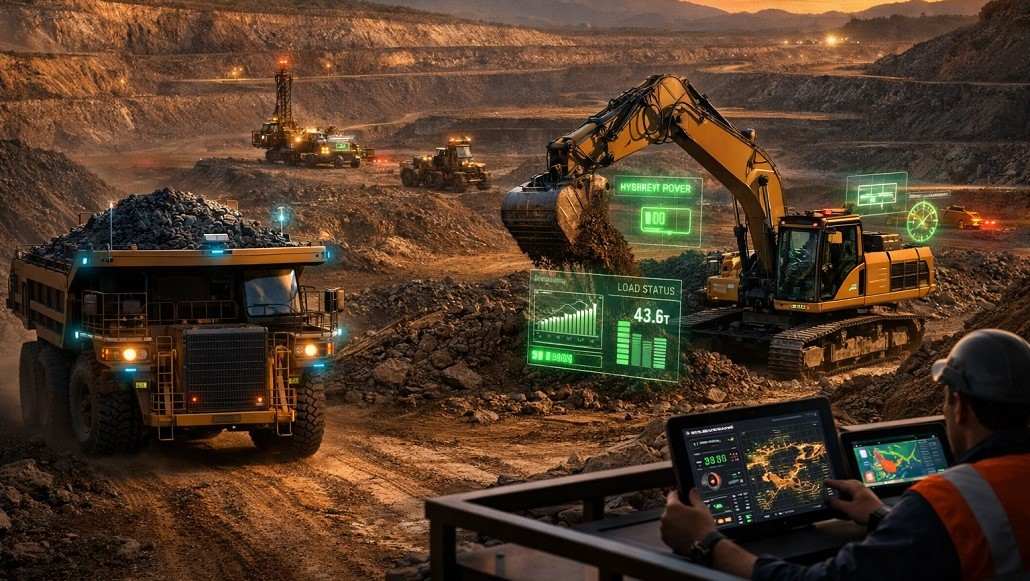


The industrial landscape is currently experiencing a profound shift as the traditional boundaries between extraction and infrastructure development blur under the influence of advanced technological integration. Smart mining machinery has emerged as the cornerstone of this evolution, serving as a catalyst for a broader transformation within the heavy construction sector. This shift is not merely about replacing manual labor with mechanical power but rather about the infusion of intelligence into the very fabric of industrial operations. By leveraging a sophisticated array of sensors, telematics, and autonomous systems, modern equipment is now capable of performing complex tasks with a level of precision and consistency that was previously unimaginable. The ripple effects of these advancements are being felt across global markets, driving a renewed focus on operational efficiency and the long-term sustainability of large-scale projects.
The integration of these technologies represents a departure from the “brute force” era of industrial development. In the past, the success of a mining or construction project was measured by the sheer volume of material moved and the number of hours machines were kept running. Today, the focus has shifted toward “intelligent output,” where the quality of work, the reduction of waste, and the preservation of the mechanical assets are given equal weight. This transition is being led by a new generation of engineers and operators who view industrial machinery not just as tools, but as sophisticated data-gathering platforms that can be optimized in real-time.
The Evolution of Automation in Mining and Heavy Infrastructure
The journey toward full site autonomy began with the incremental adoption of remote monitoring and basic telematics. Today, the sector has moved far beyond simple GPS tracking into the realm of fully autonomous haulage systems and remote-controlled drilling rigs. Automation in mining is no longer a futuristic concept but a present-day reality that dictates the competitive standing of major enterprises. These systems allow for continuous operation without the inherent risks associated with human presence in hazardous environments. In the context of heavy construction machinery, automation translates to automated grading, precision excavation, and optimized material handling. This convergence of technologies ensures that projects are completed with minimal waste and maximum adherence to design specifications.
The implementation of automation requires a fundamental rethinking of site logistics. In a traditional site, human operators make thousands of micro-decisions every hour choosing a path, adjusting the bucket angle, or reacting to a change in soil density. Autonomous smart mining machinery replaces these intuitive decisions with algorithmic precision. For instance, an autonomous loader can calculate the most efficient path to a haul truck, taking into account the current topography and the weight of the load. This level of optimization reduces cycle times and significantly lowers the mechanical stress on the equipment, leading to a more predictable and profitable operation.
Advanced AI Diagnostics and Predictive Maintenance Strategies
One of the most critical components of modern industrial machinery is the implementation of AI diagnostics. Traditionally, maintenance was either reactive, occurring after a failure, or preventive, based on arbitrary schedules that often led to unnecessary downtime. Smart mining machinery utilizes machine learning algorithms to analyze data streams from hundreds of engine and hydraulic sensors. These algorithms can identify subtle patterns that precede mechanical failure, allowing operators to intervene before a catastrophic breakdown occurs. This transition to predictive maintenance significantly boosts the lifespan of industrial machinery and ensures that heavy construction machinery remains active during critical project windows.
Furthermore, AI diagnostics allow for a more nuanced understanding of machine health. Rather than just reporting a fault code, modern systems can provide context explaining why a component is failing and suggesting the most efficient repair path. This “prescriptive” maintenance model reduces the time technicians spend troubleshooting and ensures that spare parts are ordered and delivered just in time. By minimizing unplanned downtime, companies can maintain a steady output and avoid the massive financial penalties associated with project delays in the highly competitive heavy construction sector.
Fuel Efficient Equipment and Environmental Responsibility
As global pressure to reduce carbon footprints intensifies, the development of fuel efficient equipment has become a primary objective for manufacturers. The modern iteration of smart mining machinery incorporates hybrid power systems and sophisticated engine management software that optimizes fuel consumption based on the immediate load and terrain. In heavy construction, this technology is vital for managing the overhead costs of large fleets. Construction technology has evolved to include stop-start systems and energy recovery mechanisms that capture wasted energy during braking or descending maneuvers. These innovations not only lower the operational costs but also align industrial practices with modern environmental standards.
The economic benefits of fuel efficient equipment are particularly evident in remote mining locations where the cost of transporting diesel can be higher than the cost of the fuel itself. By reducing consumption, companies can significantly lower their logistical burden and improve their overall energy security. Moreover, the reduction in emissions associated with smart mining machinery helps companies meet their environmental, social, and governance (ESG) targets, which are increasingly important to investors and regulatory bodies. This alignment of economic and environmental goals is a defining characteristic of the modern industrial age.
Enhancing Safety and Precision through Construction Technology
Safety has always been the paramount concern in both mining and heavy construction. The introduction of smart mining machinery has fundamentally changed the risk profile of these sites. Collision avoidance systems, fatigue monitoring sensors, and remote operating stations have moved workers from the high-risk “front line” to controlled office environments. This shift does not eliminate the need for human expertise but rather reorients it toward high-level supervision and strategic planning. Furthermore, the precision offered by modern mining equipment ensures that geological instabilities are detected and mitigated before they pose a threat to personnel.
The use of industrial machinery equipped with 3D mapping and LiDAR technology allows for the creation of highly accurate site models. These models are not static; they are updated in real-time as the machinery excavates or moves material. This “live” site view allows managers to identify potential hazards such as an unstable slope or an encroaching vehicle well before they become a danger. In heavy construction, this technology ensures that underground utilities are avoided and that foundations are placed with sub-centimeter accuracy. The result is a site that is not only more productive but also significantly safer for every individual involved in the operation.
Integration of IoT and Real-Time Data Ecosystems
The efficacy of smart mining machinery is largely dependent on its ability to communicate within a larger ecosystem. The Internet of Things (IoT) provides the connectivity required for various pieces of equipment to operate in harmony. On a smart construction site, a loader can communicate directly with a haul truck to optimize loading times and routes, reducing idle time and fuel waste. This interconnectedness allows for a bird’s-eye view of the entire operation, where bottlenecks can be identified and addressed instantly. The data harvested from these interactions provides invaluable insights into fleet performance, allowing for continuous refinement of operational strategies.
This data ecosystem also facilitates a more collaborative relationship between equipment manufacturers and their customers. Through remote monitoring, manufacturers can see how their smart mining machinery is performing in the field and provide over-the-air software updates to improve performance or patch vulnerabilities. For the operator, this means that their industrial machinery is constantly improving, even years after it was first purchased. This “hardware-as-a-service” model is becoming more common, as companies look for ways to maximize the value of their long-term capital investments.
The Human Element in an Automated Landscape
Despite the rapid advancement of automation and AI diagnostics, the human element remains a vital component of the industrial sector. The role of the equipment operator is evolving from one of manual control to one of systems management. Today’s operators must be proficient in interpreting complex data visualizations and managing multiple autonomous systems simultaneously. This requires a new approach to training and workforce development, where digital literacy is given as much importance as mechanical skill. The transition to smart mining machinery is creating high-value jobs in areas like data analysis, remote systems operation, and specialized maintenance for electronic and hydraulic systems.
Moreover, the shift toward remote operation is making the industry more accessible to a wider range of people. By removing the need for physical presence in remote or harsh environments, companies can tap into a more diverse talent pool. This “democratization” of industrial work is a significant benefit of the digital transformation, helping to address the chronic labor shortages that have plagued the sector for decades. The collaboration between human intelligence and machine precision is what will ultimately drive the next phase of global infrastructure development.
The Future of Industrial Machinery in Global Markets
Looking ahead, the trajectory of smart mining machinery points toward even deeper levels of integration and autonomy. We are likely to see the rise of swarm robotics, where groups of smaller, specialized machines work together to complete a task that would traditionally require a single large machine. This approach offers greater flexibility and resilience, as the failure of one unit does not stop the entire operation. Furthermore, the development of self-healing mechanical systems that can perform minor repairs using onboard 3D printers or robotic arms will further reduce the need for human intervention in remote areas.
The role of heavy construction machinery will continue to expand, with specialized equipment being developed for extreme environments, such as deep-sea mining or the construction of habitats in space. These frontier applications will push the boundaries of construction technology, leading to breakthroughs that will eventually trickle down to terrestrial projects. As the technology becomes more accessible and cost-effective, even smaller-scale operations will be able to harness the power of AI diagnostics and automation to compete on a global stage. The transformation is well underway, and those who embrace the potential of smart mining machinery today will be the leaders of the industrial world tomorrow.
The long-term success of the industry will depend on its ability to balance innovation with responsibility. As machines become more powerful and autonomous, the ethical implications of their use must be carefully considered. This includes ensuring data privacy, maintaining robust cybersecurity defenses, and managing the social impact of automation on local communities. By proactively addressing these challenges, the sector can ensure that the transition to smart mining machinery is a benefit to both the economy and society as a whole. The era of intelligent heavy construction has arrived, and its potential to reshape our world is truly limitless.