

























The global mining industry is currently at a critical crossroads, facing dual pressures to increase production while simultaneously reducing its environmental impact. As the world transitions toward a low-carbon economy, the extraction of minerals remains essential for manufacturing everything from electric vehicle batteries to renewable energy infrastructure. However, the traditional methods of mining are energy-intensive and have a significant carbon footprint. To address this challenge, the industry is increasingly turning to sustainable construction equipment and low-emission fleet solutions. This transition represents a fundamental shift in how mining operations are powered and managed, moving away from a reliance on fossil fuels toward a more diversified and sustainable energy mix. By embracing green mining technology, companies are not only fulfilling their corporate social responsibilities but also ensuring their long-term economic viability in an increasingly regulated market.
The magnitude of this shift cannot be overstated. For over a century, the internal combustion engine has been the undisputed king of the mining site. The transition to sustainable construction equipment requires a complete re-evaluation of site infrastructure, power delivery, and maintenance protocols. It is not simply a matter of swapping a diesel engine for an electric motor; it is about rethinking the entire “energy lifecycle” of the mine. This includes how energy is generated, how it is stored, and how it is consumed by a fleet of high-capacity machines. The companies that lead this transition will be those that view sustainability not as a cost to be managed, but as a strategic opportunity to drive innovation and efficiency.
The Rise of Electric Mining Equipment and Zero-Emission Solutions
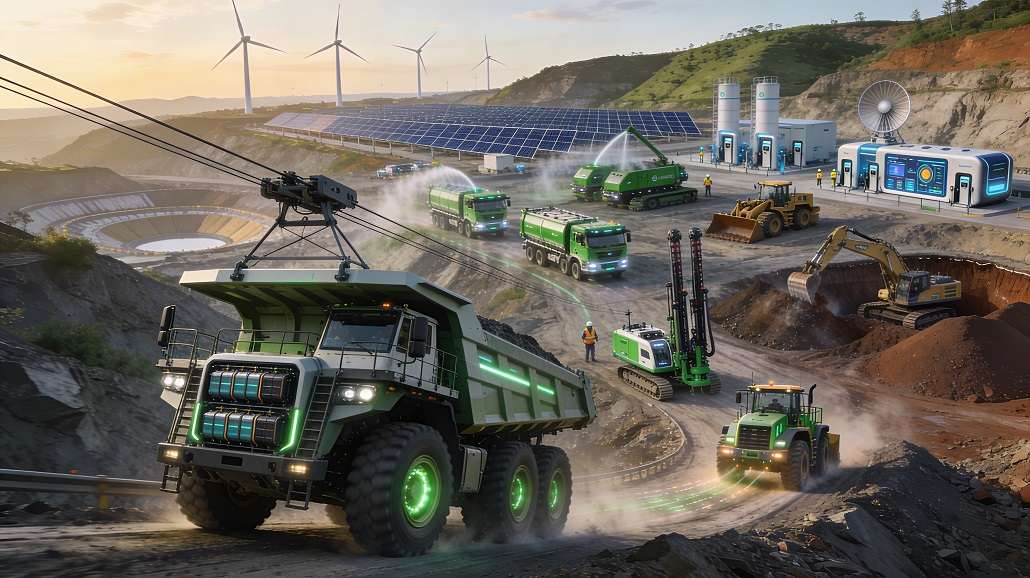
Perhaps the most significant development in the pursuit of sustainability is the emergence of fully electric mining equipment. For decades, the industry relied almost exclusively on high-consumption diesel engines to power its heavy machinery. Today, advancements in battery technology and electric drivetrains have made it possible to deploy zero-emission loaders, drills, and even haul trucks. These machines offer several advantages over their diesel counterparts, including significantly lower operational costs and reduced maintenance requirements. Because electric motors have fewer moving parts and do not require complex exhaust treatment systems, they are inherently more reliable and have longer service intervals.
Furthermore, in underground mining environments, the use of electric mining equipment provides immediate and tangible benefits to worker health and safety. Traditional diesel engines emit a cocktail of harmful pollutants, including particulate matter and nitrogen oxides, which require massive and energy-intensive ventilation systems to clear. By eliminating these tailpipe emissions, electric machines create a much cleaner and cooler work environment. This not only reduces the health risks for miners but also significantly lowers the energy costs associated with mine ventilation. In many cases, the energy savings from reduced ventilation can offset a significant portion of the capital cost of the electric machinery, making the transition to sustainable construction equipment an economically sound decision as well as an environmental one.
Hybrid Construction Vehicles and Transitional Technologies
While the long-term goal for many mining companies is a fully electric fleet, the transition is often facilitated by hybrid construction vehicles. These machines combine traditional internal combustion engines with electric motors and energy storage systems, providing a middle ground that balances performance with environmental responsibility. Hybrid systems are particularly effective in mining applications where machines undergo frequent cycles of heavy loading and descending. For instance, a hybrid haul truck can use its electric motor to provide a “boost” of power during a steep climb, reducing the load on the diesel engine and improving fuel efficiency.
The true genius of hybrid construction vehicles lies in their ability to recover energy. During descent or braking, the electric motor can act as a generator, capturing energy that would otherwise be wasted as heat in the brakes and storing it in a battery or ultracapacitor. This stored energy can then be used to power the machine’s auxiliary systems or assist the engine during the next high-load task. The result is a significant reduction in fuel consumption and carbon reduction in mining without requiring a complete overhaul of the existing on-site power infrastructure. As battery costs continue to fall and energy density increases, these hybrid systems will serve as the essential stepping stone toward fully electric, sustainable construction equipment fleets.
Implementing Low Emission Machinery in Surface Operations
In large-scale surface mining, the challenge of sustainability is magnified by the immense size of the equipment involved. A single ultra-class haul truck can consume thousands of liters of diesel in a single shift. However, even here, low emission machinery is making significant inroads. Manufacturers are now offering ultra-low emission diesel engines that utilize advanced filtration and catalytic reduction systems to meet the most stringent global emission standards. These engines provide a direct path to carbon reduction in mining for existing fleets, allowing companies to improve their environmental performance without the need for massive capital investment in new technology.
Additionally, the adoption of “trolley assist” systems for haul trucks has proven to be an effective way to reduce diesel consumption in deep pits. In a trolley-assist system, trucks are equipped with pantographs that allow them to draw electricity from overhead lines while climbing the steepest and most energy-intensive sections of the haul road. This allows the truck to switch off its diesel engine or run it at idle, significantly reducing fuel consumption and emissions while increasing the speed of the climb. This hybrid approach allows mining operations to achieve immediate and substantial carbon reductions while the technology for fully electric heavy-duty vehicles continues to mature. The integration of sustainable construction equipment in surface operations is a testament to the industry’s ability to innovate within the constraints of current technology.
Green Mining Technology and the Circular Economy
The concept of sustainability in mining extends beyond the power source of the machinery; it also encompasses the entire life cycle of the equipment and the materials it handles. Green mining technology includes innovations that improve the efficiency of mineral processing, reduce water consumption, and minimize the volume of tailings generated. For example, the use of dry stacking technology for tailings management reduces the risk of dam failures and lowers the water footprint of the mine. Similarly, advanced sorting technologies can separate ore from waste rock more efficiently, reducing the volume of material that must be transported and processed by the fleet of sustainable construction equipment.
Furthermore, there is a growing focus on the “circularity” of the equipment itself. This involves designing machinery for easier disassembly and recycling, as well as remanufacturing programs that give a second life to major components like engines, transmissions, and hydraulic cylinders. By viewing industrial machinery as a long-term asset that can be continually renewed, companies can significantly reduce the environmental impact associated with the manufacturing and disposal of their fleets. This “circular” approach not only reduces waste but also provides a more stable and predictable supply chain for critical parts. In a truly sustainable mine, nothing is wasted not the ore, not the water, and certainly not the machinery.
Energy Efficient Fleet Operations and Digital Optimization
The efficiency of a mining fleet is not just determined by the machines themselves, but by how they are used. Energy-efficient fleet operations rely on the integration of digital tools to optimize haul routes, reduce idle times, and manage the charging or refueling cycles of the vehicles. For example, autonomous haulage systems can be programmed to drive in a way that maximizes fuel efficiency and minimizes tire wear, avoiding the “jackrabbit” starts and hard braking that are common with human drivers. Similarly, real-time monitoring of energy consumption across the site allows managers to identify “energy hotspots” and implement changes to operational procedures to reduce waste.
Digital optimization also plays a critical role in the management of electric mining equipment. Unlike diesel trucks, which can be refueled in minutes, electric vehicles require careful management of their charging cycles to ensure they are always available when needed. Fleet management software can coordinate the charging of dozens of vehicles to avoid overloading the site’s power grid and ensure that batteries are maintained in optimal condition. This data-driven approach to sustainability ensures that every kilowatt of energy is used as effectively as possible, further contributing to the goals of carbon reduction in mining. The “smart” mine of the future will be one where every machine is part of a perfectly synchronized, energy-efficient ecosystem.
The Role of Renewables in Powering Sustainable Fleets
To truly achieve zero-emission mining, the energy used to power the electric mining equipment must itself come from sustainable sources. Many mining companies are now investing in on-site renewable energy projects, such as solar farms or wind turbines, to power their operations. This is particularly beneficial for remote mines that are not connected to a national grid and must rely on expensive and carbon-intensive diesel generators for their power. By integrating renewable energy with battery storage, these mines can create a stable and sustainable power supply that is both cheaper and cleaner than traditional alternatives.
The synergy between renewable energy and electric mining equipment is a powerful driver for the industry’s transformation. As the cost of solar and wind energy continues to fall, the economic case for transitioning to sustainable construction equipment becomes even more compelling. Some companies are even exploring the use of green hydrogen produced on-site using renewable energy as a fuel for their heavy-duty vehicles. This “green hydrogen” path offers a potential solution for the most energy-intensive applications where battery technology is not yet practical. Regardless of the specific energy carrier, the future of mining lies in the complete decoupling of mineral extraction from fossil fuel consumption.
Future Outlook for Sustainable Mining Operations
The transition to sustainable construction equipment is not just a trend; it is the future of the mining industry. As environmental, social, and governance (ESG) criteria become increasingly important to investors and consumers, mining companies that fail to adapt risk losing their “social license to operate.” The next decade will likely see the widespread adoption of hydrogen fuel cell technology for heavy-duty haulage, the development of solid-state batteries for faster charging, and the complete automation of the “pit-to-port” logistics chain. These advancements will allow the industry to continue providing the raw materials that the world needs while drastically reducing its impact on the planet.
The journey toward sustainable mining is a long and complex one, but with the right technology and a commitment to innovation, the industry is well on its way to a cleaner, more efficient, and more responsible future. Sustainable construction equipment and low-emission fleets are the cornerstones of this transformation, providing the tools we need to extract the minerals of the future in a way that respects the environment and the communities that depend on it. The mining industry has a proud history of solving the world’s most difficult engineering challenges; the challenge of sustainability is simply the latest and perhaps the most important one it will conquer.