





























Key Takeaways
- Predictive analytics reduce delivery delays by 35-50% through early identification of risks enabling proactive intervention.
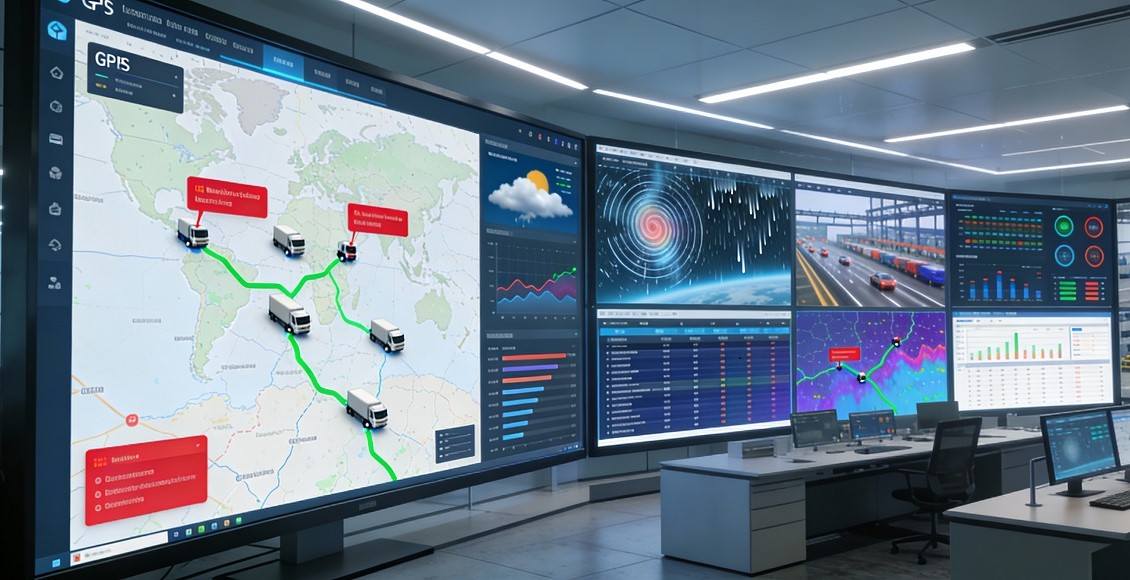
- GPS-enabled fleet management provides real-time visibility enabling immediate response to emerging problems or traffic disruptions.
- Weather forecasting integration enables proactive transportation adjustments preventing weather-related delays.
- Predictive maintenance prevents equipment failures reducing unexpected breakdowns disrupting delivery schedules.
- Historical data analysis identifies patterns predicting likely problems enabling contingency planning.
- Real-time coordination between factory and site enables dynamic adjustments optimizing overall project execution and timeline
Construction project variability represents a persistent challenge compromising scheduling reliability. Prefab projects depend on synchronized factory production and site installation. If factory production lags, installation teams sit idle awaiting components. If installation falls behind schedule, components arriving as planned must be staged creating congestion and damage risk. Variability in either production or installation cascades through projects creating inefficiencies, costs overruns, and timeline delays.
Traditional approaches accepted variability as inevitable. Project schedules included substantial buffers protecting against assumed delays. Contingency reserves allowed for problems to emerge without cascading impact. This conservative approach sacrificed efficiency accepting higher costs as the price of reliability.
Predictive logistics represents a more sophisticated approach. Rather than accepting variability as inevitable, predictive approaches employ data and analytics to forecast conditions enabling proactive management. Rather than reacting after variability emerges, predictive systems identify emerging problems enabling intervention before impact. The result combines improved reliability with improved efficiency
Foundational Concepts of Predictive Logistics
Predictive logistics employs historical data, current conditions, and sophisticated analytics to forecast future outcomes. Rather than assuming that future conditions will resemble historical averages, predictive systems identify specific conditions predicting likely future variations. These predictions enable proactive decisions preventing unfavorable outcomes.
The foundation relies on comprehensive data collection. Every relevant variable should be tracked—weather patterns, traffic conditions, equipment performance, crew productivity, supplier reliability, transportation time. Historical data is analyzed identifying patterns and relationships. Machine learning algorithms train on this data learning to recognize conditions predicting specific outcomes.
As new data arrives in real-time, predictive systems apply learned patterns to current conditions. If current conditions match patterns historically associated with delays, systems alert stakeholders enabling proactive response. As new outcomes occur, algorithms continuously improve through incorporating new data into learned patterns.
GPS-Enabled Fleet Management
GPS tracking provides real-time visibility into vehicle locations and movement patterns. Rather than periodic status updates, GPS systems continuously transmit vehicle location enabling moment-to-moment tracking. Fleet managers observe current positions, travel speed, and route progression in real-time.
This visibility enables immediate response to problems. If a vehicle falls behind schedule, routes can be adjusted, traffic patterns can be analyzed identifying delays, and alternative routing can be deployed. If a vehicle diverges from planned route suggesting navigation problems, corrective instructions can be transmitted. If mechanical problems are detected through vehicle diagnostics, maintenance can be scheduled preventing equipment failure.
The visibility also improves overall fleet efficiency. Managers can identify which drivers and vehicles operate most efficiently. Best practices from high-performing drivers can be shared. Inefficiencies can be identified and corrected. The continuous improvement enabled by visibility compounds into substantial efficiency gains.
Weather Forecasting Integration
Weather represents one of the most significant uncontrollable variables affecting logistics. Snow, rain, fog, and high winds all degrade transportation speed and safety. Severe weather might close roads entirely. Traditional approaches accepted weather variability as uncontrollable. Predictive logistics integrates weather forecasting enabling proactive management.
Rather than hoping weather won’t disrupt plans, logistics systems integrate detailed weather forecasting. If weather predictions indicate significant storms approaching, transportation can be rerouted around affected regions. If weather predictions indicate snow creating hazardous conditions, departure times can be shifted. If weather creates prolonged disruptions, alternative routing or storage arrangements can be prepared in advance.
The integration of multiple data sources improves predictions. Rather than relying on single weather forecasts, systems integrate multiple weather sources, historical patterns, and real-time conditions. This multi-source approach improves forecast accuracy enabling more confident decisions.
Predictive Maintenance Preventing Equipment Failures
Equipment breakdowns represent another significant variability source. Vehicles experience unexpected failures, critical repairs, and mechanical problems disrupting transportation. Traditional approaches serviced equipment on fixed schedules or reactively when failures occurred. Predictive maintenance identifies problems before they cause failures enabling proactive service.
Sensors embedded in vehicles continuously monitor mechanical conditions. Engine diagnostics identify degradation patterns predicting likely failures. Tire pressure and wear monitoring predicts punctures. Brake system monitoring predicts brake degradation. Transmission diagnostics predict transmission problems. As patterns indicating developing problems emerge, maintenance alerts trigger enabling service before failures occur.
The benefits prove substantial. Rather than unexpected breakdowns creating schedule disruptions, planned maintenance prevents failures. Vehicles remain available for scheduled transportation. Projects maintain planned schedules rather than experiencing disruptions from unexpected equipment failures.
Data-Driven Route Optimization
Routing proves surprisingly complex—longer routes aren’t always slower, shorter routes sometimes encounter worse traffic, different times of day experience different conditions. Rather than drivers choosing routes intuitively or relying on GPS defaults, predictive logistics optimizes routes based on data.
Historical traffic data reveals patterns—specific locations experience congestion during specific times, certain routes remain clear during peak hours, weather conditions affect different routes differently. Machine learning models trained on this data learn to predict travel time accurately for any proposed route and departure time. Route optimization systems use these predictions to identify routes minimizing travel time considering current or forecasted conditions.
The sophistication enables remarkable optimization. Rather than drivers wasting hours in traffic, predictive routing minimizes delays. Complex routes serving multiple stops are sequenced optimally. Trade-offs between distance and traffic congestion are calculated. The accumulated routing optimization across large fleets delivers enormous efficiency improvements.
Real-Time Coordination Between Factory and Site
The ultimate benefit of predictive logistics emerges through enabling real-time coordination between factory and site operations. Rather than operating independently with periodic communication, integrated systems enable continuous coordination.
Factory systems receive real-time visibility into site progress. If site work progresses faster than expected, factories can accelerate production ensuring component availability. If site work lags behind expectations, factories can defer production preventing excess inventory. The dynamic coordination eliminates both inventory shortage and excess inventory scenarios.
Similarly, site teams receive real-time visibility into factory progress and component shipping. If components are delayed, site teams can adjust work schedules or prepare contingencies. If components are arriving ahead of expectations, site teams can accelerate preparation. The coordination enables both parties to optimize their operations considering actual conditions rather than theoretical assumptions.
Scenario Planning and Contingency Preparation
Beyond reacting to real-time conditions, predictive systems enable proactive scenario planning. Historical data identifies risks likely to occur. Rather than assuming everything proceeds smoothly, planners develop contingencies for likely disruptions.
For example, analysis might indicate that weather delays occur in approximately 15% of winter shipments, that specific suppliers historically experience 5% late delivery rate, that specific routes during peak seasons experience average 2-hour delays. Rather than ignoring these risks, scenario planning prepares contingencies. Alternative routing is pre-identified. Backup suppliers are qualified. Timeline buffers are right-sized based on actual risk probabilities rather than blanket contingencies protecting against all imaginable problems.
The scenario planning approach enables far more efficient project planning than conservative buffering. Rather than adding 30% buffer to all timelines protecting against worst-case scenarios, risk-based planning adds buffers proportional to identified risks. The result improves both reliability and efficiency.
Continuous Improvement and Learning
Predictive systems continuously improve as new data accumulates and algorithms refine. Rather than static predictions based on historical data, systems adapt to changing conditions. When predictions prove inaccurate, algorithms learn why and adjust future predictions. When disruptions occur, root causes are analyzed improving future predictions.
Organizations implementing predictive logistics develop learning organizations where continuous improvement becomes systematic. Rather than repeating mistakes, organizations capture lessons and prevent recurrence. Rather than accepting variability, organizations identify causes and implement solutions.
Implementation Requirements and Organizational Change
Successfully implementing predictive logistics requires substantial organizational change. Rather than transportation operating independently, logistics must integrate with design, manufacturing, and installation. Communication systems must enable real-time information sharing. Personnel must develop new competencies interpreting predictions and making decisions based on data.
The change management challenge proves significant. Some personnel resist changes to established ways of working. Organizations must invest in training, change management, and demonstrated benefits building confidence. Pilot implementations enable learning before full-scale rollout.
Competitive Implications and Industry Evolution
Organizations implementing predictive logistics develop substantial competitive advantages. Superior reliability enables confident scheduling. Superior efficiency reduces costs. Superior flexibility enables rapid response to changing conditions. These advantages compound creating market leadership.
The competitive advantage particularly accrues to organizations serving demanding clients valuing reliability. Rather than accepting traditional variability, predictive logistics delivers unprecedented reliability. The value proposition proves powerful for clients willing to pay premium prices for guaranteed delivery.
The industry increasingly recognizes predictive logistics as competitive necessity. Software platforms increasingly provide predictive capability. Data collection becomes more sophisticated. Industry standards increasingly codify predictive practices. These systemic changes drive adoption toward industry standard.
The future of prefab logistics will involve comprehensive predictive capability. Rather than accepting variability, organizations will forecast conditions enabling proactive management. Real-time coordination will enable seamless factory-site synchronization. Data-driven decisions will replace intuitive choices. Organizations leading this transformation will establish dominant competitive positions.