























RMIT University, Australia researchers are coming up with a method so as to lessen the carbon effect of infrastructure through transforming the common organic waste into viable construction materials. The study has been published in the International Journal of Construction Management. One of the pioneering life-cycle analyses has gone on to demonstrate that biochar, which is derived from spent coffee grounds, can go ahead and contribute to the production of low-carbon concrete, thereby validating the strength enhancements that have been observed in the prior laboratory experiments.
Past investigations by the RMIT group went on to involve heating used coffee grounds to almost 350°C within an oxygen-deprived environment in order to yield a fine biochar.
Incorporating this biochar as a 15% substitute for sand within the concrete resulted in an almost 30% growth in 28-day strength, thereby indicating a feasible strategy so as to alleviate the demand pertaining to natural sand resources.
A recent study, expanding upon this foundational work and spearheaded by Dr. Jingxuan Zhang as well as Dr. Mohammad Saberian, goes on to introduce an in-depth life cycle evaluation, which is a complete evaluation that spans production to end-of-life, thereby quantifying carbon emissions, resource consumption, and certain other environmental effects.
The findings go on to indicate life-cycle carbon dioxide deductions of 15%, 23%, and 26% when biochar replaces sand at 5, 10, and 15%, respectively. Moreover, the study also reports almost a 31% dip in fossil fuel utilization as well as enhanced outcomes with regard to the impacts on aquatic ecosystems.
This investigation goes on to contribute toward the transition of Australia towards a circular economy and its net-zero targets by converting plentiful waste into practical materials, hence reducing the dependence on natural sand and also fostering public involvement within the resource recovery initiatives thereby reducing the carbon effect of infrastructure.
Dr. Zhang also went on to affirm that these outcomes reinforce justification for executing real-world trials.
Saberian went on to report on the team’s ongoing engagement with the industry, as well as state and local governments, concerning the construction projects.
Chun-Qing Li who advised the team said that next steps go on to include the larger pilots, mix optimization, and also alignment with the standards so that the projects can adopt confidently. He added that they do welcome the collaboration on supply chains as well as field deployments.
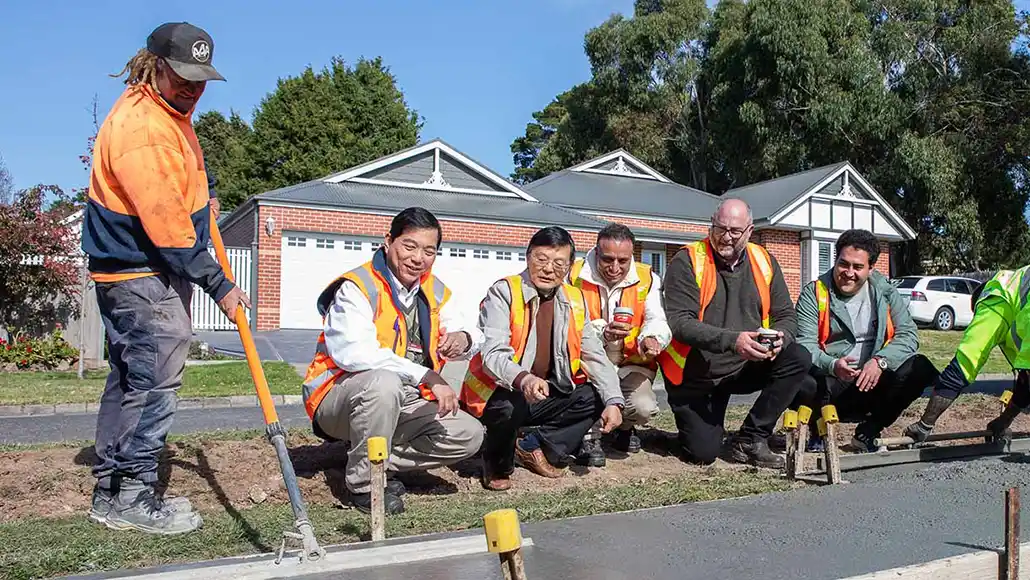
Notably, RMIT as well as the collaborators have even promoted the low-carbon concrete in a sidewalk trial and the inaugural coffee-biochar concrete component on Victorian Big Build. They also went ahead and presented the idea through the National Gallery of Victoria’s Making Good: Redesigning the Everyday display.