
























Construction delays cost the global industry more than $1.6 trillion annually. From weather setbacks to site readiness issues, projects often stumble before the first brick is even laid. But what if site preparation wasn’t the bottleneck anymore? What if logistics were flexible, mobile—and even predictive? As inflation, labor shortages, and supply chain uncertainty stretch margins, the real competitive edge comes from how fast and efficiently a site can become operational. That’s where smart construction logistics enters the picture.
The underestimated cost of unready sites
Delays don’t start with faulty materials or flawed design. They begin the moment a construction site lacks the basic infrastructure to support early-phase work. Missing utilities, storage, shelter, or office space can stall operations for weeks. And in today’s market, weeks can mean lost contracts, penalties, and reputational damage.
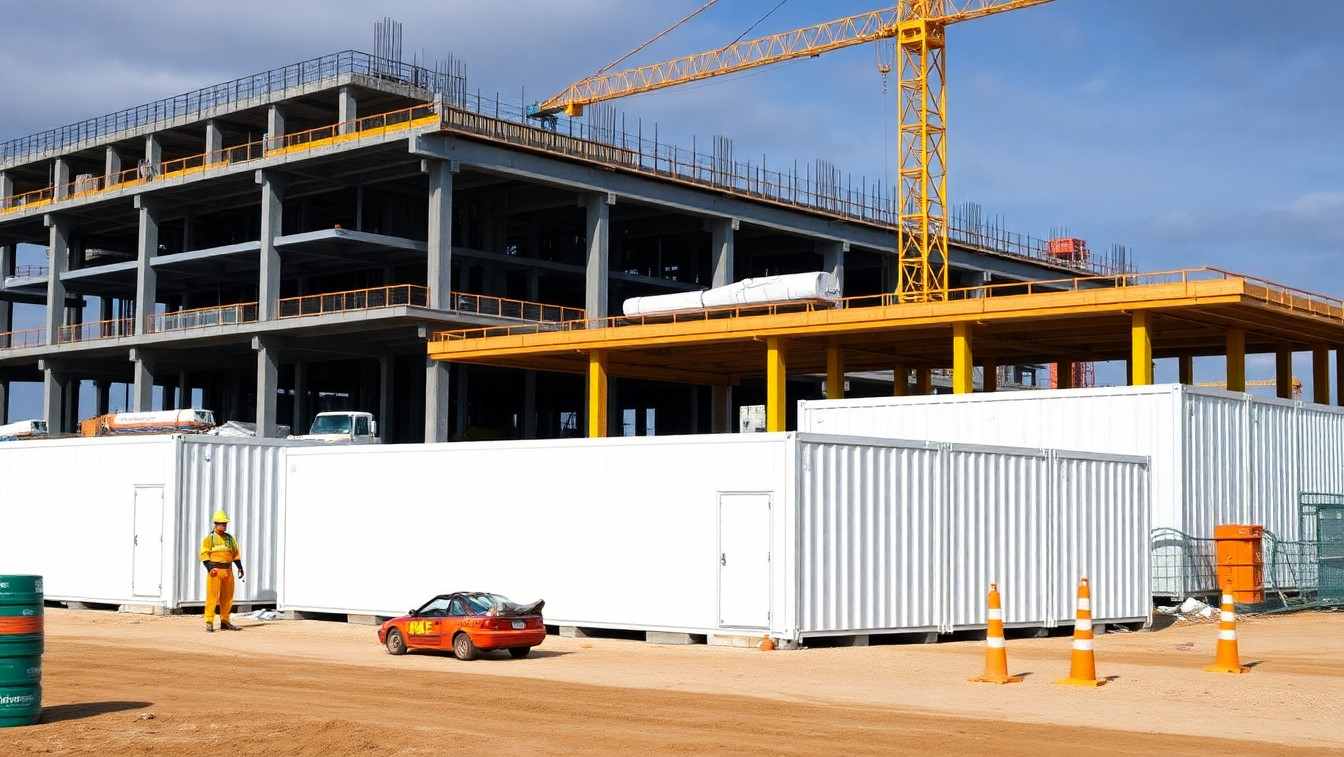
To counteract this, project managers are shifting towards more agile planning models. The days of relying solely on permanent site buildings or long procurement cycles are numbered. Many now opt for modular logistics, including temporary building solutions, to establish critical infrastructure within days. Whether it’s setting up mobile command centers, secure storage units, or weatherproof changing rooms—speed matters more than ever.
Contractors operating across multiple sites especially benefit from relocatable systems. They minimize capital tie-up, reduce permitting delays, and can adapt to shifting timelines. It’s a logistics-first approach to risk mitigation.
Modular logistics as a project enabler
Fast doesn’t mean sloppy. Modular logistics today are designed with durability, safety, and compliance in mind. Solutions are engineered to meet regional codes, while offering insulation, climate control, and even IT-ready workspaces. In sectors like energy, infrastructure, and remote civil works, this flexibility isn’t a luxury—it’s a necessity.
Take the example of Spantech’s mobile structures. These aren’t tents or sheds—they’re fully engineered environments that can operate in challenging conditions while maintaining professional standards. Their ability to be installed on nearly any terrain makes them ideal for both emergency builds and highly coordinated mega-projects. When timing and mobility align, productivity follows.
Moreover, modular logistics allow teams to phase operations efficiently. Temporary facilities serve initial crews, while permanent infrastructure rises in the background. It’s a model that supports lean construction principles and reduces early-stage idle time.
Technology meets logistics: The digital integration shift
Beyond hardware, modern construction logistics are becoming smarter. Digital twins, site tracking, and AI-based scheduling tools are transforming how logistics are planned and managed. Instead of reactive transport and setup models, systems can now predict bottlenecks and recommend site layouts in advance.
For example, software can analyze terrain, weather forecasts, and delivery schedules to optimize placement of modular units—maximizing flow and minimizing clashes. On large sites, this precision translates into better safety, reduced equipment damage, and smoother handovers between subcontractors.
Integration between building systems and logistics providers also creates data trails, which are crucial for auditing, compliance, and future planning. It’s not just about moving faster—it’s about moving smarter.
Looking ahead: Logistics as strategy, not cost center
Forward-thinking firms no longer view logistics as a box to tick—they treat it as a competitive strategy. Those who deploy modular infrastructure early control the project’s tempo. They gain flexibility to adapt to unforeseen changes and improve worker morale through better on-site conditions.
Partnerships with providers like spantech offer more than just temporary solutions—they unlock a mobile, scalable backbone for modern construction sites. Especially in markets dealing with harsh environments, regulatory delays, or urban density, adaptive logistics become the difference between stagnation and momentum.
Stakeholders—whether developers, GCs, or infrastructure agencies—must rethink their project roadmaps. Logistics should be embedded in the design phase, not patched in later. The earlier temporary structures are planned, the more resilient the overall schedule becomes.
Workforce Efficiency Begins with the Right Setup
No matter how skilled your crew is, their productivity depends heavily on the conditions they arrive to each morning. Poor site logistics don’t just slow material flow—they wear down teams, introduce friction, and increase the chance of human error. Long walks to tool stations, lack of shelter during bad weather, and overcrowded rest areas all chip away at morale and momentum.
Modern construction logistics recognize that workforce efficiency starts well before the first task of the day. Properly positioned temporary facilities—like break rooms, mobile bathrooms, and fully equipped site offices—create a structured, safe, and motivating environment. This matters especially on complex or long-term builds, where keeping teams focused and retention rates high can make or break a project timeline.
Contractors are now measuring “worker uptime” not only by time on task, but by overall flow and comfort. Companies that invest in the worker experience—from logistics to layout—report smoother operations and fewer accidents.