
























Close
MCE 2026
Wednesday, January 14, 2026
JEC WORLD 2026

Energy Efficient Buildings Market to Hit $89.03B

Note* - All images used are for editorial and illustrative purposes only and may not originate from the original news provider or associated company.

Subscribe

- Never miss a story with notifications

- Gain full access to our premium content

- Browse free from any location or device.

Media Packs

Expand Your Reach With Our Customized Solutions Empowering Your Campaigns To Maximize Your Reach & Drive Real Results!

– Access the Media Pack Now

– Book a Conference Call

Leave Message for Us to Get Back

Related stories

Caterpillar to Get Autonomous Technology in Construction

Caterpillar is going ahead with a major leap forward...

Emerging Technologies Set to Transform Concrete and Structural Construction

Advanced technologies including self-healing concrete, 3D-printed structures, smart sensors, ultra-high-performance materials, and artificial intelligence-powered design and planning systems are poised to fundamentally reshape construction practices. These innovations promise enhanced durability, reduced waste, accelerated project delivery, improved safety, and optimized resource utilization. Understanding adoption readiness, practical implementation approaches, and realistic timelines enables construction professionals to prepare for technological transformation while maintaining focus on delivering high-quality facilities that serve stakeholders' needs.

Lifecycle Focused Construction Practices for Sustainable Infrastructure

Sustainable infrastructure development requires extending construction thinking beyond initial project completion to encompass the entire building lifecycle spanning decades of operation, maintenance, and eventual decommissioning. By integrating lifecycle cost analysis, selecting durable materials, designing for operational efficiency, planning for maintenance accessibility, and anticipating end-of-life material recovery, construction professionals create assets that deliver long-term value while minimizing environmental impact. This holistic approach transforms infrastructure from cost centers requiring perpetual maintenance into resilient assets that serve communities sustainably across generations.
- Advertisement -
Advancing Prefabrication 2026

Revenue from Energy Efficient Buildings Market to Cross US$ 89.03 Billion With 11.00% CAGR Growth From 2025–2034

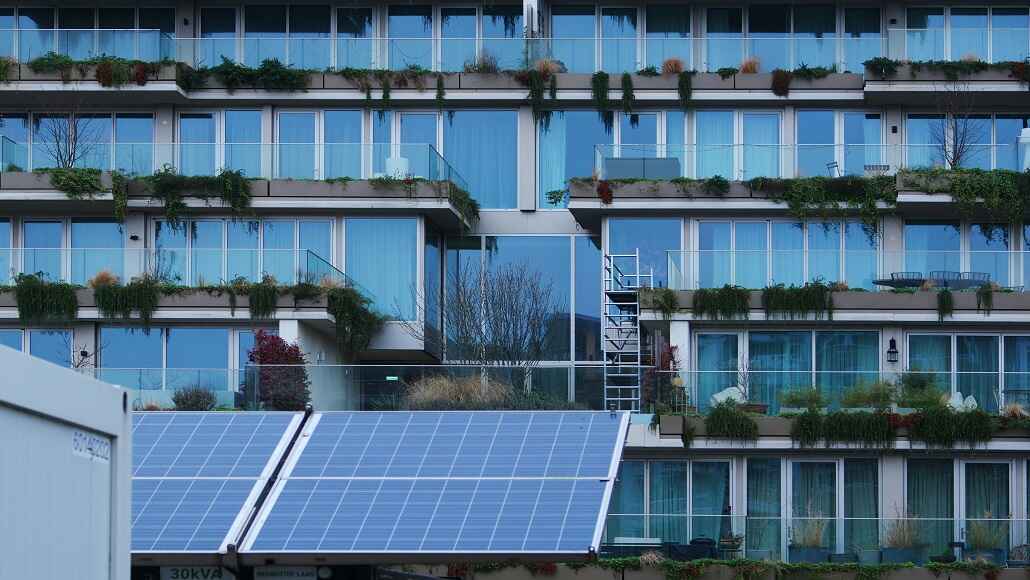
Over the next projection period, 2025 to 2034, the market for energy-efficient buildings is predicted to increase. Polaris Market Research studies the market to estimate USD 89.03 billion by 2034 and will expand at a CAGR of 11.0% in the above-mentioned forecast period. In 2024 the market is expected to be USD 31.47 billion.

An energy-efficient construction creates pleasant living conditions within the house with low energy consumption, therefore optimizing production in the use of resources. Estimates to make a building energy efficient encompass the building’s whole lifetime, which covers the construction process itself, advancing into the operation maintenance cycle, and demolition phases of the construction.

An energy-efficient construction also preserves the building ideally operational and thermally pleasant for its residents. The need to provide energy-efficient building designs becomes more important given the price of energy soaring and energy catastrophe as a reality about to dawn. Offering a maximum range of subservient solar design techniques, energy-efficient equipment, and green sources of energy, an energy-efficient building evaluates all aspects of energy use in a building.

Drivers of market growth: The globe rising urbanization is likely to drive market augmentation According to UN estimates, most people on Earth live in metropolitan areas rising from one-third in 1950 and should rise to about two-thirds in 2025. Urbanization drives demand for homes, businesses, and public places, therefore stressing energy assets and enabling higher carbo emission.

The need for green solutions in the home environment is created by the awareness of climate change, resource depletion, and increasing greenhouse gas emission among governments all around. This is a major helper to global energy consumption and carbon discharge.

Competitive Situation:

The aggressive topography of the industry is shown by intense rivalry among important candidates vying for market leadership. Some of the present participants in the market for energy-efficient buildings are:

  • American Rockwools Manufacturing LLC
  • BasF
  • Covestro AG
  • Dow Inc.,
  • Fletcher Buildings
  • GAF Materials Corporation
  • Honeywell Foreign
  • Huntsman Corp.
  • Jhonson manages
  • John’s Manville
  • Kingspan Group
  • Owens Corning
  • Rockwool A/S International
  • Saint-Gobain SA
  • Schindler electric
  • Siemens

Highlights of Energy Efficient Buildings Market Report:

  • Material-wise, the enlarged polystyrene (EPS) segment is expected to expand at a strong rate in the next years because of its great insulating properties, durability, and adaptability to different uses.
  • Based on application, the residential segment dominated the energy efficient buildings market share in 2024 due to growing demand for sustainable living environments and increased awareness of energy saving among homeowners.
  • Thanks to strict energy efficiency rules and the general acceptance of sustainable building techniques, the Europe energy efficient buildings market held the biggest revenue share in 2024 on the worldwide scene.
  • Rising demand for sustainable building solutions and increasing expenditures in green infrastructure mean that the North America energy efficient buildings market is likely to expand rapidly over the forecast period.

Outlook segmentally by Material Outlook (Revenue, USD Billion, 2020–2034)

  • Expanded Polystyrene (EPS); Extruded Polystyrene (XPS); Glass Wool; Mineral Wool

Outlook, Component Type Revenue, USD Billion, 2020–2034

  • Systems of ventilation; lighting technologies; energy management systems; controls

Applied Outlook (USD Billion, Revenue, 2020–2034)

  • Residential • Business

Regional Analysis

Economic factors, technical developments, and industry-specific demand drive notable regional differences in the market.

Supported by rigorous energy efficiency policies and significant acquisition of green building techniques, Europe accounted for the most market share in 2024. The European Union’s commitment to reach carbon neutrality by 2050 has driven the implementation of policies such the Energy Performance of Buildings Directive (EPBD), which guides increased energy presentation levels for modern and prevailing constructions.

Profiting from increasing financing for green infrastructure and rising demand for sustainable building solutions, the North America energy efficient buildings market is likely to rise quickly during the forecast period.

Achema Middleeast

Latest stories

Related stories

Caterpillar to Get Autonomous Technology in Construction

Caterpillar is going ahead with a major leap forward...

Emerging Technologies Set to Transform Concrete and Structural Construction

Advanced technologies including self-healing concrete, 3D-printed structures, smart sensors, ultra-high-performance materials, and artificial intelligence-powered design and planning systems are poised to fundamentally reshape construction practices. These innovations promise enhanced durability, reduced waste, accelerated project delivery, improved safety, and optimized resource utilization. Understanding adoption readiness, practical implementation approaches, and realistic timelines enables construction professionals to prepare for technological transformation while maintaining focus on delivering high-quality facilities that serve stakeholders' needs.

Lifecycle Focused Construction Practices for Sustainable Infrastructure

Sustainable infrastructure development requires extending construction thinking beyond initial project completion to encompass the entire building lifecycle spanning decades of operation, maintenance, and eventual decommissioning. By integrating lifecycle cost analysis, selecting durable materials, designing for operational efficiency, planning for maintenance accessibility, and anticipating end-of-life material recovery, construction professionals create assets that deliver long-term value while minimizing environmental impact. This holistic approach transforms infrastructure from cost centers requiring perpetual maintenance into resilient assets that serve communities sustainably across generations.

Improving Construction Efficiency Without Compromising Quality

Achieving construction efficiency requires process-focused improvements that enhance productivity while maintaining or improving quality standards. Through workflow optimization, enhanced coordination mechanisms, quality management practices, and strategic technology integration, construction organizations deliver projects faster and more cost-effectively without sacrificing structural integrity or compliance. Balancing speed with excellence transforms construction management from a trade-off exercise into a synergistic approach where efficiency and quality reinforce one another.

Subscribe

- Never miss a story with notifications

- Gain full access to our premium content

- Browse free from any location or device.

Media Packs

Expand Your Reach With Our Customized Solutions Empowering Your Campaigns To Maximize Your Reach & Drive Real Results!

– Access the Media Pack Now

– Book a Conference Call

Leave Message for Us to Get Back

Translate »