




















Close
MCE 2026
Friday, January 30, 2026
JEC WORLD 2026

KIIT researchers develop cement-less green construction material

Note* - All images used are for editorial and illustrative purposes only and may not originate from the original news provider or associated company.

Subscribe

- Never miss a story with notifications

- Gain full access to our premium content

- Browse free from any location or device.

Media Packs

Expand Your Reach With Our Customized Solutions Empowering Your Campaigns To Maximize Your Reach & Drive Real Results!

– Access the Media Pack Now

– Book a Conference Call

Leave Message for Us to Get Back

Related stories

How Advanced Rigging Solutions Keep Large Construction Projects on Schedule

Large construction projects live and die by their schedules....

Digital Planning Tools for Building Envelope Systems

The complexity of modern architectural skins requires a fundamental shift in how we conceive, design, and manage the outer boundaries of our structures. By leveraging advanced digital planning platforms and integrated modeling environments, the construction industry can achieve unprecedented levels of precision, ensuring that every component of the structural perimeter is optimized for performance, durability, and long-term sustainability throughout its entire operational lifecycle.

Fire Safety and Compliance in Building Openings

The protection of life and property in the built environment depends heavily on the integrity of apertures within fire-rated compartments, where every door and window must function as a reliable barrier against the spread of heat and smoke. By strictly adhering to modern fire regulations and implementing rigorously tested opening systems, architects and developers can ensure a high level of passive fire protection that safeguards occupants and facilitates a more effective response from emergency services.
- Advertisement -
Advancing Prefabrication 2026

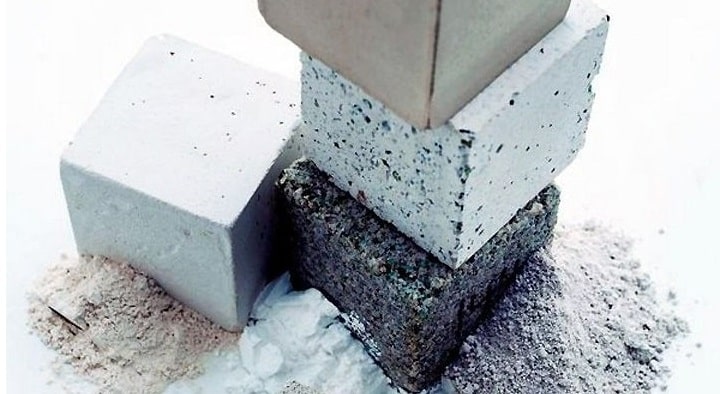
KIIT researchers have developed a cement-less green construction material. For the first time, the technology has been implemented successfully in Odisha.

Experiments with the novel road construction material were carried out on a pilot basis near village Amanapada in Cuttack district in the first week of June 2020. The innovative Green Concrete road was constructed without using cement and using only industrial wastes. The new technology, which does not contribute to global warming, has potential to bring about a revolution in engineering constructions, claimed KIIT researchers.

The cement industries contribute about 6% of all CO2 emissions, next only to automobiles. Ever increasing production of cement may also cause acute shortage of limestone, the main raw material, in 25 – 50 years.

Fly ash (FA), a waste product from thermal industries, is simply dumped on the earth occupying a large space. Hence, an alternative binder like Geo-polymer concrete is an emerging alternative construction material to the conventional cement concrete. Fly ash is the source material rich in silica and alumina, which reacts with an alkali solution to produce alumina silicate gel that binds the fine as well as coarse aggregates to produce a good mode of concrete.

The behaviour of fly ash based geo-polymer concrete on mechanical and durability properties are similar to normal cement concrete. The durability and serviceability property is much better than normal cement concrete. The innovation is a result of the collective effort of the academic fraternity and the all supportive engineering personnel who extended whole-hearted assistance.

The pilot project was carried out by Rural Works Department, Cuttack under research and development (R&D) scheme under the guidance (technical support, Supervision and Quality Check) of Prof. Dillip Kumar Bera, Associate Professor KIIT Deemed to be University and Prof. Ashoke Kumar Rath, former professor of KIIT. All tests were carried out at the KIIT laboratory before implementation.

Expressing his happiness, Dr. Achyuta Samanta, Founder, KIIT & KISS thanked all M. Tech and Ph.D students including research scholars Er. Jagannath Patel, Er. Subodha Routrai and Er. Amarendra Mohapatra, who were involved in this research work. The research and development projects in KIIT have been continuing since its inception. It is the latest among several success stories, added Dr. Samanta.

Er. Santosh Mishra, EE, Er. Prahalad Barik, Er. Prasanna Sahoo, Er. Ramyaranjan Panda of RD-Cuttack-1, Er. Nilamadhaba Sahu, Er. Saheb Kumar Sahu, Er. Satyajit Dalai, Er. Prasant Kumar Satpathy, Contractor, Mr. Sheik Khalilulla, social activist, Mr. Lalit Kumar Dash were present during the construction work.

Achema Middleeast

Latest stories

Related stories

How Advanced Rigging Solutions Keep Large Construction Projects on Schedule

Large construction projects live and die by their schedules....

Digital Planning Tools for Building Envelope Systems

The complexity of modern architectural skins requires a fundamental shift in how we conceive, design, and manage the outer boundaries of our structures. By leveraging advanced digital planning platforms and integrated modeling environments, the construction industry can achieve unprecedented levels of precision, ensuring that every component of the structural perimeter is optimized for performance, durability, and long-term sustainability throughout its entire operational lifecycle.

Fire Safety and Compliance in Building Openings

The protection of life and property in the built environment depends heavily on the integrity of apertures within fire-rated compartments, where every door and window must function as a reliable barrier against the spread of heat and smoke. By strictly adhering to modern fire regulations and implementing rigorously tested opening systems, architects and developers can ensure a high level of passive fire protection that safeguards occupants and facilitates a more effective response from emergency services.

High Performance Windows Meeting Global Energy Codes Today

The implementation of superior fenestration technology is no longer an optional upgrade but a fundamental necessity for architectural projects aiming to achieve regulatory compliance and long-term sustainability. By integrating advanced glazing and framing solutions, buildings can significantly reduce their operational energy demand while providing occupants with enhanced comfort and durability against a backdrop of increasingly stringent global construction standards.

Subscribe

- Never miss a story with notifications

- Gain full access to our premium content

- Browse free from any location or device.

Media Packs

Expand Your Reach With Our Customized Solutions Empowering Your Campaigns To Maximize Your Reach & Drive Real Results!

– Access the Media Pack Now

– Book a Conference Call

Leave Message for Us to Get Back

Translate »