
























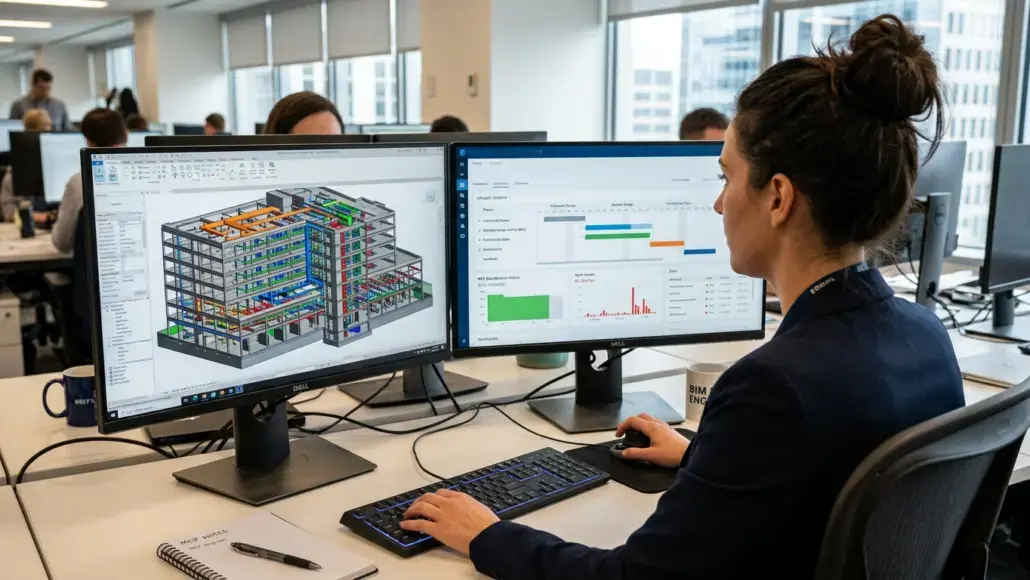

The construction industry has long struggled with the fragmentation of information, where critical data is often lost as a project moves from one phase to the next. For years, Building Information Modeling (BIM) has served as the cornerstone of digital transformation, providing a 3D visual framework for design and coordination. However, the industry is now moving toward a more sophisticated concept the digital thread. The transition of BIM to digital thread construction represents the evolution of static models into a living, breathing stream of data that connects every stakeholder, process, and asset throughout its entire existence. This approach ensures that the right information is available to the right person at exactly the right time, fundamentally changing the way we conceive, build, and maintain our physical world.
The digital thread is not a replacement for BIM but rather an expansion of its capabilities. While BIM focuses on the geometry and spatial relationships of a building, the digital thread incorporates the time-based and operational data that defines its performance. This includes everything from the manufacturing specifications of a specific HVAC unit to the real-time energy consumption data collected by IoT sensors once the building is occupied. By creating a continuous link between the digital model and the physical asset, we can eliminate the data silos that have historically hindered productivity and led to costly errors. This connectivity is the foundation of a truly modern, data-driven construction environment.
Bridging the Gap Between Design and Operations
The most significant benefit of BIM to digital thread construction is its ability to bridge the gap between the construction phase and the operational phase. In traditional workflows, the handover of a building often involves a chaotic transfer of paper manuals, disconnected spreadsheets, and outdated drawings. This information is difficult to search and often incomplete, leading to inefficiencies in facility management. With a digital thread, the handover is a seamless transition of data. The facility manager receives a digital twin a virtual representation of the building that is populated with the exact data generated during the design and construction phases. This allows for immediate and informed decision-making regarding maintenance and repairs.
This continuity of data also enables predictive maintenance. Instead of waiting for a component to fail, the digital thread allows facility managers to monitor the health of building systems in real-time. By analyzing data trends, they can identify potential issues before they become critical. For example, if a pump is vibrating outside of its normal parameters, the digital thread can instantly provide the original installation date, the manufacturer’s warranty info, and a link to the digital repair manual. This level of integrated intelligence reduces downtime, lowers operational costs, and extends the overall lifespan of the building’s infrastructure.
Enhancing Collaboration Across the Project Lifecycle
Construction is an inherently collaborative endeavor involving architects, engineers, contractors, and owners. However, collaboration is often hampered by the use of different software platforms and data formats that do not communicate with each other. The digital thread addresses this by providing a unified source of truth that is accessible to all parties. When a change is made in the design phase, it is automatically propagated through the thread, updating the procurement lists, the construction schedule, and the eventual maintenance logs. This real-time synchronization ensures that everyone is working from the most current information, drastically reducing the likelihood of rework and delays.
The digital thread also facilitates a more integrated approach to procurement and supply chain management. By linking the digital model directly to the supply chain, contractors can track the status of materials from the factory floor to the construction site. This visibility allows for just-in-time delivery, reducing the need for onsite storage and minimizing the risk of damage or theft. Furthermore, the digital thread can store environmental certifications and carbon footprint data for every material used, enabling owners to prove compliance with sustainability goals. This level of transparency is becoming increasingly important as the industry moves toward more circular and eco-friendly practices.
Data Integration and the Role of the Digital Twin
The ultimate manifestation of BIM to digital thread construction is the digital twin. A digital twin is more than just a 3D model it is a dynamic virtual replica of a physical asset that is updated with real-time data. This is made possible by the integration of IoT (Internet of Things) sensors throughout the building. These sensors collect data on temperature, occupancy, air quality, and structural health, which is then fed back into the digital twin. This allows owners to test different scenarios in a virtual environment before implementing them in the physical building. For example, they could simulate the impact of a heatwave on the building’s energy consumption and adjust the HVAC settings accordingly.
The integration of data also plays a crucial role in safety and compliance. The digital thread can maintain a complete audit trail of every decision made and every action taken during the construction process. If a structural issue is discovered years after completion, the thread can provide the exact batch number of the concrete used, the results of the initial strength tests, and the name of the subcontractor who performed the work. This level of accountability is essential for managing risk and ensuring the long-term safety of the built environment. As regulatory requirements become more stringent, the ability to produce comprehensive and accurate data will be a significant competitive advantage.
Overcoming Challenges in Digital Adoption
Despite the clear advantages, the shift from BIM to digital thread construction is not without its challenges. It requires a significant investment in technology and a cultural shift within the organization. Teams must be willing to adopt new ways of working and to share data more openly than they have in the past. There are also technical hurdles to overcome, such as ensuring data interoperability between different software platforms and managing the massive volumes of data generated by a digital thread. However, the cost of inaction is far greater. Companies that fail to embrace data integration will find themselves increasingly marginalized in a market that demands efficiency, transparency, and sustainability.
In conclusion, the transformation of construction data through the digital thread is a journey toward a more intelligent and integrated industry. By moving beyond static BIM models and embracing the continuous flow of information, we can unlock new levels of performance and value. The digital thread empowers us to build smarter, manage better, and create a more resilient future for our cities and infrastructure. As we continue to refine these technologies, the boundary between the physical and digital worlds will continue to blur, leading to a new era of connected and truly digital construction.
