
























The construction industry is currently standing at the precipice of a material science revolution, driven by the persistent challenge of infrastructure degradation. For decades, the primary approach to maintaining structural integrity has been reactive, focusing on manual inspection and periodic repair. However, the emergence of self healing materials construction represents a fundamental shift toward proactive resilience. These materials are engineered to detect and mend internal damage without human intervention, effectively mimicking the biological healing processes found in living organisms. As global urbanization accelerates, the demand for longer-lasting, more reliable infrastructure has never been higher. The integration of autonomous repair mechanisms into building materials like concrete, polymers, and asphalt is not merely a technical curiosity but a necessity for the sustainable development of modern cities.
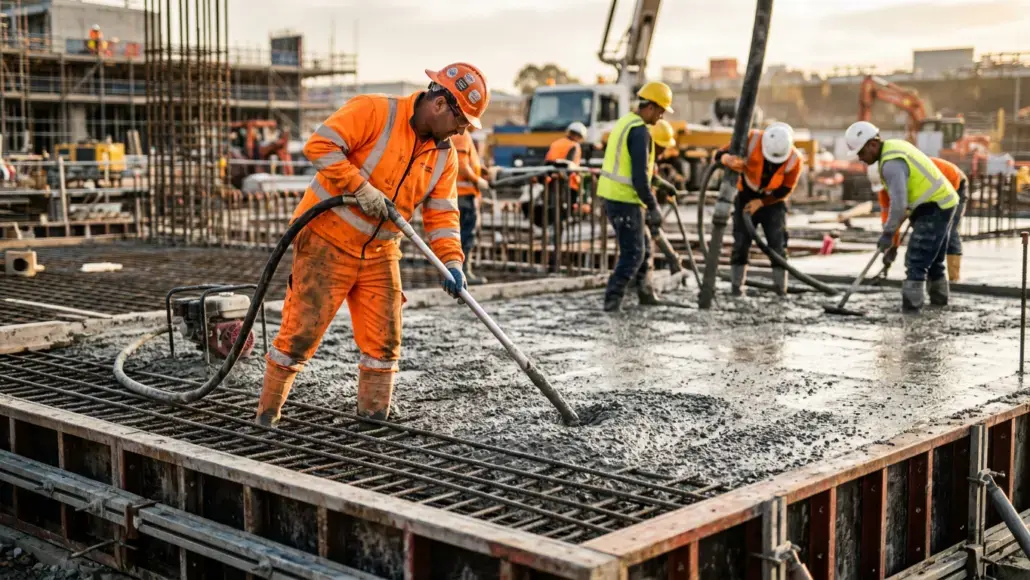
Concrete is the most widely used construction material on the planet, yet it is inherently susceptible to cracking due to tension, environmental stress, and chemical ingress. These cracks, while often microscopic at first, serve as pathways for water, chlorides, and oxygen to reach the steel reinforcement, leading to corrosion and eventually catastrophic failure. The development of self-healing concrete addresses this vulnerability by incorporating micro-encapsulated healing agents or specialized bacteria. When a crack forms, the capsules rupture or the bacteria activate, releasing substances that fill the void and restore the material’s structural continuity. This level of autonomy in material performance ensures that minor damage is addressed before it can escalate into a major structural deficit, thereby preserving the durability of the asset for generations.
Biological Mechanisms in Structural Healing
One of the most promising avenues in the field of self healing materials construction involves the use of microbial agents. Biological self-healing concrete utilizes specific strains of calcifying bacteria, such as Bacillus, which are embedded within the material in a dormant state. These bacteria are packaged alongside a nutrient source, often calcium lactate. When moisture and oxygen penetrate a crack, the bacteria awaken and begin a metabolic process that results in the precipitation of limestone (calcium carbonate). This mineral growth physically plugs the crack, creating a permanent and durable seal that prevents further degradation. The elegance of this solution lies in its longevity these bacteria can remain dormant within the concrete for decades, ready to respond to damage whenever it occurs.
The application of biological healing extends beyond simple crack filling. It enhances the overall impermeability of the structure, protecting it against the freeze-thaw cycles that plague infrastructure in colder climates. By sealing the surface, the bacterial activity prevents water from expanding within the pores of the concrete, which is a leading cause of surface scaling and internal cracking. Furthermore, the limestone produced is chemically compatible with the concrete matrix, ensuring that the repaired area maintains a high degree of bond strength. This intersection of biology and civil engineering showcases the potential for “living” infrastructure that can adapt and sustain itself under harsh environmental conditions.
Chemical and Synthetic Healing Agents
While biological solutions offer significant promise, synthetic healing mechanisms provide a different set of advantages, particularly in environments where microbial life might struggle to survive. Micro-encapsulation techniques involve tiny spheres filled with polymers, resins, or mineral agents that are dispersed throughout the material during mixing. When the mechanical stress of a crack exceeds the strength of the capsule wall, the healing agent is released via capillary action into the fissure. Once in contact with the atmosphere or a catalyst embedded in the matrix, the agent solidifies, bonding the crack walls together. This method is particularly effective for high-strength applications where the speed of the healing process is critical for maintaining load-bearing capacity.
Beyond capsules, some researchers are developing vascular networks within concrete, inspired by the human circulatory system. These networks consist of thin tubes or channels that can be refilled with healing agents from an external or internal reservoir. This allows for repeated healing in the same location, a feature that single-use capsules cannot provide. Vascular systems are especially useful for infrastructure subjected to fatigue or cyclical loading, such as bridges and high-traffic pavements. The ability to “pump” new life into a structure through integrated conduits represents the pinnacle of advanced materials construction, moving us closer to a future where buildings and bridges are maintained with the same internal logic as a biological entity.
Economic and Environmental Implications of Smart Materials
The transition to self healing materials construction is often scrutinized from a cost perspective, as the initial investment in these advanced materials is higher than traditional options. However, a comprehensive lifecycle analysis reveals a different story. The true cost of infrastructure is not found in the initial pour, but in the decades of maintenance, lane closures, and eventual reconstruction. By reducing the frequency and intensity of manual repairs, self-healing materials offer a significant return on investment. Furthermore, the extended service life of these structures means that fewer raw materials such as cement and aggregate are needed over time, directly contributing to a reduction in the carbon footprint of the construction sector.
Sustainable construction is no longer an optional goal it is a regulatory and ethical mandate. The production of cement is a major contributor to global carbon dioxide emissions. Therefore, any technology that doubles or triples the lifespan of a concrete structure is inherently a green technology. Self-healing materials minimize the need for the “demolish and rebuild” cycle that dominates current urban planning. Instead, we can focus on building high-performance, low-maintenance infrastructure that respects both the economic constraints of public budgets and the environmental limits of our planet. This holistic benefit ensures that smart materials will become the standard, rather than the exception, in the coming years.
Future Horizons and Industry Adoption
The path to widespread adoption of self-healing technologies involves overcoming several hurdles, including standardization and large-scale manufacturing. While laboratory results have been extraordinary, the performance of these materials in complex, real-world conditions must be rigorously documented. Engineers and architects require clear guidelines and building codes that account for the autonomous repair capabilities of these materials. As more pilot projects such as self-healing roads and tunnel linings are completed successfully, the confidence of the industry will grow. The shift from a culture of maintenance to a culture of resilience is well underway, supported by a growing ecosystem of material scientists, structural engineers, and technology providers.
In conclusion, the evolution of construction durability is inextricably linked to the intelligence we embed within the materials themselves. Self-healing materials construction is not just about fixing cracks it is about rethinking the relationship between the built environment and the passage of time. By embracing the principles of biomimicry and advanced chemistry, we are creating a world where our infrastructure is as resilient as it is functional. This technological progression promises a safer, more efficient, and more sustainable future, where the silent work of autonomous repair ensures that our cities remain strong and vibrant for the long term.