
















The traditional methods of communicating architectural and engineering designs 2D drawings and static 3D models are often insufficient for the complexities of modern construction projects. They require a high degree of mental visualization and can lead to misunderstandings between architects, engineers, and owners. However, the rise of AR VR construction collaboration is fundamentally changing the way project stakeholders interact with design data. By utilizing immersive technologies, we can now step inside a building before a single brick is laid, allowing for a level of design clarity and coordination that was previously impossible. This transition from looking at a design to experiencing it is the catalyst for a new era of collaborative excellence.
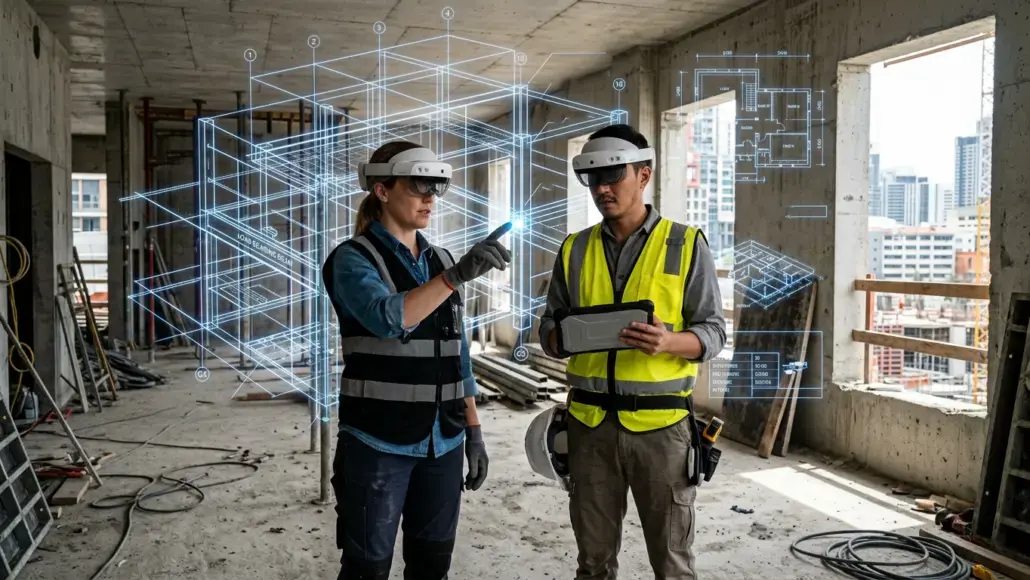
Virtual Reality (VR) provides a fully immersive experience, allowing users to navigate a digital twin of the project at a 1:1 scale. This is particularly valuable for design reviews and stakeholder engagement, as it allows non-technical clients to truly understand the spatial qualities, light, and materiality of a space. Augmented Reality (AR), on the other hand, overlays digital information onto the physical world. This is exceptionally useful on the construction site, where workers can use AR headsets to see the digital blueprints superimposed over the actual work-in-progress, facilitating precise installation and immediate clash detection. Together, these technologies are bridging the gap between imagination and reality.
Immersive Visualization and Stakeholder Alignment
The primary strength of AR VR construction collaboration is its ability to foster total alignment among all project participants. In a typical design meeting, different people may interpret a floor plan in different ways. In a VR walkthrough, everyone sees the same space, the same height, and the same potential conflicts. This shared visual context eliminates ambiguity and allows for immediate consensus on design decisions. For instance, if an owner realizes that a corridor feels too narrow or that a window placement doesn’t capture the desired view, these changes can be made in the digital model instantly, avoiding the massive costs associated with change orders during the construction phase.
Immersive visualization also plays a critical role in public consultations and community engagement. For large-scale infrastructure projects, such as bridges or transit stations, VR allows community members to see how the new structure will fit into their neighborhood. This transparency builds trust and can significantly accelerate the permitting process. By providing a tangible, easy-to-understand representation of the project, developers can address concerns and incorporate feedback early in the lifecycle. This level of engagement is becoming increasingly important as urban projects become more complex and socially scrutinized.
Real-Time Coordination and Clash Detection
One of the most technically demanding aspects of construction is the coordination of complex systems, such as HVAC, plumbing, and electrical conduits, within tight structural spaces. AR VR construction collaboration enhances this process by bringing clash detection into the 3D space. Instead of relying on a software report that lists coordinates of a pipe hitting a beam, engineers can use VR to visually inspect the conflict. They can walk to the exact location of the clash and experiment with different routing solutions in real-time. This spatial intuition leads to more creative and efficient problem-solving.
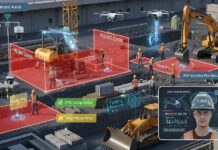
On the job site, AR takes this a step further by providing X-ray vision for contractors. Using AR glasses, a technician can see where the pipes and wires are supposed to be located behind a wall or under a floor. This ensures that the installation is performed exactly as intended and prevents accidental damage to existing services. If an onsite condition differs from the digital model, the contractor can use AR to document the discrepancy and send a 3D as-built update back to the design team instantly. This continuous feedback loop ensures that the digital thread remains accurate and that the project moves forward without the delays typical of manual RFI processes.
Remote Collaboration and Global Expertise
The global nature of today’s construction industry means that the best experts for a project may be located thousands of miles away. AR VR construction collaboration enables remote teamwork that feels as natural as being in the same room. Using social VR platforms, an architect in London, a structural engineer in New York, and a client in Tokyo can all meet within the 3D model of a project. They can walk through the space together, point to specific details, and leave 3D voice notes or annotations. This level of remote collaboration reduces the need for expensive and carbon-intensive travel while ensuring that the highest level of expertise is always available.
This remote capability is also invaluable for training and safety. New workers can undergo a virtual induction, learning the layout of a complex site and identifying potential hazards in a safe, simulated environment. They can practice operating heavy machinery or performing high-risk tasks until they are proficient, all without any risk to themselves or the physical site. By the time they step onto the actual job site, they have a level of familiarity and competence that significantly reduces the likelihood of accidents. This intersection of education and technology is a major driver of workforce development in the industry.
Overcoming Barriers to Widespread Immersive Tech Use
Despite the obvious benefits, the adoption of AR and VR in construction faces hurdles, including the cost of hardware and the need for high-performance data processing. However, as the technology matures and the price of headsets continues to fall, these barriers are rapidly diminishing. The integration of 5G connectivity is also a game-changer, enabling the seamless streaming of high-fidelity 3D models to portable devices on the job site. The most important factor for success is the integration of these tools into existing workflows, ensuring that they are seen as essential productivity enhancers rather than mere bells and whistles.
In conclusion, AR VR construction collaboration is more than just a visual gimmick it is a fundamental shift in the cognitive process of building. By allowing us to visualize, simulate, and coordinate in an immersive environment, we are reducing risk, improving quality, and fostering a more collaborative culture. These technologies empower us to build with a degree of precision and foresight that was previously unattainable. As we move forward, the use of AR and VR will become as common as the use of a tape measure, serving as an indispensable part of the modern builder’s toolkit and shaping the future of our built environment.