

























The decarbonization of buildings happens to be a very important aspect of the effort to achieve net zero emissions. That said, numerous buildings happen to pose challenges when it comes to decarbonization due to factors related to their age, structure, as well as location, among several others.
Cambridge University’s Department of Architecture researchers have gone on to create a new deep learning model that can help recognize buildings that could be prioritized for retrofitting as well as other decarbonizing measures. The researchers claim that this model can accurately pinpoint these buildings with a precision rate of 90%, and hence its development aims to address the issue at hand with a greater impact.
It is well to be note that this rate is expected to increase as additional data gets added.
Cambridge’s Sustainable Design Group, led by Dr. Ronita Bardhan, explains that this is the first scenario of AI being equipped to identify hard-to-decarbonize buildings by making use of open-source data.
Policymakers seek information on the number of houses that are required to be decarbonized but regularly face resource limitations that prevent them from conducting thorough audits on each individual house. Their model happens to have the capability and the capacity to guide individuals to high-priority houses, effectively saving them invaluable time as well as resources.
Houses that happen to be difficult to decarbonize are expected to contribute to more than 25% of overall direct housing emissions. That said, these houses are often not acknowledged or prioritized for improvement.
The new AI model, which has been published in the journal Sustainable Cities and Society, is anticipated to assist authorities when it comes to understanding the geographical distribution of hard-to-decarbonize residences. This will aid them in efficiently aiming and deploying interventions.
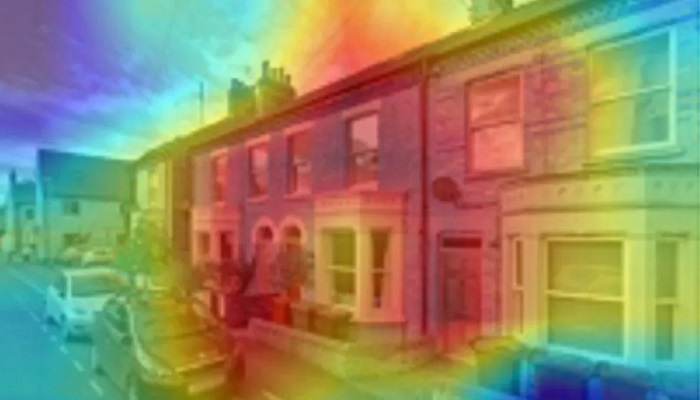
It is well to be noted that the model has been trained using a varied range of data sources for the city of Cambridge, like energy performance certificates, street view teamed with aerial view images, land surface temperature, as well as building stock information.
Their model went on to identify a total of 700 houses that are challenging to decarbonize as well as 635 houses that are not difficult to decarbonize.
Once the model is completely trained, it can get applied not only in other British cities but also within locations that happen to have limited datasets.
The researchers are at present developing a more advanced framework that will have additional data layers that will go on to have information on aspects such as energy use, poverty levels, and thermal images of building facades.
The model happens to come with the ability to identify particular elements of buildings, like roofs and windows, that happen to be losing the most heat. It can also gauge whether a building is old or happens to be modern. However, there is room for improvement when it comes to the level of detail and accuracy, which is anticipated to be significantly increased.
Additionally, they happen to be applying AI model training using thermal images of buildings from numerous cities in the UK and have established a partnership with a space products-based organization so as to leverage the benefits of higher-resolution thermal images that are obtained from newly launched satellites.