
























Close
MCE 2026
Thursday, January 29, 2026
JEC WORLD 2026

RSF Association board approves regulation on wood as building material

Note* - All images used are for editorial and illustrative purposes only and may not originate from the original news provider or associated company.

Subscribe

- Never miss a story with notifications

- Gain full access to our premium content

- Browse free from any location or device.

Media Packs

Expand Your Reach With Our Customized Solutions Empowering Your Campaigns To Maximize Your Reach & Drive Real Results!

– Access the Media Pack Now

– Book a Conference Call

Leave Message for Us to Get Back

Related stories

Digital Planning Tools for Building Envelope Systems

The complexity of modern architectural skins requires a fundamental shift in how we conceive, design, and manage the outer boundaries of our structures. By leveraging advanced digital planning platforms and integrated modeling environments, the construction industry can achieve unprecedented levels of precision, ensuring that every component of the structural perimeter is optimized for performance, durability, and long-term sustainability throughout its entire operational lifecycle.

Fire Safety and Compliance in Building Openings

The protection of life and property in the built environment depends heavily on the integrity of apertures within fire-rated compartments, where every door and window must function as a reliable barrier against the spread of heat and smoke. By strictly adhering to modern fire regulations and implementing rigorously tested opening systems, architects and developers can ensure a high level of passive fire protection that safeguards occupants and facilitates a more effective response from emergency services.

High Performance Windows Meeting Global Energy Codes Today

The implementation of superior fenestration technology is no longer an optional upgrade but a fundamental necessity for architectural projects aiming to achieve regulatory compliance and long-term sustainability. By integrating advanced glazing and framing solutions, buildings can significantly reduce their operational energy demand while providing occupants with enhanced comfort and durability against a backdrop of increasingly stringent global construction standards.
- Advertisement -
Advancing Prefabrication 2026

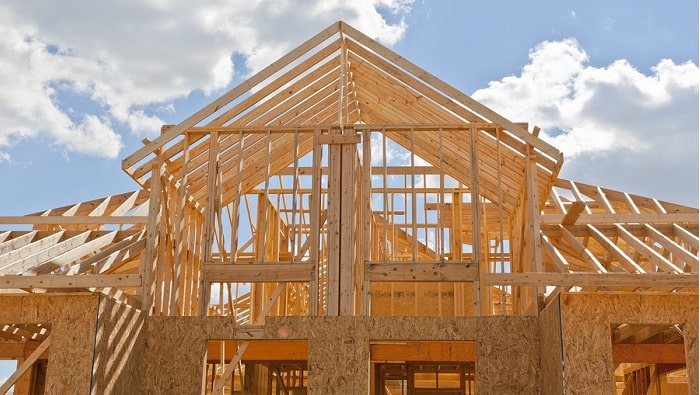
The Rancho Santa Fe Association board approved a new regulatory code Aug. 6 regarding the use of wood in new home builds and remodels: wood is allowed but is restricted in its use. The vote was 5-1-1 with Director Bill Strong abstaining.

The new regulation was posted in June and Association Building Commissioner Maryam Babaki said they received only two comments. No one was in attendance at the Aug. 6 virtual meeting to provide public comment.

“I’m shocked to be honest that a larger percentage of our residents didn’t weigh in on this,” said Vice President Mike Gallagher.

In a 4-3 vote in March 2019, the Association board passed a resolution allowing California ranch architecture in the Covenant which also stated that the use of wood, while not preferred, is consistent with the Covenant if the material is consistent with the allowed styles.

As Babaki has said, the Protective Covenant points to the importance of exterior materials in preserving the character of the community and enhancing its Latin-inspired architecture. The new regulation seeks to further clarify the use of wood as an exterior cladding as there have been many different interpretations of the resolution since it passed last March.

Paragraph 159 of the Protective Covenant states that “plaster, adobe and stucco, concrete, stone are preferred” — wood is not listed as a preferred material but it is not prohibited. The new Chapter 49 of the regulatory code states that wood (board and batten or shiplap) will be allowed in the case of new construction up to a maximum of 25% of the main residence and/or structure’s exterior wall surface.

Wood will also be allowed in the remodel of an existing main residence as long as wood was used as the primary exterior wall surface in the existing main residence and it is limited to no more than 25% of the original residence’s square footage. Additionally, the remodel, addition or additional structure shall include at least 50% of a preferred material.

Gallagher, who did not support the resolution in 2019, seconded Director Sharon Ruhnau’s motion to approve the new regulation as long as it was reviewed within one year to gauge the impact and determine if it needs to be adjusted. He said while perhaps not perfect, the new regulation is clear and consistent and unlike last year’s resolution, was developed in a less heavy-handed approach.

“We’ve been criticized as a board for getting involved with this process of giving guidance to the Art Jury,” Gallagher said. “And there have been criticisms of the Art Jury over many decades that there has been inconsistency in the application of the rules. This board has an obligation to provide clarity as much as possible and to give guidance to the Art Jury. We don’t want to be doing this, we have an obligation to be doing this.”

Director Laurel Lemarie was the sole no vote against the resolution. As former Art Juries have approved a lot of wood Ranch homes, including her own, she said it was “ridiculous” that if she wanted to add on to her house she could only add on 25%.

Strong’s abstention was due to his desire for the board to revisit the use of non-preferred materials sooner rather than later as Rancho Santa Fe is approaching the limits of their proliferation in use. He said while the clarified resolution establishes “reasonable” limits for the use of the non-preferred material of wood, glass is another material that is increasingly being used in new construction.

“Recent, modern-ish approvals have now been constructed and we can see the light and style impacts of these,” Strong said of new homes with glass walls. “I think we need we need to come back to glass as a non-preferred exterior surface in the next month or two, not 12 months.”

The Association and the building commissioner are continuing work on the large undertaking of updating the regulatory code and the residential design guidelines, which in some cases are 30 to 40 years old. In September, the board will consider the Covenant interpretation regarding California Ranch architecture as well as the outdoor lighting regulation, which has been posted for comments.

Babaki said public input as the draft updates are posted is very important as it can help shape the regulations and address all concerns.

There is still an opening on the Art Jury following a member resignation and applications are due by Sept. 15. Two terms will also be opening up this December.

Achema Middleeast

Latest stories

Related stories

Digital Planning Tools for Building Envelope Systems

The complexity of modern architectural skins requires a fundamental shift in how we conceive, design, and manage the outer boundaries of our structures. By leveraging advanced digital planning platforms and integrated modeling environments, the construction industry can achieve unprecedented levels of precision, ensuring that every component of the structural perimeter is optimized for performance, durability, and long-term sustainability throughout its entire operational lifecycle.

Fire Safety and Compliance in Building Openings

The protection of life and property in the built environment depends heavily on the integrity of apertures within fire-rated compartments, where every door and window must function as a reliable barrier against the spread of heat and smoke. By strictly adhering to modern fire regulations and implementing rigorously tested opening systems, architects and developers can ensure a high level of passive fire protection that safeguards occupants and facilitates a more effective response from emergency services.

High Performance Windows Meeting Global Energy Codes Today

The implementation of superior fenestration technology is no longer an optional upgrade but a fundamental necessity for architectural projects aiming to achieve regulatory compliance and long-term sustainability. By integrating advanced glazing and framing solutions, buildings can significantly reduce their operational energy demand while providing occupants with enhanced comfort and durability against a backdrop of increasingly stringent global construction standards.

Sustainable Materials Shaping Future Building Envelopes

The selection of environmentally responsible building components is fundamentally altering the trajectory of modern construction, moving away from carbon-intensive resources toward innovative, low-impact alternatives. By utilizing advanced bio-based composites, recycled metals, and high-performance insulation, designers are creating resilient structures that not only minimize their initial environmental footprint but also provide superior operational efficiency throughout their entire lifecycle.

Subscribe

- Never miss a story with notifications

- Gain full access to our premium content

- Browse free from any location or device.

Media Packs

Expand Your Reach With Our Customized Solutions Empowering Your Campaigns To Maximize Your Reach & Drive Real Results!

– Access the Media Pack Now

– Book a Conference Call

Leave Message for Us to Get Back

Translate »