

























Close
MCE 2026
Thursday, January 29, 2026
JEC WORLD 2026

Public sector projects drive Singapore’s construction recovery

Note* - All images used are for editorial and illustrative purposes only and may not originate from the original news provider or associated company.

Subscribe

- Never miss a story with notifications

- Gain full access to our premium content

- Browse free from any location or device.

Media Packs

Expand Your Reach With Our Customized Solutions Empowering Your Campaigns To Maximize Your Reach & Drive Real Results!

– Access the Media Pack Now

– Book a Conference Call

Leave Message for Us to Get Back

Related stories

How Advanced Rigging Solutions Keep Large Construction Projects on Schedule

Large construction projects live and die by their schedules....

Facade Design Trends Influencing Urban Architecture

The rapid evolution of the building exterior is fundamentally reshaping the visual and functional identity of our cities, moving beyond static surfaces toward dynamic, responsive systems that interact with their surroundings. By embracing innovative materials and digital manufacturing processes, designers are creating high-performance envelopes that not only redefine building aesthetics but also contribute to the resilience and sustainability of the modern urban landscape.

Digital Planning Tools for Building Envelope Systems

The complexity of modern architectural skins requires a fundamental shift in how we conceive, design, and manage the outer boundaries of our structures. By leveraging advanced digital planning platforms and integrated modeling environments, the construction industry can achieve unprecedented levels of precision, ensuring that every component of the structural perimeter is optimized for performance, durability, and long-term sustainability throughout its entire operational lifecycle.
- Advertisement -
Advancing Prefabrication 2026

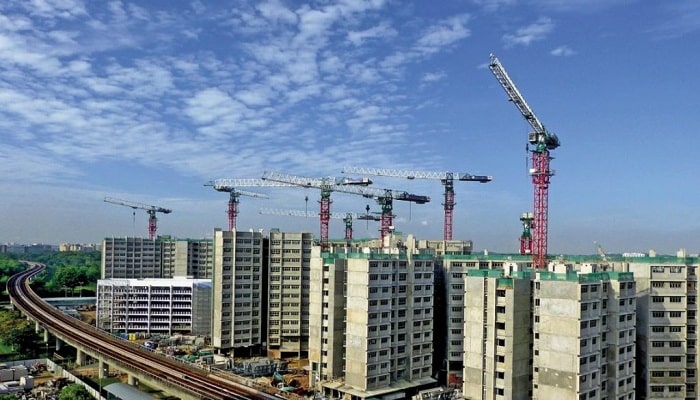
Singapore’s construction sector will see a soft recovery in 2021 and regain momentum over the next five years in line with global recovery from the pandemic, led by government projects.

Our latest Singapore Market Insight Report reflects a cautiously optimistic outlook for the construction sector, with sectoral recovery led by public sector projects.

Construction activity in 2021 will continue to be driven mainly by the public sector at 65 percent, up from 62 percent in 2020. Prospects for construction demand is expected to improve, albeit only marginally. The Building and Construction Authority projects construction demand for 2021 to be between S$23 billion and S$28 billion.

Notwithstanding that construction demand for 2021 is not yet back to pre-COVID levels, the Singapore government expects a sustained recovery in construction demand over the next five years. Some of the notable projects in the pipeline include subsequent phases of major MRT infrastructure projects, new healthcare facilities and new regional centres.

Demand from the private residential segment is anticipated to remain soft this year with a reduction in the number of land parcels put up for sale in the first half of 2021. However, the demand for collective sales could pick up later this year, as developers may start looking to replenish their land banks.

We anticipate a low demand for new office and retail developments with opportunities for more office re-stacking and consolidation fit-out works, as companies consider more flexible working models to ensure the relevance of office workspace.

While construction output is due to rise to the range of S$24 billion and S$27 billion in 2021, up from S$19.5 billion last year, this increase will be largely attributed to the backlog created during the pandemic.

Despite a decline in construction activity, tender pricing for new projects is anticipated to increase between six and ten percent, driven by contractors allowing for labour shortages, increases in key construction material costs (reinforcement), availability of contracting resources and the implementation of the COVID-safe management measures. Given the level of uncertainty in the current market, a much wider range of tender pricing has also been reflected in some project tenders, in some instances more than 10 percent over and above last year’s price level. It is anticipated that it will take some time for tender prices to stabilise.

We foresee further industry consolidation and Singapore’s construction supply chain to face continued challenges with upstream and downstream disruptions.

To address a backlog of projects, severe labour shortages and lower productivity, all players across the value chain will need to work together to integrate and digitalise processes, upskill workers and uplift the capabilities of the entire Built Environment sector. The pandemic has reaffirmed the need to accelerate the adoption of Design for Manufacturing and Assembly (DfMA) technologies to help build a more resilient industry and reduce reliance on foreign workers.

Khoo Sze Boon, Managing Director, Singapore said: “Singapore’s construction industry remains one of the most severely affected sectors hit by the COVID-19 pandemic. As we continue down the path to recovery with vaccination programmes in progress and the number of cases under control, it is imperative that the construction sector rebuilds itself through collaboration and innovation. To ensure the sector’s success over the medium to long term, we need to build up the DfMA competencies of all players across the supply chain, drive the development of sustainable design and adoption of innovative technologies and materials, as well as steer research and development on renewable energy.”

Achema Middleeast

Latest stories

Related stories

How Advanced Rigging Solutions Keep Large Construction Projects on Schedule

Large construction projects live and die by their schedules....

Facade Design Trends Influencing Urban Architecture

The rapid evolution of the building exterior is fundamentally reshaping the visual and functional identity of our cities, moving beyond static surfaces toward dynamic, responsive systems that interact with their surroundings. By embracing innovative materials and digital manufacturing processes, designers are creating high-performance envelopes that not only redefine building aesthetics but also contribute to the resilience and sustainability of the modern urban landscape.

Digital Planning Tools for Building Envelope Systems

The complexity of modern architectural skins requires a fundamental shift in how we conceive, design, and manage the outer boundaries of our structures. By leveraging advanced digital planning platforms and integrated modeling environments, the construction industry can achieve unprecedented levels of precision, ensuring that every component of the structural perimeter is optimized for performance, durability, and long-term sustainability throughout its entire operational lifecycle.

Fire Safety and Compliance in Building Openings

The protection of life and property in the built environment depends heavily on the integrity of apertures within fire-rated compartments, where every door and window must function as a reliable barrier against the spread of heat and smoke. By strictly adhering to modern fire regulations and implementing rigorously tested opening systems, architects and developers can ensure a high level of passive fire protection that safeguards occupants and facilitates a more effective response from emergency services.

Subscribe

- Never miss a story with notifications

- Gain full access to our premium content

- Browse free from any location or device.

Media Packs

Expand Your Reach With Our Customized Solutions Empowering Your Campaigns To Maximize Your Reach & Drive Real Results!

– Access the Media Pack Now

– Book a Conference Call

Leave Message for Us to Get Back

Translate »