
























Close
MCE 2026
Tuesday, January 20, 2026
JEC WORLD 2026

Green Concrete Lasts Longer Than Portland Cement – Research

Note* - All images used are for editorial and illustrative purposes only and may not originate from the original news provider or associated company.

Subscribe

- Never miss a story with notifications

- Gain full access to our premium content

- Browse free from any location or device.

Media Packs

Expand Your Reach With Our Customized Solutions Empowering Your Campaigns To Maximize Your Reach & Drive Real Results!

– Access the Media Pack Now

– Book a Conference Call

Leave Message for Us to Get Back

Related stories

Future Ready Construction Equipment for Infrastructure Growth

The next generation of heavy machinery is being forged at the intersection of sustainability and high-performance computing. As nations embark on massive infrastructure renewals, the equipment leading the charge will be defined by its ability to integrate with digital twins, utilize alternative energy sources, and operate within a connected ecosystem that prioritizes long-term resilience and productivity.

Safety Innovation in Modern Construction Machinery Design

The pursuit of a zero-harm workplace is driving a technological revolution in the way heavy equipment is engineered and operated. By integrating advanced sensors and automated intervention systems, the industry is creating a protective shield around its most valuable assets the people on the ground and in the cab significantly reducing the inherent risks of complex building environments.

Compact Construction Equipment Meeting Urban Project Needs

The rapid expansion of city infrastructure requires a new generation of machinery designed for high-density environments. These specialized tools prioritize maneuverability and reduced environmental impact, allowing contractors to execute complex builds in tight spaces without compromising the efficiency or safety of the surrounding metropolitan area.
- Advertisement -
Advancing Prefabrication 2026

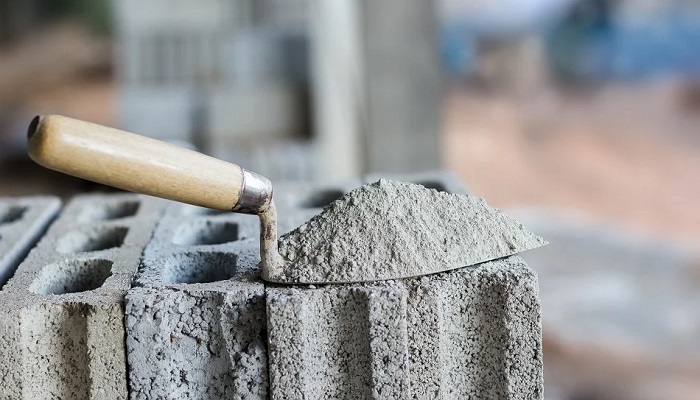
The researchers from RMIT have created a kind of green conclave that has twice as much recycled coal ash as present low-carbon concrete that goes on to halve the cement needed and, at the same time, lasts much longer as compared to regular Portland cement concrete.

The fact is that coal ash happens to be found in abundance around coal-fired power stations, and as a matter of fact, across the world, the power stations happen to produce almost 1.2 billion tonnes of it per year. As per certain studies, coal ash in Australia comprises around 20% of all the waste. It is indeed quite a staggering figure, and at the same time, happens to be a safe bet that it is going to be abundant long into the renewable energy shift.

Notably, it is indeed a massive potential material resource, and the fact is that low-carbon concrete manufacturers are using it like a substitute for cement, essentially replacing almost 40% of the cement. From an environmental perspective, this goes on to make quite phenomenal use of a waste product while also cutting down on cement, which goes on to account for almost 8% of the worldwide carbon emissions.

Interestingly, the RMIT team has been consistently working along with the AGL Loy Yang Power Station as well as the Ash Development Association of Australia in an endeavor to amp up the ash content so as to replace more than 80% of cement.

In order to achieve this, the researchers made use of a low-calcium fly ash mix along with 18% hydrated lime as well as 3% of the nanosilica, which acts like strengthening agents, and then happened to pour some concrete and began testing the mechanical properties.

Interestingly, the resultant high-volume fly ash-HFVA-80 concrete displayed a compressive strength rise from 22 to 71 MPa in 7 and 450 days. It also attained flexural strengths of 2.7-8.7 MPa, thereby splitting the tensile strength of 1.6–5.0 MPa as well as an elastic modulus of 28.9–37.0 GPa. It is well to be noted that it outlasted regular Portland cement with time in the case of exposing to acids as well as sulphates for 2 years.

In a press release, Dr. . Chamila Gunasekara from the RMIT School of Engineering remarked that the addition of nanoadditives so as to modify the chemistry of the concrete enables more fly ash to be added sans comprising the performance of engineering.

The team says that it sees that this technique does not need fine fly ash and looks to work about it as well, along with the low-grade pond ash having now created as well as tested on structural concrete beams from the latter, which have gone on to pass the Australian standards certification when it comes to engineering performance.

According to Gunasekara, it is indeed exciting that the preliminary outcomes show lower-grade pond ash, thereby potentially opening a totally novel but massively underutilized resource when it comes to cement replacement. Vis-à-vis fly ash, pond ash happens to be underexploited within the construction domain due to its numerous attributes. The point is that there happen to be hundreds of megatonnes of ash waste that happen to be sitting in dams across Australia and even more across the world. The ash ponds indeed pose a risk of becoming an environmental hazard, and the capacity to repurpose this ash within construction materials at scale would go on to be a phenomenal success. Apparently, the team from RMIT has also worked in collaboration with Hokkaido University so as to create a pilot computer modelling system that predicts the performance of such new concrete mixtures with time and the team looks to make use of the software in order to evaluate and also make optimal use of new mixes.

Achema Middleeast

Latest stories

Related stories

Future Ready Construction Equipment for Infrastructure Growth

The next generation of heavy machinery is being forged at the intersection of sustainability and high-performance computing. As nations embark on massive infrastructure renewals, the equipment leading the charge will be defined by its ability to integrate with digital twins, utilize alternative energy sources, and operate within a connected ecosystem that prioritizes long-term resilience and productivity.

Safety Innovation in Modern Construction Machinery Design

The pursuit of a zero-harm workplace is driving a technological revolution in the way heavy equipment is engineered and operated. By integrating advanced sensors and automated intervention systems, the industry is creating a protective shield around its most valuable assets the people on the ground and in the cab significantly reducing the inherent risks of complex building environments.

Compact Construction Equipment Meeting Urban Project Needs

The rapid expansion of city infrastructure requires a new generation of machinery designed for high-density environments. These specialized tools prioritize maneuverability and reduced environmental impact, allowing contractors to execute complex builds in tight spaces without compromising the efficiency or safety of the surrounding metropolitan area.

Telematics Transforming Construction Equipment Management

The adoption of sophisticated data transmission systems is revolutionizing how heavy machinery is monitored and maintained. By providing a continuous stream of operational insights, these tools allow fleet managers to transition from reactive repairs to a proactive, data-driven strategy that maximizes uptime and optimizes resource allocation across complex jobsites.

Subscribe

- Never miss a story with notifications

- Gain full access to our premium content

- Browse free from any location or device.

Media Packs

Expand Your Reach With Our Customized Solutions Empowering Your Campaigns To Maximize Your Reach & Drive Real Results!

– Access the Media Pack Now

– Book a Conference Call

Leave Message for Us to Get Back

Translate »