
























Close
WORLD OF CONCRETE
Saturday, December 20, 2025
JEC WORLD 2026

EU building data project to drive full decarbonisation in three European countries

Note* - All images used are for editorial and illustrative purposes only and may not originate from the original news provider or associated company.

Subscribe

- Never miss a story with notifications

- Gain full access to our premium content

- Browse free from any location or device.

Media Packs

Expand Your Reach With Our Customized Solutions Empowering Your Campaigns To Maximize Your Reach & Drive Real Results!

– Access the Media Pack Now

– Book a Conference Call

Leave Message for Us to Get Back

Related stories

How To Choose Trailer GPS Units That Actually Work for UK Fleets

You know the drill. A trailer van goes missing...

Improving Construction Efficiency Without Compromising Quality

Achieving construction efficiency requires process-focused improvements that enhance productivity while maintaining or improving quality standards. Through workflow optimization, enhanced coordination mechanisms, quality management practices, and strategic technology integration, construction organizations deliver projects faster and more cost-effectively without sacrificing structural integrity or compliance. Balancing speed with excellence transforms construction management from a trade-off exercise into a synergistic approach where efficiency and quality reinforce one another.

Training Strategies for Operating Advanced Construction Equipment

Modern construction equipment demands operator skills that extend far beyond basic machinery operation. Comprehensive training programs combining classroom instruction, simulator practice, and hands-on field experience prepare operators to safely and efficiently manage increasingly sophisticated equipment. Through structured certification approaches, ongoing skill development, and commitment to continuous learning, construction organizations develop operator competency that enhances project safety, productivity, and equipment longevity.
- Advertisement -
Achema Middleeast

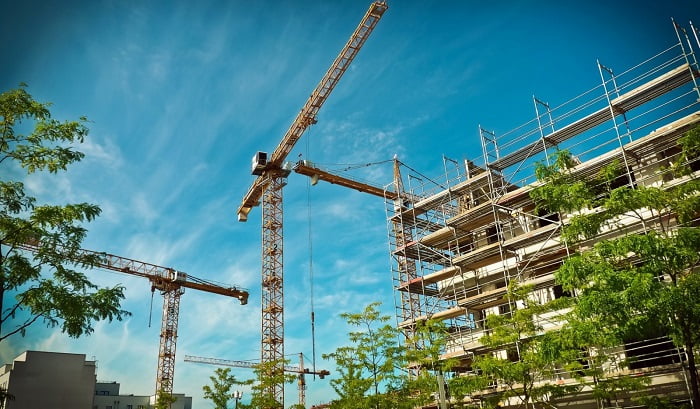
Czechia, Ireland and Spain will be the first countries to participate in a new initiative which aims to boost the availability of quality building climate data, a critical step towards full decarbonisation of the heavily emitting construction sector, responsible for almost 40 percent of global carbon emissions. The INDICATE initiative will bring together governments, industry and academia to tackle one of the most common barriers to enacting policies which will ensure climate neutral construction: a lack of reliable and comprehensive emissions data for buildings.

INDICATE seeks to accelerate policy development across Europe by generating critical baseline data for buildings, which can help guide policymakers to set carbon limits that cover the full lifecycle impact of buildings, from manufacture and construction, through to deconstruction and waste processing – the so-called ‘whole life carbon limits’.

Currently, almost all building regulations in Europe only address carbon emissions from the building operation, ignoring the emissions that are generated before a building comes into use and at the end of its life. These embodied carbon emissions – which together with operational CO2 are known as whole life carbon – can be more than half of a new building’s total carbon footprint and threaten to consume national construction carbon budgets well ahead of 2050 net zero goals.

Certain leading markets like Denmark, Finland, France and the Netherlands have already enacted whole life carbon policies. The first crucial step in setting these was to establish baselines. Other European countries are held back from following this example due to a lack of necessary data.

The coalition behind INDICATE is tackling this data gap. The innovative public-private approach of the project aims to secure broad support and investment for the results from industry and policy makers alike, helping to ensure the resulting data can be quickly put to use. This is just the beginning of what the coalition hopes will be a European-wide programme to finally quantify and drive a quick reduction in unregulated carbon emissions.

The EU recently took its own first steps towards whole life carbon regulation with proposals to introduce mandatory reporting in the revision of a key piece of European buildings policy, the Energy Performance of Buildings Directive (EPBD). By strengthening political support and industry capability amongst more countries INDICATE will help to overcome opposition seen from some Member States to the ambitious proposals EU lawmakers have put forward for the EPBD revision.

Achema Middleeast

Latest stories

Related stories

How To Choose Trailer GPS Units That Actually Work for UK Fleets

You know the drill. A trailer van goes missing...

Improving Construction Efficiency Without Compromising Quality

Achieving construction efficiency requires process-focused improvements that enhance productivity while maintaining or improving quality standards. Through workflow optimization, enhanced coordination mechanisms, quality management practices, and strategic technology integration, construction organizations deliver projects faster and more cost-effectively without sacrificing structural integrity or compliance. Balancing speed with excellence transforms construction management from a trade-off exercise into a synergistic approach where efficiency and quality reinforce one another.

Training Strategies for Operating Advanced Construction Equipment

Modern construction equipment demands operator skills that extend far beyond basic machinery operation. Comprehensive training programs combining classroom instruction, simulator practice, and hands-on field experience prepare operators to safely and efficiently manage increasingly sophisticated equipment. Through structured certification approaches, ongoing skill development, and commitment to continuous learning, construction organizations develop operator competency that enhances project safety, productivity, and equipment longevity.

Managing Material Costs in a Volatile Construction Market

Construction material price volatility presents significant challenges to project budgeting and risk management. Strategic procurement approaches, supply chain resilience strategies, and contract mechanisms that balance risk effectively enable stakeholders to navigate market fluctuations successfully. Understanding market dynamics, implementing escalation clauses, developing flexible procurement strategies, and maintaining strong supplier relationships help construction professionals maintain project viability despite unpredictable material cost movements.

Subscribe

- Never miss a story with notifications

- Gain full access to our premium content

- Browse free from any location or device.

Media Packs

Expand Your Reach With Our Customized Solutions Empowering Your Campaigns To Maximize Your Reach & Drive Real Results!

– Access the Media Pack Now

– Book a Conference Call

Leave Message for Us to Get Back

Translate »