


















Close
MCE 2026
Thursday, January 29, 2026
JEC WORLD 2026

CEMEX awarded grant from United States Department of Energy to develop carbon capture technology

Note* - All images used are for editorial and illustrative purposes only and may not originate from the original news provider or associated company.

Subscribe

- Never miss a story with notifications

- Gain full access to our premium content

- Browse free from any location or device.

Media Packs

Expand Your Reach With Our Customized Solutions Empowering Your Campaigns To Maximize Your Reach & Drive Real Results!

– Access the Media Pack Now

– Book a Conference Call

Leave Message for Us to Get Back

Related stories

How Advanced Rigging Solutions Keep Large Construction Projects on Schedule

Large construction projects live and die by their schedules....

Digital Planning Tools for Building Envelope Systems

The complexity of modern architectural skins requires a fundamental shift in how we conceive, design, and manage the outer boundaries of our structures. By leveraging advanced digital planning platforms and integrated modeling environments, the construction industry can achieve unprecedented levels of precision, ensuring that every component of the structural perimeter is optimized for performance, durability, and long-term sustainability throughout its entire operational lifecycle.

Fire Safety and Compliance in Building Openings

The protection of life and property in the built environment depends heavily on the integrity of apertures within fire-rated compartments, where every door and window must function as a reliable barrier against the spread of heat and smoke. By strictly adhering to modern fire regulations and implementing rigorously tested opening systems, architects and developers can ensure a high level of passive fire protection that safeguards occupants and facilitates a more effective response from emergency services.
- Advertisement -
Advancing Prefabrication 2026

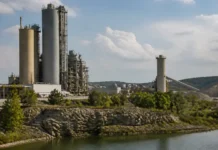
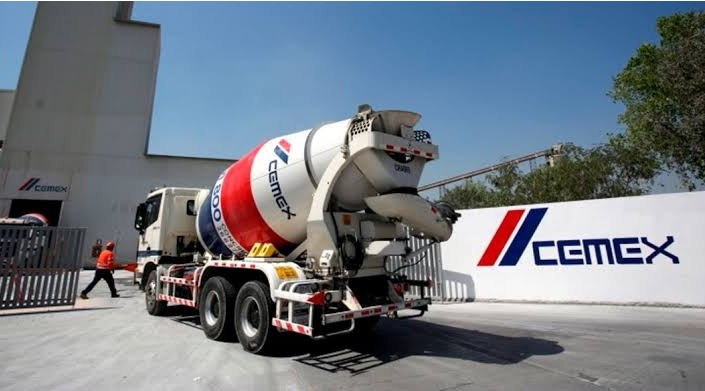
CEMEX has announced that its US operations have been awarded a grant from the United States Department of Energy to research, engineer and develop a pilot for a breakthrough carbon capture unit. The project, anchored to CEMEX’s Victorville, California cement plant, will also contemplate cost-competitive solutions to completely close the loop on current carbon emissions.

In this initiative led by RTI international (RTI), a non-profit research institute, CEMEX is joining forces with UK-based Carbon Clean and Oak Ridge National Laboratory. The goal of the consortium is to increase efficiencies and value in CEMEX’s overall building material fabrication process, while significantly reducing its CO2 footprint through the leverage of technological upgrades. The specific objectives of this project also include the development, optimisation and scaleup of specific CO2 capture process components, as well as incorporation of next-generation non-aqueous solvents. Integration aspects of the low-cost, modular, process intensification capture technology with CEMEX’s cement plant are also planned to be covered, together with subsequent cost evaluations and technical considerations for the transformation of captured CO2 into new marketable products.

“CEMEX is committed to being part of the solution to reduce carbon emissions globally and to deliver net-zero CO2 concrete to all of our customers by 2050,” said CEMEX USA President Jaime Muguiro. “We cannot achieve these without innovative technology and collaborative relationships with both public and private organisations who share a commitment to climate action. This grant gives us an excellent opportunity to further develop a new technology to help us all reach our goals.”

“With CEMEX being a project partner and technology stakeholder, the design and integration of the capture system with its cement plant, and subsequent use of the CO2 at its concrete plants are set to align with the industry’s needs”, said Paul Mobley, Research Chemical Engineer at RTI. “The development of this highly disruptive CO2 capture technology could accelerate industry adoption and thereby significantly reduce industrial emissions.”

“Oak Ridge National Laboratory is dedicated to translating science into industry solutions for addressing some of the most critical problems facing our nation,” said Xin Sun, interim associate laboratory director for energy science and technology at ORNL. “We look forward to applying our advanced manufacturing expertise to this project in support of a clean, efficient, flexible and secure energy future.”

Aniruddha Sharma, CEO of Carbon Clean, said: “CEMEX shares our mission to enable the net zero transition by developing affordable modularised carbon capture solutions. This latest grant from the US government endorses the importance of such work. We are looking forward to delivering this breakthrough project with CEMEX further strengthening our relationship and helping to decarbonise the cement industry.”

CEMEX announced in 2020 its Climate Action strategy, defining a global target of a 35% reduction of CO2 emissions per ton of cementitious products by 2030. To complement this strategy with a longer-term vision, CEMEX also established an ambition to deliver net-zero CO2 concrete to all its customers globally by 2050.

CEMEX is successfully introducing Vertua®, its low carbon and net-zero CO2 products, in the countries where it has a presence. Vertua is the result of the work done by the CEMEX’s Research and Development Centre in Switzerland, and it is a milestone towards carbon-neutral construction becoming a reality.

Achema Middleeast

Latest stories

Related stories

How Advanced Rigging Solutions Keep Large Construction Projects on Schedule

Large construction projects live and die by their schedules....

Digital Planning Tools for Building Envelope Systems

The complexity of modern architectural skins requires a fundamental shift in how we conceive, design, and manage the outer boundaries of our structures. By leveraging advanced digital planning platforms and integrated modeling environments, the construction industry can achieve unprecedented levels of precision, ensuring that every component of the structural perimeter is optimized for performance, durability, and long-term sustainability throughout its entire operational lifecycle.

Fire Safety and Compliance in Building Openings

The protection of life and property in the built environment depends heavily on the integrity of apertures within fire-rated compartments, where every door and window must function as a reliable barrier against the spread of heat and smoke. By strictly adhering to modern fire regulations and implementing rigorously tested opening systems, architects and developers can ensure a high level of passive fire protection that safeguards occupants and facilitates a more effective response from emergency services.

High Performance Windows Meeting Global Energy Codes Today

The implementation of superior fenestration technology is no longer an optional upgrade but a fundamental necessity for architectural projects aiming to achieve regulatory compliance and long-term sustainability. By integrating advanced glazing and framing solutions, buildings can significantly reduce their operational energy demand while providing occupants with enhanced comfort and durability against a backdrop of increasingly stringent global construction standards.

Subscribe

- Never miss a story with notifications

- Gain full access to our premium content

- Browse free from any location or device.

Media Packs

Expand Your Reach With Our Customized Solutions Empowering Your Campaigns To Maximize Your Reach & Drive Real Results!

– Access the Media Pack Now

– Book a Conference Call

Leave Message for Us to Get Back

Translate »