



























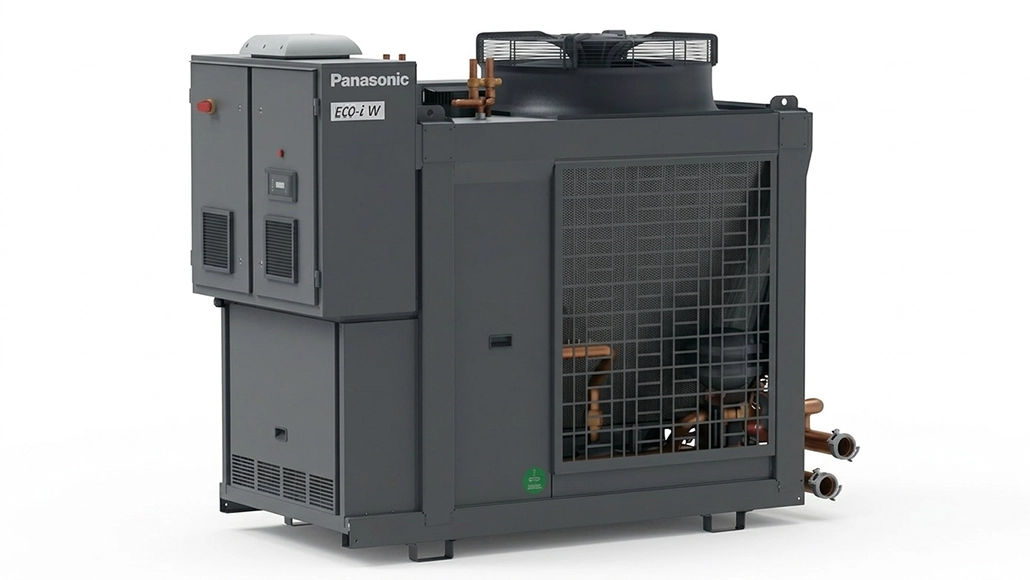

Panasonic has introduced a new propane-based heat pump aimed at commercial, light industrial, and multi-residential applications, expanding its existing ECOi-W lineup. The newly launched Aqua-G EVO series, developed by Panasonic Heating & Cooling Solutions, represents a targeted push into sustainable heating systems designed to directly replace traditional gas boilers. Positioned specifically for structured heating substitution rather than general-purpose use, the propane heat pump is engineered to meet rising demand across regulated markets.
The system integrates an inverter-driven compressor and pump alongside advanced refrigerant circuitry and defrost management technologies. Compared with earlier ECOi-W configurations that rely on scroll compressors and variable-speed pumps, this setup enables tighter temperature control and improved seasonal efficiency. Panasonic emphasized that the propane heat pump maintains operational stability even under harsh winter conditions, supporting consistent heating performance where reliability is critical.
“The new heat pump has been purpose-built to meet the rising commercial demand for sustainable heating technologies that can effectively replace gas boilers across commercial, light industrial, and multi-residential buildings,” Panasonic said in a statement. “Using the natural refrigerant propane (R290), with an ultra-low global warming potential (GWP) of just 0.02, the range aligns with evolving F-Gas regulations and supports corporate sustainability commitments across European markets.”
Performance metrics outlined by the company indicate that the system can retain approximately 85 % of its capacity at -10 C outdoor temperatures. It is also capable of producing 55 C water at -18 C ambient conditions and up to 75 C for domestic hot water at -2 C. The Aqua-G EVO series is available in 60, 80, and 110 kW configurations, allowing deployment across varied commercial installations. Additionally, up to eight units can be cascaded to deliver a combined capacity nearing 880 kW, while smaller configurations of up to four units enable space-efficient, side-by-side installation within plant rooms.
Panasonic further noted that the system integrates into its broader HVAC ecosystem, which includes high-efficiency chillers and fan coils equipped with nanoe X technology to enhance air quality. Centralized digital platforms also allow operators to manage multiple sites, streamlining operational control across installations.
