



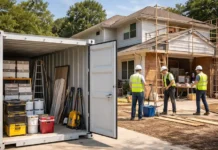


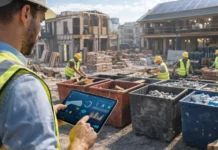













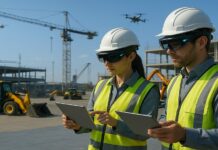





The construction industry stands at a critical inflection point, where the convergence of sustainability imperatives, technological innovation, and evolving workforce challenges is fundamentally reshaping how buildings are conceived, designed, and delivered. As we advance into 2026, understanding the trends shaping the construction industry has become essential for construction professionals seeking competitive advantage. The trends shaping the construction industry in 2026 represent a departure from traditional methodologies, introducing a paradigm that prioritizes efficiency, environmental responsibility, and technological integration. Whether through material innovation, automation technologies, or new delivery methods, these trends will determine which firms thrive and which fall behind.
Sustainability Revolutionizing Construction Practices
The sustainability imperative has transcended aspirational marketing to become a core operational requirement across the construction industry. Building practices are undergoing a profound transformation as regulatory frameworks, client expectations, and environmental imperatives converge to demand fundamentally different approaches to how infrastructure and buildings are created. The construction industry now operates within a landscape where sustainable construction has shifted from a competitive differentiator to a baseline expectation for project viability and stakeholder acceptance.
Adaptive Reuse Transforms Existing Structures into New Assets
The adoption of adaptive architecture and retrofitting represents one of the most significant evolutions in how the industry approaches existing building stocks. Rather than pursuing a perpetual demolition-and-rebuild cycle, construction professionals increasingly view existing structures as valuable assets worthy of transformation and reimagining. Adaptive reuse projects transform buildings from their original purposes into contemporary, functional spaces that preserve architectural heritage while dramatically reducing waste and environmental impact. These projects eliminate the substantial carbon emissions and raw material requirements inherent in demolition and new construction, positioning adaptive architecture as an economically and environmentally intelligent strategy. When property owners undertake adaptive reuse initiatives, they preserve community character, maintain embodied materials already invested in structures, and create distinctive spaces that command significant market premiums compared to standardized new construction. The architectural and engineering community now possesses sophisticated tools for assessing structural viability, environmental performance, and long-term operational costs of adaptive projects, making such undertakings increasingly accessible across project typologies from residential to commercial to industrial applications.
Retrofitting Existing Buildings to Boost Energy Efficiency
Retrofitting of existing building envelopes represents a parallel but distinct approach to addressing environmental performance without wholesale structural replacement. The construction industry increasingly recognizes that updating insulation systems, replacing heating and cooling infrastructure, upgrading window and glazing systems, and implementing smart building controls can deliver profound carbon reduction without incurring the environmental cost of new construction. These retrofitting interventions have become particularly strategic in urban environments where property values are high and available land for new development is constrained, making the optimization of existing assets not merely environmentally responsible but economically compelling. Building envelope retrofits address the reality that substantial portions of building stocks were constructed before contemporary energy efficiency standards existed, resulting in structures that consume energy at rates incompatible with climate goals. Professional retrofit programs now integrate multiple systems simultaneously, creating comprehensive performance improvements that exceed what individual interventions might achieve independently. Construction firms specializing in retrofitting have developed methodologies for rapid assessment, transparent cost estimation, and minimal occupancy disruption, enabling property owners to undertake meaningful environmental improvements without abandoning revenue-generating properties or displacing occupants.
Living Building Principles Enhance Performance and Well-Being
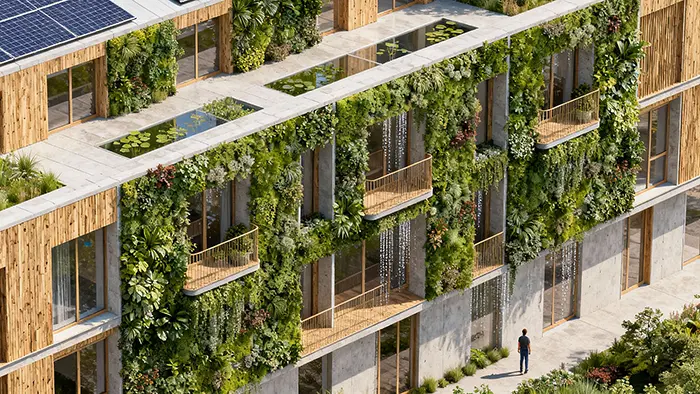
Living building design and biophilic integration have emerged as profound sustainability methodologies that address both environmental performance and human wellness simultaneously. Rather than treating buildings as mechanical systems serving purely functional purposes, living building philosophy reconceives structures as organisms that actively contribute to environmental regeneration and human flourishing. These buildings incorporate living walls featuring vertical gardens of native plantings, green roofs that provide habitat for urban biodiversity while improving thermal performance, and water management systems that capture, treat, and reuse precipitation rather than burdening municipal infrastructure. The construction materials selected for living building projects prioritize non-toxic, renewable, and locally sourced options including bamboo, reclaimed wood, responsibly harvested timber, and stone from regional quarries.
Biophilic design principles guide spatial planning and material selection to ensure that building occupants experience regular connection to natural elements, patterns, and materials that research demonstrates enhance cognitive function, emotional resilience, and overall well-being. Professional construction teams implementing living building standards navigate increasingly sophisticated certification frameworks including the Living Building Challenge, which establishes rigorous performance requirements that extend beyond typical sustainable building standards to encompass water independence, waste elimination, and regenerative approaches to site stewardship and community contribution.
Smart Construction Technology Driving Operational Transformation
The integration of artificial intelligence, computational design, and real-time data systems represents a watershed moment in construction project management and field execution. Smart construction methodologies leverage AI to optimize scheduling, resource allocation, safety monitoring, and predictive maintenance in ways that were impossible with conventional project management approaches. These systems analyze historical project data, real-time site conditions, and forward-looking scenarios to enable construction teams to shift from reactive problem-solving to proactive anticipation and prevention of delays, cost overruns, and safety risks. Construction professionals equipped with AI-powered analytics platforms can identify labor shortage patterns weeks in advance, adjusting hiring strategies and scheduling to maintain project momentum. Machine learning algorithms process complex datasets spanning multiple simultaneous projects, identifying optimization opportunities and resource reallocation strategies that human project managers could not realistically identify manually.
BIM Evolves into a Data-Driven Project Intelligence Hub
Building Information Modeling has evolved from a documentation and visualization tool into the foundational digital backbone enabling integrated project delivery and operational intelligence. Contemporary BIM systems now incorporate comprehensive performance data including structural characteristics, mechanical system specifications, lifecycle cost projections, and operational requirements encoded within three-dimensional digital models. When paired with artificial intelligence and IoT sensor networks, BIM models enable construction teams to monitor real-time building behavior during construction phases and transition into facility management systems that optimize energy consumption, predict equipment maintenance needs, and identify opportunities for operational cost reduction. The integration of BIM with scheduling, procurement, and resource management systems creates unprecedented project coordination, where design changes automatically cascade through cost estimates, material orders, and construction schedules without manual recalculation. AI-enhanced BIM systems now provide generative design capabilities, enabling architects and engineers to explore thousands of design iterations rapidly, evaluating each against performance criteria including embodied carbon, constructability, lifecycle cost, and operational efficiency. This technological synthesis represents a fundamental departure from linear design and construction processes toward iterative, data-informed methodologies that continuously optimize outcomes against multiple competing objectives.
Drones Improve Site Visibility, Documentation, and Safety
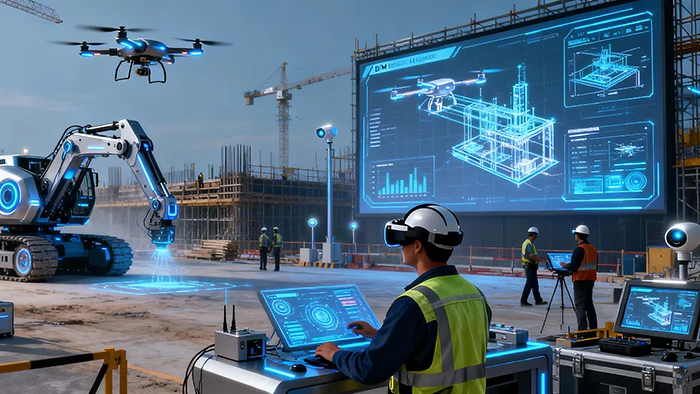
Drones equipped with high-resolution cameras, LiDAR sensors, and thermal imaging capabilities have become indispensable tools for construction site surveillance, progress documentation, and safety inspection. These unmanned aerial vehicles capture comprehensive real-time footage of job sites, creating detailed three-dimensional models that construction managers utilize to monitor progress against project schedules, identify spatial conflicts before they escalate into costly rework, and verify compliance with design specifications. When drone-captured data integrates directly into BIM systems through photogrammetry and point-cloud processing, site conditions are continuously updated against digital models, enabling early detection of deviations and rapid implementation of corrective measures. Drones serve critical safety functions by conducting hazardous inspections that would traditionally require personnel working at heights or in potentially unstable conditions, eliminating worker exposure to dangerous situations while providing superior image quality for detailed analysis. The data generated through regular drone surveys creates a continuous visual record of project evolution, facilitating communication with stakeholders, improving coordination among distributed teams, and providing documentation for quality assurance and dispute resolution.
AR and VR Enhance Visualization, Coordination, and Workforce Training
Augmented reality and virtual reality technologies are transforming how construction teams visualize complex designs, coordinate spatial relationships, and conduct safety training and pre-construction planning. Workers equipped with AR headsets can overlay digital design models onto physical spaces, identifying coordination issues and spatial conflicts before actual construction begins, dramatically reducing the likelihood of costly field modifications. Virtual reality environments enable construction teams to rehearse complex assembly sequences, identify inefficiencies in material staging and workflow, and optimize execution strategies in risk-free digital environments before committing resources to physical construction. These immersive technologies prove particularly valuable for training workers on new equipment and methodologies, enabling comprehensive instruction in controlled environments where mistakes have no consequence yet provide valuable learning. VR simulations of completed projects enable property owners and facility managers to experience completed spaces before construction begins, providing feedback that informs design refinements while buildings remain in preliminary phases where modifications are economical to implement.
Machinery Trends Reshaping Jobsite Operations
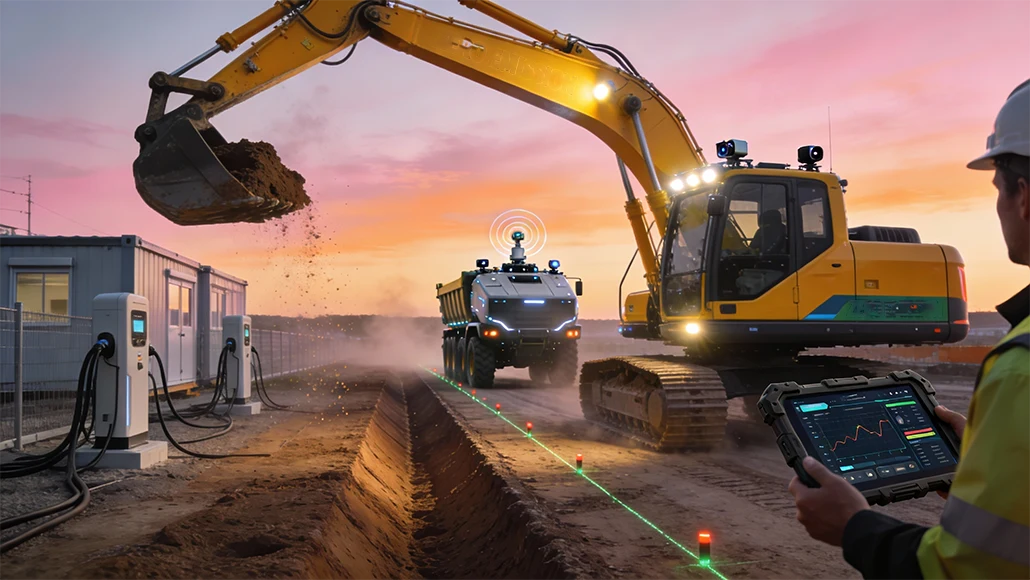
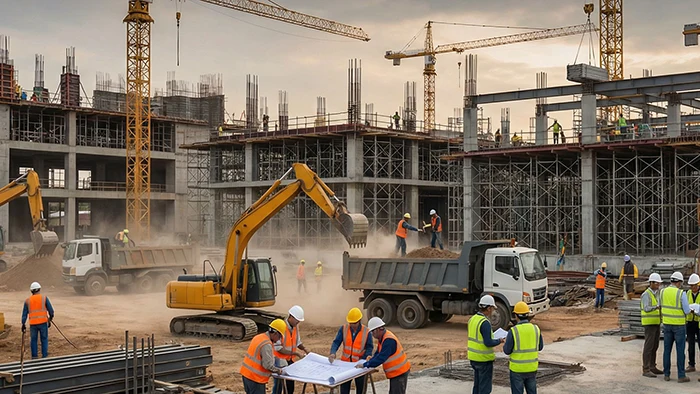
Autonomous and semi-autonomous equipment is rapidly reshaping construction operations by addressing workforce shortages, improving productivity, and significantly reducing safety risks. Contractors are increasingly deploying semi-autonomous dozers, graders, and excavators that automate repetitive functions, allowing operators to oversee multiple machines while maintaining precision and consistency. Fully autonomous haulers and loaders, supported by LiDAR, GPS, and AI-powered navigation, are expanding quickly as reliability improves and operational data confirms superior performance compared to human-operated systems. These technologies operate continuously without fatigue, reduce accident rates linked to human error, and help contractors achieve predictable project outcomes across complex or high-risk jobsite environments.
Electrification of Construction Machinery
Electrification has emerged as a central machinery trend as battery-powered excavators, loaders, and specialty machines move into mainstream adoption, driven by lower operating costs and tightening emissions regulations. Electric equipment delivers substantial lifecycle savings through reduced fuel use, lower maintenance requirements, and improved reliability compared to diesel engines with complex mechanical systems. Regulatory pressure, including zero-emission construction mandates in key European markets and municipal restrictions in major global cities, continues to accelerate adoption. Field trials demonstrate that electric machinery not only reduces carbon output but also cuts hourly operating costs by more than half, making it both an environmental and financial advantage for contractors seeking to modernize fleets and operate efficiently in urban or enclosed spaces.
Telematics and AI-Powered Predictive Maintenance
Telematics combined with AI-driven predictive maintenance is transforming fleet management by providing real-time performance insights, reducing unplanned downtime, and extending equipment lifespan. Modern sensor networks track engine performance, hydraulic pressure, fuel use, and utilization patterns, feeding data into machine-learning models that predict component wear and identify problems long before failures occur. This shift from reactive to condition-based maintenance enables contractors to schedule repairs strategically, avoid costly project delays, and optimize equipment deployment across multiple job sites. Enhanced visibility into equipment health and operator behavior also improves fuel efficiency, safety, and cost allocation, making telematics an essential capability for data-driven decision-making and long-term fleet optimization.
Advanced Materials Driving Performance and Sustainability Innovation
The construction materials industry is experiencing revolutionary innovation across multiple fronts, with emerging materials and formulations offering dramatic improvements in performance characteristics, environmental impact, manufacturing efficiency, and lifecycle sustainability. The trends shaping the construction industry in 2026 include unprecedented focus on materials science and advanced manufacturing techniques that enable construction professionals to specify products offering superior performance while reducing environmental burden, a fundamental shift from historical tradeoffs between durability and sustainability.

Low-Carbon Concrete and Cement Alternatives
Low-carbon concrete formulations utilizing supplementary cementitious materials, calcined clays, recycled concrete aggregates, and alternative binders can achieve substantial embodied carbon reductions, up to forty percent reductions compared to conventional Portland cement concrete, while maintaining or exceeding structural performance requirements. These formulations address the reality that concrete production accounts for approximately eight percent of global carbon emissions, positioning any meaningful climate mitigation strategy as contingent on substantial concrete decarbonization. Limestone Calcined Clay Cement (LC³) represents a particularly promising technology, blending calcined clays with traditional cement components to achieve cost savings of up to twenty-five percent compared to conventional cement while reducing embodied carbon, with global deployment potential through existing cement production equipment with modest modifications.
Graphene and Nanomaterials Enhancing Construction Materials
Graphene and advanced nanomaterials are transforming concrete performance characteristics through mechanisms including nucleation enhancement, improved interfacial bonding, nano-scale reinforcement, and toughening of cement matrices. The addition of graphene-based materials to concrete enhances mechanical properties including compressive strength, tensile capacity, and durability while simultaneously improving thermal conductivity and electrical properties, enabling applications ranging from structural components to functional elements. Graphene’s exceptional strength-to-weight ratio and thermal characteristics enable lightweight structural solutions reducing overall material consumption while maintaining load capacity, a particularly valuable advancement for applications where structural mass significantly impacts energy consumption and environmental impact. The modification of graphene through functionalization, doping, and hybrid approaches enables customization of material properties for specific application requirements, creating opportunities for engineering concrete formulations optimized for particular performance objectives and environmental contexts.
3D Printing Accelerating Construction Efficiency
Three-dimensional printing technologies have advanced from experimental curiosity to commercially viable construction methodology, with entire structures including housing units now fabricated through additive construction processes. The advantages of 3D-printed construction encompass dramatically accelerated timelines, structures that traditionally require weeks or months to construct can now be printed in days, reduced labor requirements, minimized material waste through precise material placement, and design freedom enabling organic forms and spatial configurations impossible through conventional construction. 3D concrete printing employs specialized mortar and concrete formulations engineered for rapid strength development and suitable extrusion properties, enabling continuous deposition of structural elements. Recent innovations including fast-curing, environmentally friendly concrete formulations achieve building strength requirements of seventeen megapascals in three days compared to the twenty-eight day cure time for conventional concrete, dramatically accelerating project timelines while reducing embodied carbon through formulations employing recycled materials and alternative binders. Layout automation robotics directly convert Building Information Model data into floor plans and reference markings, eliminating tedious manual measurement and marking while improving accuracy and eliminating transcription errors characteristic of manual processes.
Living Materials and Self-Healing Innovations
Living building materials and self-healing concrete represent approaches to material science that fundamentally reconceive building components as dynamic systems capable of adaptation and repair rather than static inert elements. Self-healing concrete incorporates biological or chemical mechanisms that respond to crack formation by generating healing agents, enabling the material to repair its own damage in response to environmental exposure including contact with water and air. This capability extends material lifespan, reduces maintenance requirements over building lifecycles, and addresses the reality that conventional concrete cracks over time in response to temperature fluctuations, structural stresses, and environmental exposure, ultimately requiring expensive remediation or replacement. Biodegradable materials including mycelium, the root structure of fungi, are cultivated using agricultural waste byproducts including sawdust and straw, creating building materials with exceptional insulating properties, lightweight characteristics, fire-resistance, and complete biodegradability upon end of service life. Bamboo and other rapidly renewable materials provide structural capacity comparable to conventional timber while regenerating within years rather than the decades required for forest recovery, enabling truly renewable structural systems.
Recycled and Circular Economy Materials in Construction
Recycled plastic materials transformed into building components address the environmental crisis of plastic accumulation in landfills and waterways by converting waste streams into valuable construction resources. Recycled plastic can be fabricated into structural lumber, roofing materials, decking, pipes, and other components while maintaining durability and performance characteristics competitive with conventional materials. Reclaimed and salvaged materials harvested from demolished structures create circular economy opportunities, eliminating waste while reducing manufacturing impacts associated with virgin material production. The construction industry increasingly specifies recycled content in materials including aggregates, steel reinforcement, and structural elements, creating demand signals that incentivize development of collection and processing infrastructure for construction waste streams.
Prefabrication and Modular Construction Accelerating Project Delivery
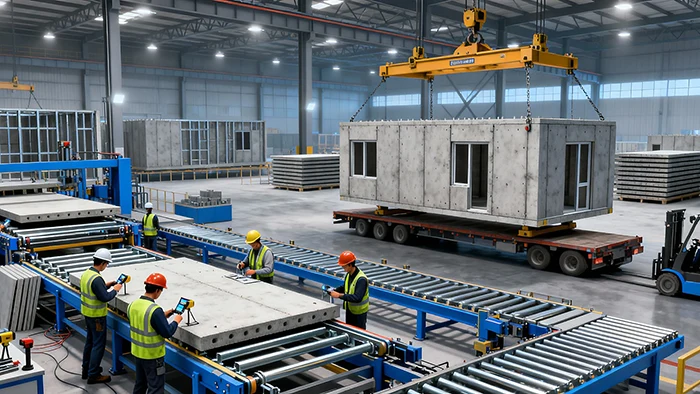
Prefabrication and modular construction methodologies have transitioned from specialized niches to mainstream delivery approaches adopted across residential, commercial, healthcare, education, and industrial project typologies. The modular and prefabricated construction market is experiencing robust growth, with projections indicating expansion from one hundred seventy-three billion dollars in 2025 toward three hundred billion dollars by 2035, reflecting sustained industry confidence in the viability and scalability of off-site construction methods. These delivery approaches address fundamental construction industry challenges including labor shortages limiting capacity for on-site work, unreliable project scheduling and budget performance, quality control difficulties in field environments, and supply chain disruptions affecting material availability and timing. Factory-based manufacturing of building components and integrated modules enables standardized processes, quality assurance protocols, and efficiency optimization impossible in on-site conditions subject to weather, site logistics constraints, and distributed team coordination challenges.
Modular Solutions for Faster Housing and Infrastructure Delivery
The acceleration of project timelines through modular construction proves particularly valuable in contexts including affordable housing delivery, where rapid scaling of construction capacity is critical to addressing housing shortages, and disaster recovery, where rapid deployment of structures is essential to restoring community function. Entire multifamily residential buildings incorporating interior finishes, mechanical systems, electrical infrastructure, and plumbing can be manufactured in factory environments, then transported to sites and assembled into completed buildings in fractions of the time required for traditional construction methods. Factory integration of building systems enables comprehensive testing and commissioning before modules leave controlled environments, reducing on-site coordination complexity and improving reliability of integrated systems upon occupancy. The modular approach proves particularly advantageous for building typologies including healthcare facilities, education buildings, and hospitality properties where consistent quality and reliable delivery timelines are critical to operational planning and financial viability.
Design for Manufacturing and Assembly (DfMA) Principles
Design for manufacturing and assembly principles guide modular project development from concept phases, ensuring that architectural vision is optimized for factory production, logistics efficiency, and site assembly. These principles emphasize repetition and standardization, enabling economies of scale and learning curve benefits as production volumes increase. Hybrid modular approaches blend prefabricated structural and major systems with on-site customization and finishing, balancing the efficiency and quality advantages of factory production with design flexibility and site-specific adaptation. Manufacturers have developed sophisticated logistics planning and simulation tools that optimize module sequencing, identify critical path elements in assembly operations, and coordinate crane operations and material staging on increasingly constrained urban sites where space for traditional construction laydown areas is unavailable.
Sustainability Advantages of Modular Construction
The integration of advanced prefabrication with sustainable materials and construction methodologies enables projects that simultaneously achieve timeline acceleration, cost optimization, and environmental performance improvement. Factory-controlled environments enable precise material staging and waste management, with scrap materials and byproducts segregated for recycling rather than commingled into construction waste destined for landfills. Modular units can incorporate advanced insulation, high-performance windows, integrated renewable energy systems, and smart building controls from manufacturing phases, ensuring optimal integration and reliable performance upon occupancy. The construction industry increasingly recognizes that modular and prefabricated construction aligns with sustainability objectives by reducing material waste, improving energy efficiency of building operations, and enabling rapid deployment of affordable housing, addressing the reality that sustainable buildings that remain unbuilt because construction timelines and costs are prohibitive provide no environmental benefit whatsoever.
Conclusion: The Integrated Future of Construction Excellence
The trends shaping the construction industry in 2026 reveal an industry fundamentally transformed by integration of technological innovation, material science advancement, and sustainability imperative. The key trends shaping the construction industry in 2026 do not represent isolated developments but rather interconnected transformations where artificial intelligence and BIM integration enable modular prefabrication, where advanced materials optimize both environmental performance and construction efficiency, and where autonomous equipment and digital workflows address labor challenges while improving safety and reliability. Construction professionals who embrace these trends shaping the construction industry in 2026 will position their organizations for competitive advantage and sustained relevance in an evolving sector.
The future construction landscape will increasingly reward organizations that integrate these capabilities comprehensively rather than adopting individual technologies in isolation. A construction firm implementing AI-enhanced project management without modernizing delivery methodologies misses opportunities for systematic improvement, just as a firm adopting modular construction without leveraging advanced materials and automation fails to capture the full potential of factory-based approaches. The most successful firms will recognize these trends shaping the construction industry in 2026 as components of a systemic transformation, and will organize their operations, skill development investments, and strategic partnerships to enable seamless integration across technological, material, and delivery methodology dimensions.
The construction professionals positioned for success in 2026 and beyond will be those who treat sustainability not as regulatory burden but as competitive advantage and operational necessity. Buildings designed with climate impact minimization, occupant well-being integration, and operational efficiency optimization will command market premiums, attract institutional capital increasingly screening for ESG performance, and deliver superior lifecycle value to property owners. Infrastructure projects incorporating sustainable construction principles, advanced materials, and modular delivery will meet climate goals while accelerating development timelines and improving economic outcomes, demonstrating that environmental responsibility and commercial success are complementary rather than conflicting objectives.
The trends shaping the construction industry in 2026 ultimately reflect a sector in transition from incremental improvement toward fundamental transformation. The integration of digital technologies, advanced materials, and manufacturing innovation creates possibilities for dramatic improvements in construction productivity, project delivery reliability, and environmental impact, changes that have been theoretically possible for years but are now becoming economically viable and operationally necessary. Construction professionals embracing these developments will build infrastructure and communities prepared for future demands while contributing to climate goals and human flourishing that represent the essential challenges of our era.
