



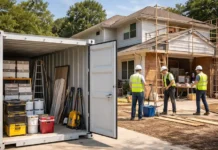


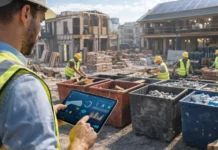


















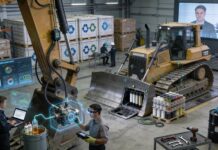
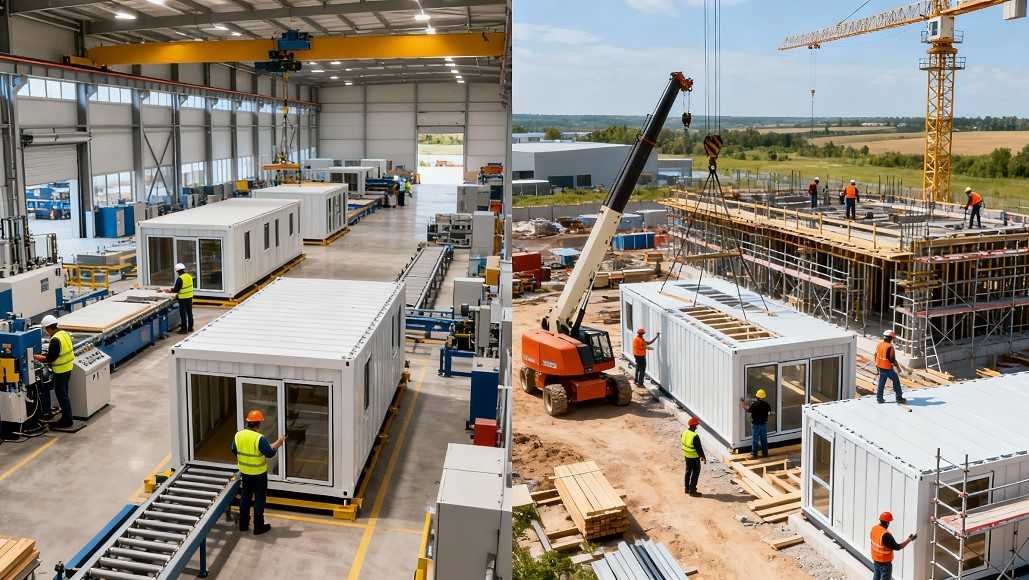

Construction’s evolution reveals itself through emerging hybrid approaches representing thoughtful compromises between competing objectives. Purely modular construction prioritizes speed through maximum prefabrication, sometimes sacrificing architectural flexibility and design distinctiveness. Purely traditional construction maximizes design freedom but sacrifices speed, cost control, and quality consistency. Hybrid construction models occupy the productive middle ground, combining offsite fabrication advantages with onsite assembly flexibility to deliver projects balancing speed, quality, customization, and cost.
This balanced approach increasingly dominates market dynamics. Rather than viewing offsite and onsite construction as opposing strategies, forward-thinking developers recognize that hybrid models enable each approach’s strengths while mitigating respective weaknesses. The global construction industry increasingly adopts hybrid methodologies as developers discover that blended approaches often deliver superior outcomes compared to purely modular or purely traditional construction.
Understanding Hybrid Construction Fundamentals
Hybrid construction integrates multiple fabrication and assembly strategies within single projects. Rather than treating buildings as entirely factory-produced or entirely site-built, hybrid approaches selectively employ offsite fabrication for components where benefits prove greatest, while reserving onsite assembly for elements where flexibility or site-specific conditions favor traditional methods.
Hybrid strategies typically employ both two-dimensional and three-dimensional prefabrication. Two-dimensional panelized systems—wall panels, floor cassettes, roof assemblies—are fabricated in factories but assembled predominantly on-site. Three-dimensional volumetric modules—complete bathroom and kitchen units, mechanical rooms, structural frames—arrive at sites substantially complete, requiring primarily connection and integration work.
This combination enables developers to capture modular construction advantages for highly standardized components while maintaining flexibility for design-specific elements. Bathroom and kitchen modules, inherently standardized and producible in quantity, are efficiently manufactured as complete 3D units. Structural systems, which must accommodate specific site conditions and loads, are often fabricated as 2D panels for on-site assembly with greater flexibility. Mechanical systems might employ prefabricated equipment packages connected to site-built distribution networks.
The key distinction separating hybrid from purely modular construction is this selective approach. Rather than demanding that everything fabricate off-site, hybrid recognizes that different building components have different optimization requirements. Some benefit dramatically from factory production. Others achieve better results through thoughtful on-site assembly. Hybrid construction optimizes each component category individually rather than applying blanket decisions.
Modular and Panelized Integration
Modern hybrid construction increasingly combines modular 3D units with panelized 2D components, recognizing that integration of both approaches delivers advantages neither achieves alone. Three-dimensional modules excel for highly standardized components—bathrooms with pre-installed plumbing, kitchens with complete appliance packages, equipment rooms with integrated HVAC and electrical systems.
Panelized systems provide flexibility for structural and envelope components where site-specific variations are common. Wall panels fabricated in factories but assembled on-site accommodate varying window locations, architectural features, and finish variations. Floor cassettes assembled on-site allow precise adjustment to existing conditions and structural requirements. Roof assemblies incorporating panelized components accommodate varying pitches, overhangs, and thermal performance requirements.
Integration of these approaches requires careful coordination. Modular units establish dimensional anchors for the overall structure. Panelized components must accommodate these modular dimensions precisely, ensuring seamless connection. Mechanical, electrical, and plumbing systems in modular units must connect cleanly to distribution networks constructed on-site.
Developers achieving this integration successfully report remarkable results. Hybrid construction combining modular bathrooms and kitchens with panelized structural systems delivers construction schedules compressed 30-40% compared to traditional approaches, while accommodating design customization impossible with purely modular construction. Quality proves excellent through factory control of standardized components combined with on-site craftsmanship addressing specific conditions.
The Strategic Case for Hybrid Construction
Purely modular construction works exceptionally well for highly repetitive projects with minimal customization—data centers with identical modules, standardized hotel room suites, basic modular housing. Projects with these characteristics benefit from full factory production, achieving remarkable speed and cost efficiency.
However, real-world projects often demand flexibility that purely modular approaches struggle to accommodate. Residential developments require architectural variety and site adaptation. Healthcare facilities demand specialized room configurations and equipment integration. Commercial buildings need flexible floor plans and unique tenant requirements. These projects push purely modular approaches to uncomfortable compromises between design ideals and manufacturing constraints.
Hybrid construction addresses these challenges. Rather than forcing buildings into rigid modular templates, hybrid approaches allow selectively choosing which components benefit from modular prefabrication. Bathrooms and kitchens, inherently standardized, are produced as modules. Structural systems are fabricated as flexible panels accommodating site variation. Mechanical systems employ modular equipment connected through site-built distribution adapted to specific requirements.
This flexibility proves particularly valuable for complex projects involving multiple building types. Mixed-use developments combining residential, commercial, and hospitality use might employ common structural and core systems while utilizing different modular or panelized approaches for each use type. Renovation projects retrofitting existing structures benefit from hybrid approaches where new systems integrate with existing infrastructure.
Application in Residential Development
Residential development represents perhaps the most promising sector for hybrid construction. Housing demand globally exceeds supply, driving pressure for faster construction at lower costs. Simultaneously, homebuyers demand architectural variety and customization that purely modular approaches sometimes struggle providing.
Hybrid residential construction typically fabricates bathroom and kitchen modules as complete units in factories. These standardized components account for significant onsite complexity—plumbing installation, fixture connections, appliance integration—areas where factory production achieves superior results. Structural systems are typically fabricated as panelized frames accommodating varying site conditions and unit configurations. Finishes incorporate both prefabricated and site-applied elements, balancing factory efficiency with customization opportunity.
Mid-rise residential developments employing hybrid construction report timeline compression enabling faster revenue generation. Projects that might require 24 months traditionally complete in 16-18 months through hybrid approaches. Cost reductions of 15-20% result from factory efficiency and compressed timelines. Quality proves excellent through factory control of modular components combined with careful on-site assembly.
The flexibility proves equally important. Rather than all units being identical as purely modular approaches sometimes require, hybrid construction accommodates unit variations—corner units with different window configurations, flexible floor plans accommodating different family sizes, varied finish options for different market segments. This flexibility enables broader market appeal and stronger sales performance compared to purely modular alternatives.
Commercial and Mixed-Use Applications
Commercial real estate increasingly employs hybrid construction approaches, recognizing that office buildings, retail spaces, and hospitality facilities benefit from balanced prefabrication and on-site assembly.
Office buildings often employ hybrid strategies where structural systems and cores are panelized for flexibility, mechanical systems incorporate prefabricated equipment packages, and interior partitioning is largely on-site assembled. This approach accommodates varying tenant configurations while achieving construction timeline compression and cost reduction. Companies can construct speculative office buildings faster, reducing lease-up period losses. Designed-for-tenant buildings can be completed in timeframes accommodating tenant fitout without extending overall schedules.
Hospitality facilities benefit from hybrid approaches combining prefabricated guest room modules with on-site-constructed public spaces. Guest rooms, inherently repetitive and standardized, are fabricated as complete modules including finishes, furnishings, and mechanical systems. Public spaces—lobbies, restaurants, conference facilities—maintain design uniqueness through on-site construction. This hybrid approach enables rapid room production (critical for project timeline) while maintaining distinctive public spaces (critical for brand differentiation).
Mixed-use developments benefit particularly from selective hybrid approaches. Rather than forcing entire projects into modular templates, developers can employ different strategies optimized for each building type. Residential towers might employ modular rooms with panelized structure. Retail components might emphasize panelized flexibility for varying tenant configurations. Office components might prioritize modular mechanical systems with flexible floor plates.
Healthcare Facility Transformation Through Hybrid Construction
Healthcare facilities represent specialized application areas where hybrid construction delivers exceptional value. Hospitals and clinical facilities demand rapid construction (delays directly impact patient care services), high quality (patient safety depends on system reliability), and flexibility (healthcare technologies and procedures evolve rapidly).
Hybrid construction addresses these requirements through strategic deployment of modular and panelized approaches. Patient rooms are typically fabricated as modules including medical gas systems, electrical capacity, and finishes. Bathrooms within rooms arrive as complete units. Nursing stations are often prefabricated, arriving on-site substantially complete. Operating rooms, with critical mechanical and electrical systems, benefit from prefabricated system packages integrated within site-built structures accommodating specific equipment and procedures.
On-site work focuses on structural systems, major mechanical distribution, and specialized areas requiring custom design. This hybrid balance enables healthcare facilities to be constructed 25-35% faster than traditional methods while accommodating specialized requirements that purely modular approaches would struggle addressing.
Quality advantages prove equally significant. Factory-produced components undergo rigorous testing, ensuring reliability critical in healthcare settings. On-site assembly focuses on integration and systems validation. The result is excellent quality achieved faster than traditional approaches enable.
The Coordination Challenge and Solution
Successful hybrid construction requires meticulous coordination between factory and onsite teams. Prefabricated components must arrive precisely timed with site readiness. Dimensional coordination must be exact—modules arrive expecting specific openings and conditions. Mechanical, electrical, and plumbing connections must align perfectly between prefabricated and on-site-constructed systems.
Organizations successfully managing this coordination employ detailed planning and communication protocols. Building Information Modeling (BIM) enables three-dimensional visualization of how prefabricated and on-site components integrate. Prefabrication schedules are coordinated with site construction progress. Dimensional control maintains tolerances ensuring components fit together reliably.
On-site teams require training for assembly and integration of prefabricated components. Rather than traditional construction craftsmanship, hybrid assembly involves installation of complete modules, electrical connections, and systems integration. This different skill set requires workforce development and training programs ensuring teams possess required capabilities.
Cost Economics of Hybrid Construction
Hybrid construction economics prove attractive, balancing cost benefits of prefabrication against the flexibility value of on-site construction. Modular components fabricated in quantity achieve cost reductions through efficient manufacturing, typically 20-30% less expensive than site-produced equivalents. Panelized systems realize 10-15% cost benefits through factory efficiency. On-site assembly labor costs rise somewhat compared to purely traditional construction due to assembly of prefabricated components, but overall labor reduction through timeline compression more than compensates.
Transportation costs present a variable element. Modular components’ weight and size necessitate specialized transport and heavy equipment installation on-site. These costs must be analyzed specifically for each project geography and site conditions. In some locations, transportation costs partially offset factory manufacturing benefits. Proximity of manufacturing facilities to project locations significantly impacts overall economics.
Total project costs typically prove 15-25% lower through hybrid approaches compared to purely traditional construction. This reduction results from combination of manufacturing efficiency, timeline compression reducing overhead costs, and reduced on-site labor. When accounting for time value of money (earlier revenue generation for developers, earlier facility operation), financial benefits frequently exceed direct cost savings.
Design Flexibility and Customization
A primary advantage of hybrid construction relative to purely modular approaches is design flexibility. Rather than buildings appearing identical through factory standardization, hybrid construction enables architectural variety while capturing efficiency benefits. Facades, spatial configurations, and finishes can vary substantially based on project requirements and client preferences.
This flexibility proves critical for market acceptance. Residential buyers often resist purely modular housing, perceiving it as lacking architectural character. Hybrid construction producing modular components concealed within conventionally-appearing buildings addresses this perception. Retail tenants demand customization that purely modular approaches struggle providing. Hybrid construction accommodates variation within standardized frameworks.
The architectural profession increasingly embraces hybrid approaches, recognizing them as enabling efficient construction while supporting design expression. Rather than viewing prefabrication as limiting design, architects design within prefabrication frameworks, optimizing designs for manufacturing while maintaining architectural quality.
The Maturing Technology and Process
Hybrid construction methodologies continue evolving as organizations refine processes and technologies. Digital fabrication improvements enable greater customization within modular frameworks. Robotics enable fabrication of varied components more efficiently. Transportation logistics become more sophisticated, enabling reliable on-time delivery of complex prefabricated components.
Building code evolution increasingly accommodates hybrid construction. Regulatory frameworks originally designed for traditional construction sometimes create barriers to prefabrication. Progressive jurisdictions are adapting codes to enable and encourage prefabrication while maintaining safety standards. This regulatory evolution accelerates hybrid construction adoption.
Workforce development represents an ongoing focus area. Hybrid construction requires somewhat different skills compared to purely traditional or purely modular approaches. Training programs increasingly develop competencies in assembly, integration, and systems coordination that hybrid construction demands.
The Strategic Future of Hybrid Construction
Hybrid construction represents the emerging industry standard as construction evolves toward greater efficiency, speed, and quality. Rather than replacing traditional construction or requiring full factory production, hybrid approaches enable selective optimization of different building components according to their unique characteristics and requirements.
The future likely involves continued hybrid construction expansion as technologies mature, costs decrease, and organizations develop greater competency. Developers increasingly recognize that hybrid construction enables them to achieve competitive advantages—faster delivery, lower costs, superior quality, greater design flexibility—simultaneously. In competitive markets, this combination proves powerful.
Organizations capable of orchestrating successful hybrid construction—capable of integrating factory production with on-site assembly, maintaining dimensional control, coordinating complex logistics—position themselves to thrive in the evolving construction landscape. The construction industry’s future belongs not to purely modular or purely traditional approaches, but to intelligent hybrid strategies optimizing each building component through appropriate production and assembly methodologies. The emergence of hybrid construction models represents construction’s maturation into a sophisticated industry balancing multiple objectives intelligently.
