

























Close
MCE 2026
Friday, January 23, 2026
JEC WORLD 2026

Kier’s latest infrastructure project to bring £200m skills boost to Luton

Note* - All images used are for editorial and illustrative purposes only and may not originate from the original news provider or associated company.

Subscribe

- Never miss a story with notifications

- Gain full access to our premium content

- Browse free from any location or device.

Media Packs

Expand Your Reach With Our Customized Solutions Empowering Your Campaigns To Maximize Your Reach & Drive Real Results!

– Access the Media Pack Now

– Book a Conference Call

Leave Message for Us to Get Back

Related stories

Lifecycle Focused Construction Practices for Sustainable Infrastructure

Sustainable infrastructure development requires extending construction thinking beyond initial project completion to encompass the entire building lifecycle spanning decades of operation, maintenance, and eventual decommissioning. By integrating lifecycle cost analysis, selecting durable materials, designing for operational efficiency, planning for maintenance accessibility, and anticipating end-of-life material recovery, construction professionals create assets that deliver long-term value while minimizing environmental impact. This holistic approach transforms infrastructure from cost centers requiring perpetual maintenance into resilient assets that serve communities sustainably across generations.

Improving Construction Efficiency Without Compromising Quality

Achieving construction efficiency requires process-focused improvements that enhance productivity while maintaining or improving quality standards. Through workflow optimization, enhanced coordination mechanisms, quality management practices, and strategic technology integration, construction organizations deliver projects faster and more cost-effectively without sacrificing structural integrity or compliance. Balancing speed with excellence transforms construction management from a trade-off exercise into a synergistic approach where efficiency and quality reinforce one another.

Managing Material Costs in a Volatile Construction Market

Construction material price volatility presents significant challenges to project budgeting and risk management. Strategic procurement approaches, supply chain resilience strategies, and contract mechanisms that balance risk effectively enable stakeholders to navigate market fluctuations successfully. Understanding market dynamics, implementing escalation clauses, developing flexible procurement strategies, and maintaining strong supplier relationships help construction professionals maintain project viability despite unpredictable material cost movements.
- Advertisement -
Advancing Prefabrication 2026

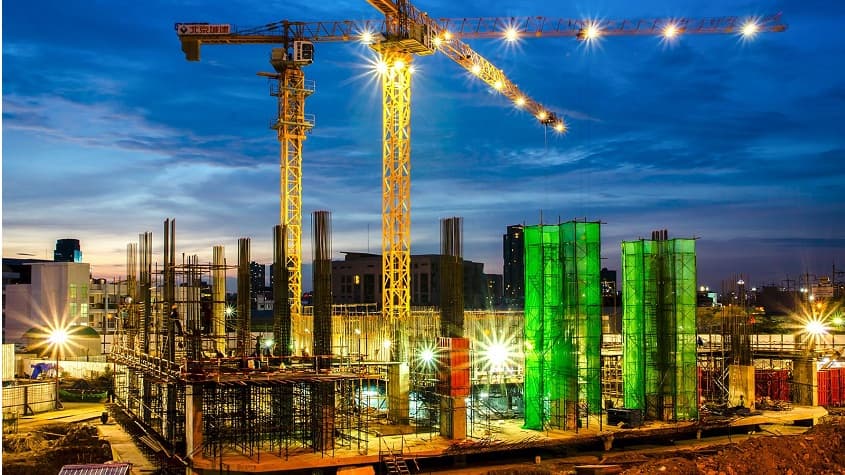
Kier, working in joint venture (JV) with VolkerFitzpatrick delivering the Direct Air to Rail Transit (DART) system for the London Luton Airport is launching a skills academy in Luton to bolster local talent and provide training opportunities through the project that is set to return £200m in positive social impact over the next three years.

The academy will provide apprenticeship opportunities and lifelong skills to hundreds of people in the local area and is being launched as the revolutionary DART system today broke ground.

As part of the academy the JV is offering 30 apprenticeships on the pioneering DART and will equip over 200 local residents with practical training courses to improve their skill set with courses such as first aid. Working with the Learning Skills Partnership (LSP), an independent training provider, apprenticeship placements are now open to applications across a number of specialisms, including construction and business administration.

The JV will also engage with schools and colleges across Luton as it looks to inspire the next generation of talent to consider a role within the built environment, providing schoolchildren with training and skills in order to play a part in Luton’s extensive pipeline of infrastructure projects.

Nigel Brook, Kier executive director, construction and infrastructure services, said: “We are committed to investing in the communities in which we work and addressing the skills shortage our industry faces. The development of this skills academy gives us a fantastic opportunity to not only engage with the next generation of local talent but also help with recruiting the 400,000 people a year the industry needs.

“We have exceptionally talented people working within our businesses who have helped deliver large infrastructure projects across the country, including the recently completed Mersey Gateway Bridge and current projects with HS2 and Crossrail, and its crucial we pass these skills down to those entering the industry. Our hope is that the iconic DART system inspires many in the local area to rethink a career within the built environment.”

The DART system is part of Luton’s wider £1.5 billion transformation plan, and a pivotal infrastructure project for the local area, increasing capacity and speed to the fastest-growing major airport in the UK.

Kier is working with London Luton Airport Limited (LLAL) and Luton Borough Council to provide the DART system, a double-shuttle, fully automated and driverless system, approximately 2.1km in length to transport passengers between Luton Airport Parkway station and London Luton Airport in around five minutes, 24 hours a day. It will also significantly reduce the journey time from central London to the airport terminal to about 30 minutes, using the fastest train from St Pancras International.

The route will run between two purpose-built stations at Bartlett Square and the airport terminal, crossing a new landmark bridge over Airport Way. In peak time a service will leave each station every four minutes.

For more details on the apprenticeships available on the DART project, email apprenticeships@kier.co.uk

Achema Middleeast

Latest stories

Related stories

Lifecycle Focused Construction Practices for Sustainable Infrastructure

Sustainable infrastructure development requires extending construction thinking beyond initial project completion to encompass the entire building lifecycle spanning decades of operation, maintenance, and eventual decommissioning. By integrating lifecycle cost analysis, selecting durable materials, designing for operational efficiency, planning for maintenance accessibility, and anticipating end-of-life material recovery, construction professionals create assets that deliver long-term value while minimizing environmental impact. This holistic approach transforms infrastructure from cost centers requiring perpetual maintenance into resilient assets that serve communities sustainably across generations.

Improving Construction Efficiency Without Compromising Quality

Achieving construction efficiency requires process-focused improvements that enhance productivity while maintaining or improving quality standards. Through workflow optimization, enhanced coordination mechanisms, quality management practices, and strategic technology integration, construction organizations deliver projects faster and more cost-effectively without sacrificing structural integrity or compliance. Balancing speed with excellence transforms construction management from a trade-off exercise into a synergistic approach where efficiency and quality reinforce one another.

Managing Material Costs in a Volatile Construction Market

Construction material price volatility presents significant challenges to project budgeting and risk management. Strategic procurement approaches, supply chain resilience strategies, and contract mechanisms that balance risk effectively enable stakeholders to navigate market fluctuations successfully. Understanding market dynamics, implementing escalation clauses, developing flexible procurement strategies, and maintaining strong supplier relationships help construction professionals maintain project viability despite unpredictable material cost movements.

Cost Optimization Strategies in Material Intensive Construction Projects

Material-intensive construction projects require comprehensive cost optimization strategies that balance budget control with quality maintenance. Through systematic planning, prefabrication techniques, lean construction principles, and strategic procurement approaches, contractors can significantly reduce project expenses while maintaining structural performance standards. Effective material efficiency combined with process optimization transforms how organizations deliver complex construction projects.

Subscribe

- Never miss a story with notifications

- Gain full access to our premium content

- Browse free from any location or device.

Media Packs

Expand Your Reach With Our Customized Solutions Empowering Your Campaigns To Maximize Your Reach & Drive Real Results!

– Access the Media Pack Now

– Book a Conference Call

Leave Message for Us to Get Back

Translate »