



























Key Takeaways
- Real-time visibility reduces supply chain disruptions by 40-60% through early problem detection enabling proactive intervention.
- Digital dashboards provide comprehensive supply chain status enabling stakeholders to make informed decisions based on current conditions.
- IoT and RFID tracking systems monitor component condition throughout transit and storage, ensuring installation readiness.
- Visibility throughout supply chain enables identification of improvement opportunities reducing costs and accelerating delivery.
- Transparency builds stakeholder confidence enabling more reliable scheduling and better project planning accuracy.
- Predictive alerts based on real-time data enable proactive corrections preventing delays before they cascade through projects.
Supply chain management traditionally operated on incomplete information. Project managers received periodic status updates—perhaps weekly or monthly—revealing current conditions after significant time delay. By the time information reached decision-makers, circumstances had often changed making information partially obsolete. Manufacturing facilities not connected with transportation systems couldn’t coordinate handoffs. Transportation companies unaware of destination site readiness staged components inefficiently. Installation teams uncertain about incoming delivery schedules prepared reactively rather than proactively.
Digital supply chain visibility fundamentally transforms this dynamic. Rather than information flowing periodically through reports, digital systems provide continuous real-time visibility. Every stakeholder monitors current supply chain status through digital dashboards. Components moving through transportation are tracked continuously. Site conditions are monitored remotely. Rather than reacting after disruptions surface, stakeholders respond proactively when problems emerge.
The value of digital visibility proves particularly acute for prefab projects where precise timing drives success. Delayed components disrupt carefully planned installation sequences. Early arrivals create staging congestion and component damage risk. Visibility enabling confidence in arrival timing and component condition proves transformative.
IoT Sensors and Continuous Condition Monitoring
Internet of Things (IoT) sensors represent the foundational technology enabling digital supply chain visibility. Rather than manual tracking relying on checkpoint updates, IoT sensors provide continuous monitoring. Temperature sensors monitor thermal conditions. Humidity sensors track moisture exposure. GPS sensors track location continuously. Vibration sensors detect rough handling.
The sensors stream data continuously to cloud platforms where sophisticated analytics interpret information. If temperatures exceed safe ranges, alerts trigger. If GPS indicates route deviations, notifications activate. If vibration suggests rough handling, alerts activate. Real-time data enables immediate response to conditions requiring intervention.
The coverage proves comprehensive. Rather than sampling occasional components, sensors monitor every component or every shipment. This comprehensive approach ensures no problems escape detection. Organizations implementing IoT systems report that early problem detection enables interventions preventing disruptions that would otherwise cascade.
RFID Tagging and Automated Tracking
Radio Frequency Identification (RFID) technology complements IoT sensors through automated component identification and tracking. RFID tags attached to components or pallets enable readers to automatically identify items. Rather than requiring manual scanning, RFID readers automatically detect components passing through specific locations.
The automation proves particularly valuable in factories and warehouse environments. Rather than workers manually recording inventory movements, RFID systems automatically document material flow. Components moving through production flow automatically register completion of each stage. Materials arriving at warehouses automatically trigger inventory updates.
RFID combined with IoT creates comprehensive tracking. RFID identifies what item is located where. IoT sensors monitor item condition. Together, the technologies provide complete visibility into component location, condition, and status.
Digital Dashboards and Stakeholder Transparency
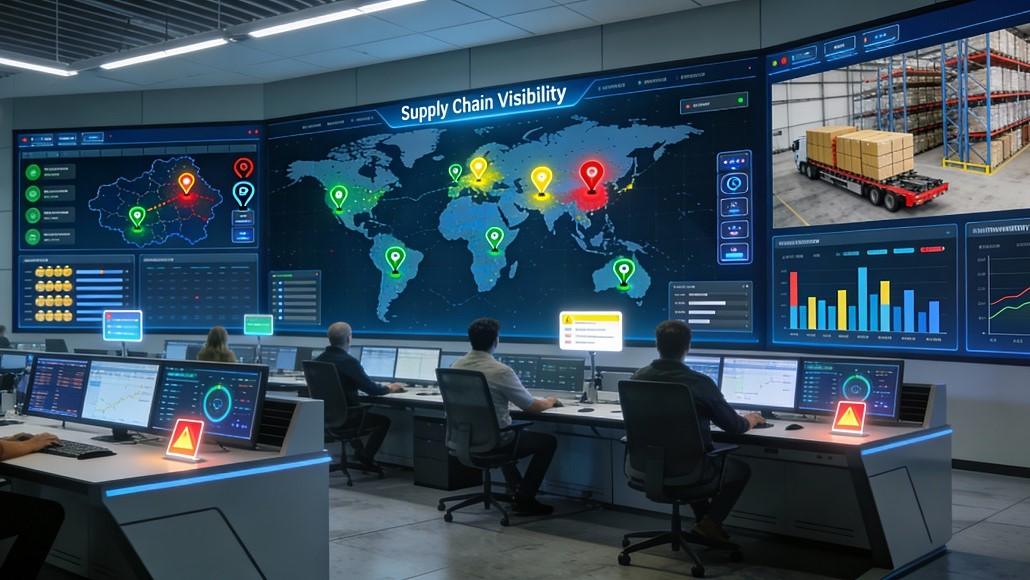
Raw data from thousands of sensors becomes overwhelming without sophisticated visualization. Digital dashboards aggregate sensor data into comprehensible formats. Rather than reviewing raw sensor feeds, decision-makers see synthesized information highlighting critical status.
Dashboards might display component locations on maps showing which components are in factories, in transportation, at staging areas, or installed. Color coding indicates status—green for on-schedule, yellow for approaching problems, red for delays. Similar dashboards monitor component condition, showing temperature histories, humidity exposure, and mechanical stress.
The transparency proves powerful. Manufacturers see current production status and downstream demand. Logistics coordinators see transportation progress and site readiness. Installation teams see incoming components and required staging preparation. Rather than each stakeholder operating with incomplete information, comprehensive transparency enables coordinated decision-making.
The psychological impact proves equally significant. When information is visible to all stakeholders, accountability improves. Rather than problems being concealed or discovered late, transparency ensures problems surface immediately when solutions remain available.
Early Problem Detection and Proactive Response
Perhaps the most valuable aspect of digital visibility involves early problem detection enabling proactive response. Rather than discovering problems only when disruptions surface, visibility systems identify emerging problems while interventions remain possible.
If a shipment indicates temperature exceedance, immediate alerts enable shipment rerouting to controlled climate environments or expedited delivery preventing component damage. If GPS indicates a delivery vehicle straying from planned routes suggesting navigation problems, alerts enable course correction preventing late arrival. If factory production lags behind schedule, supply chain systems enable adjustment of downstream expectations before installation teams prepare for imminent arrivals.
The difference between proactive and reactive response proves substantial. Reactive responses address disruptions after they cascade—installing recovery takes weeks. Proactive responses prevent disruptions from manifesting—intervention takes hours. The time and cost differences prove dramatic.
Predictive Analytics and Scenario Planning
Beyond detecting current problems, advanced systems employ predictive analytics forecasting problems before they manifest. Machine learning algorithms trained on historical patterns identify conditions predicting likely disruptions. If specific routes historically experience delays during particular weather patterns, algorithms flag imminent weather predicting likely delays enabling proactive rerouting.
Predictive capability enables scenario planning. Rather than assuming everything proceeds optimally, planners consider probable disruptions. Contingency plans prepare for likely scenarios. If analysis suggests 15% probability of specific delay type, planners develop mitigation strategies. When predicted problems materialize, responses are prepared rather than improvised.
The competitive advantage proves substantial. Organizations with predictive capability maintain more reliable schedules than competitors relying on reactive problem-solving. Customers develop confidence enabling tighter scheduling. This confidence translates to faster overall projects and improved competitiveness.
Integration with Manufacturing and Installation Systems
Digital visibility proves most valuable when integrated with manufacturing and installation systems. Rather than information flowing to passive observers, visibility enables active system adjustments. If supply chain systems indicate upstream delays, manufacturing systems can adjust production pacing preventing excess inventory accumulation. If installation systems indicate site readiness advancing faster than expected, logistics can accelerate component shipments maintaining optimal flow.
This integration transforms supply chains from isolated logistics networks into coordinated systems optimizing across all functions. Rather than manufacturing and logistics operating independently, they coordinate continuously based on real-time data. The result combines improved efficiency with improved reliability.
Real-time integration also enables sophisticated demand forecasting. Rather than annual forecasts updated quarterly, integrated systems dynamically adjust demand estimates as actual conditions become visible. Forecasting accuracy improves enabling better production planning.
Data Security and Privacy Considerations
Comprehensive supply chain visibility requires extensive data collection and transmission. The value of this data creates security risks. Unauthorized access to supply chain data could enable competitor intelligence or criminal logistics disruption. Organizations must protect data carefully.
Robust security architecture proves essential. Data should be encrypted in transit and at rest. Access controls should restrict visibility to authorized users with legitimate need. Regular security audits should verify protection measures. Organizations must balance visibility benefits against security requirements.
Privacy considerations emerge when component tracking includes customer information. Organizations must ensure customer data protection complying with applicable regulations.
Implementation Requirements and Success Factors
Successfully implementing digital supply chain visibility requires substantial investment in technology, training, and process changes. Organizations must deploy sensor networks, cloud platforms, analytics software, and integration systems. Personnel must develop new competencies interpreting data and responding to alerts.
The implementation proves most successful when driven by clear business requirements. Rather than deploying comprehensive systems optimistically, organizations should identify specific problems visibility will solve. If primary problem is product damage during transportation, environmental sensors and vibration monitoring should be priorities. If primary problem is delivery delays, GPS tracking and traffic analysis should be priorities.
Phased implementation approaches typically prove effective. Initial deployments might focus on specific product lines or transportation routes. Learnings from initial phases guide subsequent expansion. This approach limits risk while building organizational capability.
Competitive Implications and Industry Evolution
Organizations operating comprehensive digital supply chain visibility develop substantial competitive advantages. Superior reliability from early problem detection enables confident scheduling. Superior efficiency from optimized flows reduces costs. Superior quality from condition monitoring reduces damage and defects. These advantages compound creating market leadership.
The industry increasingly recognizes supply chain visibility as competitive necessity. Equipment manufacturers increasingly embed tracking capability. Software platforms increasingly provide visibility tools. Industry standards increasingly codify visibility practices. These systemic changes make visibility increasingly accessible and necessary.
The future of prefab supply chains will involve comprehensive digital visibility. Rather than manual tracking and periodic updates, future supply chains will provide continuous real-time visibility. Organizations leading this transformation will establish dominant competitive positions based on superior reliability and efficiency.
