


























The expansion of global highway networks is a fundamental driver of economic development, facilitating the movement of goods and people across continents. This monumental task of building and maintaining thousands of miles of road annually is made possible by a specialized class of heavy equipment known as road construction machinery. These machines have evolved from simple mechanical tools into highly sophisticated, data-driven systems capable of achieving incredible precision and durability. In the modern era, the focus of road building has shifted toward efficiency, speed, and sustainability, as nations strive to modernize their infrastructure while minimizing the environmental impact of construction activities. The continuous innovation in this field is essential for creating the resilient transportation networks required by the 21st century.
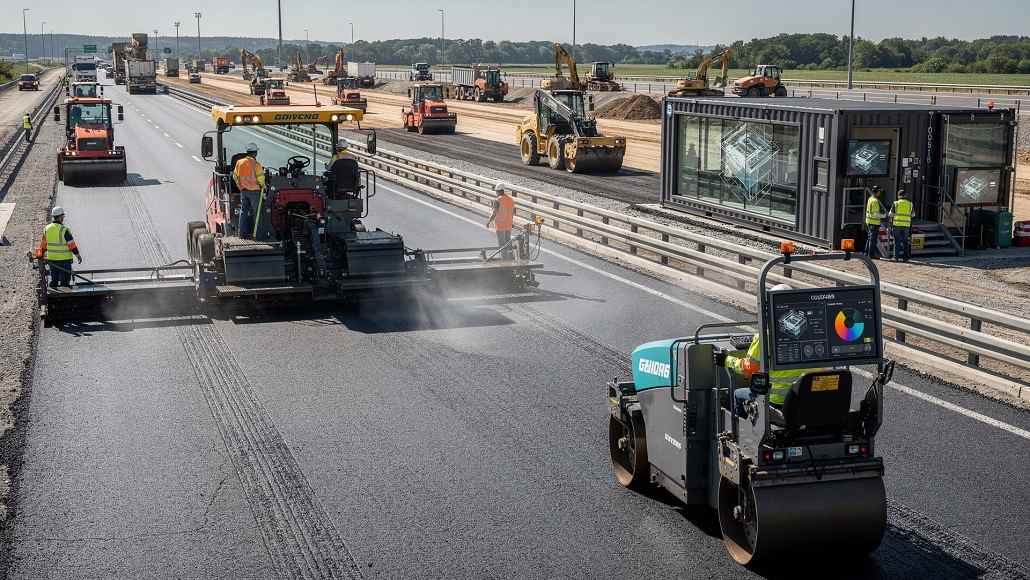
The process of building a high-capacity highway begins with the preparation of the subgrade and the placement of various structural layers. Each stage requires a specific set of highway construction equipment designed to handle different materials and site conditions. From large-scale excavators and graders that shape the landscape to the specialized units that lay the final driving surface, road construction machinery must work in perfect coordination. The quality of the finished road depends heavily on the performance of these machines, as any inconsistencies in the base or surface layers can lead to premature failure and costly repairs. As the complexity of highway projects increases, the industry is seeing a greater reliance on automated systems to ensure that the rigorous specifications of modern engineering are met.
A critical component of the paving process is the asphalt paver. Modern asphalt pavers are marvels of engineering, designed to distribute a smooth and even layer of asphalt over the prepared base. These machines have come a long way from the manual labor-intensive methods of the past. Today’s paving machinery incorporates advanced screed technology that allows for the precise control of mat thickness, slope, and density. Many of these units are now equipped with 3D paving systems that use GPS and laser guidance to follow a digital project model. This level of automation eliminates much of the guesswork associated with traditional paving, resulting in a superior surface finish and a significant reduction in material waste. The integration of real-time monitoring also allows operators to adjust the mix temperature and flow on the fly, ensuring that the asphalt is laid under optimal conditions.
The Science of Compaction and Road Durability
While the paver sets the stage, the durability of a road is largely determined by the quality of its compaction. This is where road rollers and other compaction equipment play their most vital role. Compaction is the process of removing air voids from the asphalt or soil to increase its load-bearing capacity and resistance to moisture. Modern road rollers are equipped with intelligent compaction systems that provide real-time feedback to the operator. These systems use sensors to measure the stiffness of the material as it is being compacted, allowing the operator to know exactly when the target density has been reached. This prevents both under-compaction, which leads to rutting and cracking, and over-compaction, which can damage the aggregate and reduce the road’s lifespan.
The evolution of compaction equipment has also seen the introduction of variable vibration and oscillation technologies. Unlike traditional static rollers, these advanced road rollers can adjust their vibratory force to suit the specific material and thickness of the layer being worked on. Oscillation technology, in particular, is beneficial for compacting layers over bridges or near existing structures, as it provides a gentler but highly effective compaction force. By using these sophisticated tools, contractors can achieve a more uniform density throughout the road structure, which is the key to long-term performance. The data collected by these intelligent systems also provides a valuable record for quality assurance, giving road authorities confidence in the integrity of the new highway.
Innovations in Paving Machinery and Surface Quality
Surface quality is not just about smoothness; it’s about the safety and longevity of the highway. Advanced paving machinery is now capable of producing specialized surfaces, such as “quiet asphalt” that reduces tire noise or permeable pavements that manage stormwater runoff. These innovations are critical for building highways in sensitive urban or environmental areas. The latest road construction machinery is also designed to handle a wider variety of recycled materials, such as reclaimed asphalt pavement (RAP). By incorporating these materials back into the new road surface, contractors can significantly reduce the need for virgin aggregates and bitumen, contributing to a more sustainable construction process.
The precision of modern highway construction equipment is also enhancing the safety of the final product. Advanced sensors can detect micro-variations in the road surface that might lead to hydroplaning or uneven wear. By addressing these issues during the construction phase, road builders can ensure a safer driving experience for the public. Furthermore, the speed at which modern paving machinery can operate is reducing the duration of road closures and traffic disruptions. This is a major benefit for both the economy and the public, as it minimizes the social cost of infrastructure maintenance and expansion.
Digitalization and the Connected Job Site
The road construction industry is undergoing a digital transformation that is connecting the entire job site. Many road construction machinery units are now part of a broader “fleet management” system that uses telematics to track location, performance, and maintenance needs. This connectivity allows for better coordination between the asphalt plant and the paving site. For example, if a paver is moving faster than expected, the system can automatically request more material from the plant to avoid a “cold joint” in the pavement. This level of synchronization is essential for achieving the high standards required for modern highways.
Digitalization is also enabling the use of “machine control” systems across a wider range of highway construction equipment. Beyond pavers and rollers, graders and excavators are also using 3D models to guide their movements. This ensures that the entire road profile, from the subgrade to the shoulder, is built exactly according to the design. The use of these digital tools reduces the need for manual surveying and staking, which are often the most time-consuming parts of a road project. By moving to a data-driven workflow, contractors can deliver projects faster and with a level of accuracy that was previously impossible.
Future Trends in Highway Construction Equipment
Looking toward the future, we can expect to see further advancements in automation and alternative power sources for road construction machinery. The development of autonomous road rollers and pavers is already underway, with several manufacturers testing machines that can operate with minimal human supervision. These autonomous systems have the potential to further improve safety by removing operators from high-risk zones and can work with a level of consistency that exceeds human performance. Additionally, the shift toward electric and hybrid-powered machinery is gaining momentum, particularly for smaller units used in urban environments where noise and emissions are a major concern.
The materials themselves are also evolving, and paving machinery will need to adapt to handle new bio-based binders and high-performance composites. The integration of sensors directly into the road surface during construction is another exciting trend. These “smart roads” will be able to monitor their own health and communicate with vehicles to provide real-time traffic and weather data. As the technology continues to advance, the role of road construction machinery will remain central to the creation of the global infrastructure that connects our world.
The Global Impact of Advanced Infrastructure
The impact of efficient highway construction extends far beyond the job site. High-quality roads are the lifeblood of commerce, connecting rural producers with urban markets and facilitating international trade. By investing in the latest road construction machinery and highway construction equipment, nations can build more durable and cost-effective transportation networks that support long-term economic growth. The ability to build roads faster and with better materials also allows for more rapid response to the needs of growing populations and changing trade patterns.
In conclusion, the advancement of global highways is a testament to the continuous innovation in road construction machinery. From the precision of modern asphalt pavers to the data-driven intelligence of the latest compaction equipment, the tools of the trade are more capable than ever before. As we move into an era of smarter and more sustainable infrastructure, the development of specialized highway construction equipment will continue to play a vital role in shaping the world around us. By embracing these technologies, the industry can deliver the high-performance road networks that are essential for a connected and prosperous global society.
