





















Key Takeaways:
- Construction robotics is revolutionizing project execution by integrating advanced automation into every stage of the building process.
- The technology significantly enhances precision, efficiency, and safety on job sites, leading to reduced errors and fewer workplace accidents.
- Robots are deployed in diverse roles, from autonomous surveying and structural fabrication to bricklaying, demolition, and quality control.
- Embracing robotic construction technology offers substantial benefits including cost reduction, faster project timelines, and superior build quality.
- While challenges like integration and workforce adaptation exist, the continuous evolution of robotic building systems promises a future of smarter, more sustainable construction.
From Blueprint to Build: How Construction Robotics is Reshaping Project Execution
The construction industry, a sector historically characterized by its reliance on manual labor and traditional methodologies, is experiencing a profound paradigm shift. This transformation is largely spearheaded by the integration of advanced construction robotics, a development that is rapidly redefining what is possible on job sites worldwide. From the initial conceptual blueprint to the final touches of a structure, the application of sophisticated robotic systems is not merely an incremental improvement; it is a fundamental re-engineering of project execution, promising levels of precision, efficiency, and safety that were once unimaginable. This emerging era of construction automation is not just about doing things faster or cheaper; it is about building smarter, with greater consistency and a reduced environmental footprint, all while creating safer working environments for human teams.
The journey of construction robotics project execution began decades ago with early forays into automated machinery, but it is in the last decade that advancements in artificial intelligence, sensor technology, and mechanical engineering have converged to unlock its true potential. Today’s robotic construction technology is no longer confined to the realms of science fiction; it is a tangible, operational force transforming every facet of the building lifecycle. These robotic systems are designed to tackle repetitive, dangerous, or highly precise tasks, thereby augmenting human capabilities and streamlining complex operations. The impact is palpable, manifesting in accelerated timelines, stringent quality control, and a significant reduction in the human error factor that often plagues large-scale projects.
The Dawn of Automated Precision: Early Project Phases Transformed
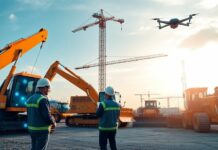
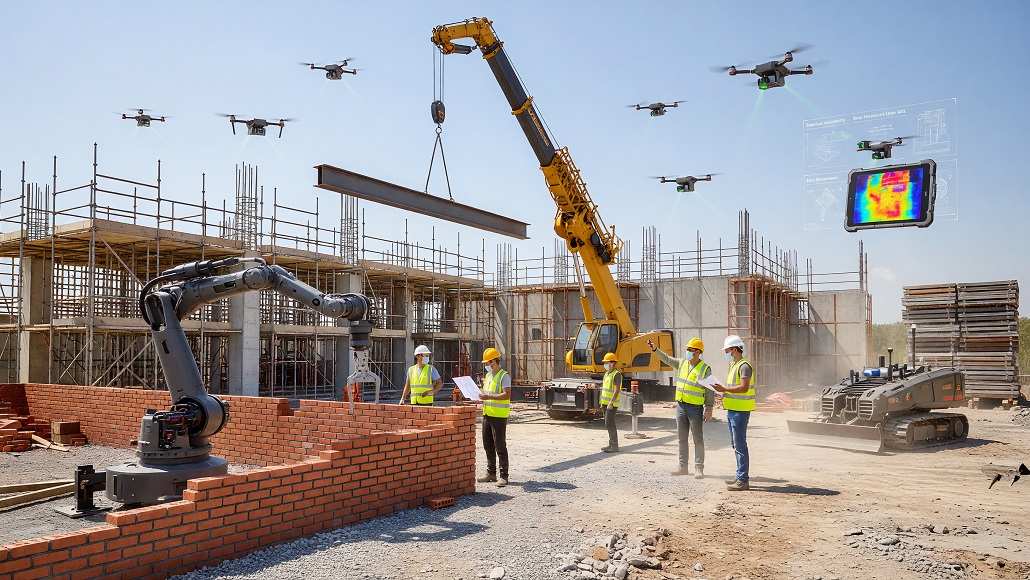
The initial stages of any construction project, particularly surveying and site preparation, are crucial for laying a stable foundation. Traditionally, these tasks have been laborious, time-consuming, and susceptible to human variability. However, the advent of construction robotics has brought unprecedented levels of precision to these foundational activities. Autonomous drones equipped with high-resolution cameras and LiDAR scanners can rapidly map vast terrains, creating incredibly detailed 3D models of potential build sites. This data, processed by intelligent algorithms, allows for precise planning, optimal resource allocation, and early identification of potential challenges, dramatically enhancing the efficacy of project execution.
Beyond aerial mapping, ground-based robots are increasingly being deployed for precise excavation and leveling. These machines, often guided by GPS and real-time kinematic (RTK) technology, can execute grading plans with millimeter-level accuracy, ensuring that the ground prepared aligns perfectly with the architectural blueprint. This level of exactitude minimizes material waste, reduces rework, and sets a higher standard for the entire construction process. The integration of such robotic construction technology in these preliminary stages signifies a move towards a ‘digital twin’ approach, where virtual models are meticulously replicated in the physical world, driving a new era of smart construction solutions.
Enhancing Data Collection and Analysis for Optimal Planning
The data gathered by robotic systems during the early project phases extends far beyond simple topography. Advanced sensors can analyze soil composition, detect underground utilities, and even monitor environmental conditions. This rich dataset feeds into Building Information Modeling (BIM) platforms, allowing project managers to make informed decisions based on comprehensive, real-time intelligence. For instance, knowing the exact ground conditions through robotic geological surveys can help engineers select appropriate foundation types, preventing costly changes later in the project execution timeline. This integration of data acquisition and intelligent analysis is a cornerstone of how construction robotics project execution is fundamentally being reshaped.
Reinventing Structural Assembly: Robotic Building Systems in Action
Once the site is prepared, the focus shifts to structural assembly a phase that traditionally demands significant human labor, often in high-risk environments. This is where robotic building systems are making some of their most significant contributions. From automated rebar tying robots to large-scale robotic arms capable of lifting and positioning heavy pre-fabricated modules, these machines are accelerating the build process while simultaneously enhancing safety. Robots can operate in conditions that are hazardous for humans, reducing exposure to falls, heavy machinery accidents, and repetitive strain injuries.
Consider the task of steel frame construction. Robotic welders can operate with incredible speed and consistency, delivering welds of superior quality compared to manual processes. Similarly, articulated robotic arms can precisely place large structural components, ensuring perfect alignment and stability. This not only speeds up construction but also improves the structural integrity of the final building. The application of robotic construction technology here isn’t just about speed; it’s about achieving a consistent, high-quality output that would be challenging to replicate manually, contributing significantly to overall construction efficiency.
Automated Masonry and Modular Construction Innovations
Perhaps one of the most visually striking applications of **construction automation** is in masonry. Robotic bricklayers can lay thousands of bricks a day with unerring accuracy, following digital plans to construct walls rapidly and perfectly plumb. This not only drastically cuts down on labor time but also ensures a consistent aesthetic and structural soundness. For modular construction, which relies on assembling pre-fabricated sections, robots play an even more pivotal role. They can precisely cut, assemble, and finish components off-site in controlled factory environments, before these modules are transported to the **job site automation** for rapid integration by other robotic or human teams. This synergistic approach streamlines the entire **construction robotics project execution** process, making it faster, more predictable, and less prone to on-site complications.
The Role of Robotics in Finishing, Inspection and Demolition
The impact of construction robotics extends well into the later phases of a project, encompassing finishing work, quality assurance, and even demolition. Precision painting robots can apply coatings evenly and efficiently, reducing material waste and achieving a superior finish. Drywall installation robots can lift and position sheets with ease, while automated sanding and polishing robots ensure smooth, uniform surfaces. These applications demonstrate how robotic building systems are refining even the most intricate details of construction.
Quality control and inspection are areas where robots offer unparalleled advantages. Drones and ground robots equipped with thermal imaging, high-definition cameras, and ultrasonic sensors can conduct comprehensive inspections of completed structures or ongoing work. They can identify defects, thermal bridges, or structural anomalies that might be missed by the human eye, providing real-time data for corrective action. This proactive approach to quality management is a significant contributor to improved construction efficiency and helps prevent costly rework down the line.
Furthermore, in the realm of demolition, robots are proving invaluable. Remote-controlled demolition robots can operate in hazardous environments, safely dismantling structures without risking human lives. These machines are designed to withstand harsh conditions, offering a controlled and efficient method for deconstruction and waste sorting, showcasing the full spectrum of smart construction solutions from build to breakdown.
Overcoming Challenges and Looking Ahead: The Future of Project Execution
While the benefits of construction robotics project execution are clear, the widespread adoption of these technologies is not without its challenges. Integration with existing workflows, the initial capital investment, and the need for a skilled workforce capable of operating and maintaining these advanced systems are significant hurdles. There’s also the crucial aspect of regulatory frameworks and safety protocols that must evolve to accommodate robotic operations on job site automation.
However, the industry is actively addressing these issues. Educational programs are emerging to train the next generation of construction professionals in robotic construction technology. Manufacturers are developing more intuitive and cost-effective robotic solutions, and open-source platforms are fostering greater interoperability between different systems. The future promises even more sophisticated smart construction solutions, including swarm robotics for collaborative tasks, AI-driven predictive maintenance for machinery, and even self-repairing materials integrated with robotic systems. The continuous evolution of robotic building systems suggests a future where robots will work seamlessly alongside humans, augmenting their capabilities and enabling the construction of structures that are safer, more sustainable, and built with unparalleled precision.
The narrative of construction robotics project execution is one of innovation and transformation. It’s a story where the traditional boundaries of building are being systematically dismantled, replaced by a vision of construction that is smarter, safer, and infinitely more efficient. As the industry moves forward, the integration of these advanced technologies will not only reshape how we build but also fundamentally alter the economic and environmental landscape of global infrastructure development. The blueprint for tomorrow’s world is being drawn today, with robots playing an increasingly critical role in bringing those visions to life.
