
























Key Takeaways:
- Transformative Integration: AI-powered construction robotics is fundamentally changing how projects are planned, executed, and managed by infusing intelligence into autonomous systems.
- Enhanced Efficiency & Safety: AI drives predictive automation, optimizing workflows, minimizing waste, and significantly boosting safety through real-time monitoring and adaptive responses.
- Self-Learning Capabilities: The emergence of self-learning construction systems allows robots to continuously improve performance, adapt to dynamic site conditions, and solve complex problems autonomously.
- Data-Driven Decision Making: AI processes vast amounts of data to provide actionable insights, enabling better resource allocation, proactive maintenance, and more accurate project forecasting.
- The Future is Intelligent: AI-powered construction robotics is a key driver towards fully autonomous and highly efficient smart job sites, defining the next era of construction and civil engineering.
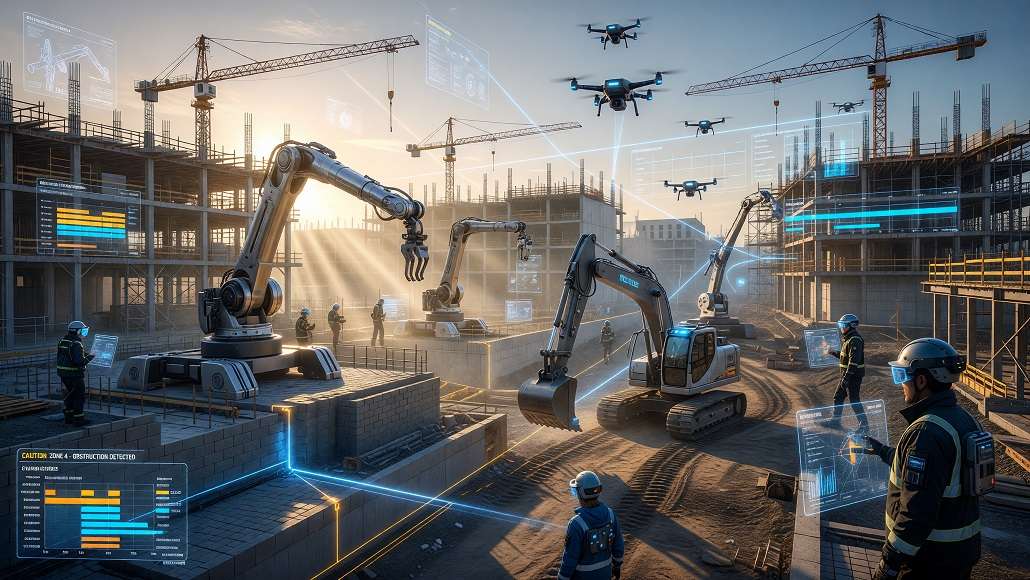
The construction industry, a sector historically characterized by its reliance on manual labor and traditional methodologies, stands at the precipice of a profound transformation. This revolution is being spearheaded by the synergistic integration of artificial intelligence with advanced robotics, culminating in what is now widely recognized as AI-powered construction robotics. This isn’t merely an incremental improvement; it’s a paradigm shift, propelling job sites into an era of unprecedented intelligence, efficiency, and self-sufficiency. We are moving beyond simple automation to a future where machines not only perform tasks but learn, adapt, and make informed decisions, fundamentally redefining the very essence of project execution and ushering in truly smart job sites. The future of construction robotics is intrinsically linked to the continuous advancement of AI, promising a landscape of innovation that was once confined to the realms of science fiction.
The Dawn of Intelligence: Unpacking AI-Powered Construction Robotics
In its simplest form, AI-powered construction robotics refers to the application of artificial intelligence to enhance the capabilities and autonomy of robotic systems deployed within construction environments. While traditional construction robots could execute pre-programmed tasks with precision, the infusion of AI grants them a new dimension of intelligence. This means these intelligent construction robots are no longer static tools but dynamic entities capable of perceiving their surroundings, processing complex data, and even making decisions in real-time, all without direct human intervention. They leverage machine learning algorithms, computer vision, natural language processing, and advanced sensor fusion to interpret chaotic and dynamic construction environments.
This symbiotic relationship between AI and robotics allows for the creation of self-learning construction systems. Imagine a robot tasked with laying bricks, as discussed in previous advancements involving bricklaying robots and 3D printing. With AI, this robot doesn’t just follow a pattern it learns from deviations, identifies efficiencies, and continuously refines its technique based on real-time feedback from the construction site. This continuous improvement cycle is a hallmark of AI in construction, distinguishing it from earlier forms of automation and signaling a significant leap forward in construction technology trends.
Real-Time Learning and Adaptive Project Execution
The true power of AI lies in its ability to facilitate real-time learning and adaptive behavior, a critical capability for any dynamic environment like a construction site. Traditional construction schedules are rigid, often failing to account for unforeseen variables such as weather changes, material delays, or unexpected site conditions. AI-powered construction robotics overcomes these limitations by enabling systems to respond dynamically. Robots equipped with AI can analyze sensor data from LiDAR scans to thermal imaging to create a continuously updated digital twin of the job site. This allows for instant adjustments to project plans and robotic operations.
For instance, a fleet of autonomous earth-moving equipment, as seen in the rise of self-driving construction machinery, can use AI to optimize excavation paths based on real-time soil conditions or the immediate availability of dump trucks. This form of predictive construction automation not only streamlines operations but also proactively mitigates potential bottlenecks. AI algorithms can predict equipment failures, forecast material demands, and even identify optimal logistics routes, dramatically enhancing overall project efficiency. This adaptive capacity is pivotal in transforming how construction projects are managed, moving away from static blueprints towards fluid, data-driven execution models.
Enhancing Planning and Design with AI
Before any physical work commences, AI significantly augments the planning and design phases. Algorithms can analyze vast datasets of past projects to identify potential risks, optimize structural designs for cost and material efficiency, and even generate multiple design iterations that satisfy complex parameters. This early integration of AI in construction allows for better informed decisions, reducing errors and rework significantly before a single spade hits the ground.
Dynamic Site Management and Resource Optimization
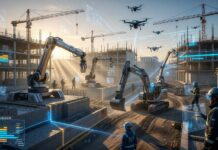
Once on site, intelligent construction robots continuously monitor progress against schedules, detect anomalies, and redistribute resources as needed. AI-driven drones, for example, can perform aerial surveys, feeding data into AI models that identify inconsistencies between planned and actual progress. This level of granular, real-time control translates into unparalleled resource optimization, minimizing waste of both materials and labor, thereby directly impacting project profitability and sustainability.
Transforming Job Site Safety and Efficiency
Safety on construction sites remains a paramount concern globally, and AI-powered construction robotics offers revolutionary solutions to inherently dangerous tasks. By deploying robots for hazardous activities such as working at heights, in confined spaces, or handling heavy loads human exposure to risk is drastically reduced. Beyond simply replacing human labor in dangerous roles, AI actively enhances safety through continuous monitoring and predictive analytics. Smart job sites leverage AI-driven cameras and sensors to identify potential hazards, detect unsafe worker behavior, and even predict accidents before they occur.
This proactive approach moves beyond reactive safety measures, fostering an environment where risks are mitigated preemptively. For instance, AI can analyze patterns of movement to identify collision risks between machinery and personnel, issuing real-time alerts. Furthermore, AI in construction plays a crucial role in improving workforce efficiency construction by optimizing workflows and reducing the physical strain on human workers. When robots handle repetitive or strenuous tasks, human workers can focus on more complex, decision-intensive roles, leading to higher productivity and job satisfaction.
Proactive Safety Measures
AI systems can monitor safety compliance, track the use of personal protective equipment (PPE), and even analyze environmental factors like air quality or structural integrity in real-time. Should conditions deviate from safe parameters, the system can automatically halt operations or issue warnings, preventing potential disasters. This constant, intelligent oversight creates a far safer working environment than traditional methods alone could achieve.
Optimized Workflows and Time Savings
The sheer speed and precision of AI-powered construction robotics translate into significant time savings. Tasks that would take human crews days or weeks can be completed by robots in a fraction of the time, often with superior accuracy. This predictive construction automation helps adhere to ambitious project timelines and often allows for earlier project completion, which has substantial economic benefits. The consistency of robotic work also reduces the likelihood of errors that would necessitate costly rework, further contributing to efficiency.
The Evolution of Collaborative Human-Robot Ecosystems
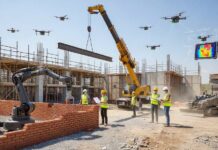
While the notion of self-learning construction systems might conjure images of fully autonomous sites devoid of human presence, the reality, at least for the foreseeable future, is one of advanced collaboration. AI-powered robots are designed not to replace human workers entirely, but to augment their capabilities, creating more productive and safer human-robot collaboration in construction ecosystems. Robots can act as intelligent assistants, carrying heavy materials, providing precise measurements, or offering real-time data insights directly to human workers.
This collaborative approach means that intelligent construction robots take on the dangerous, dirty, and dull tasks, freeing up human expertise for critical thinking, complex problem-solving, and quality control. AI facilitates seamless interaction between humans and robots, understanding verbal commands, anticipating needs, and even learning preferences over time. This synergy empowers the workforce, enhancing overall job satisfaction and fostering a more dynamic and innovative work environment. As construction technology trends evolve, this blend of human ingenuity and robotic precision will define the next generation of building practices.
Empowering the Workforce with AI Tools
AI-powered tools can provide augmented reality overlays for workers, guiding them through complex assembly processes or highlighting areas needing attention. This democratizes expert knowledge, making intricate tasks more accessible and reducing the learning curve for new employees. It’s about leveraging AI to make every worker more efficient and effective.
Real-time Communication and Coordination
AI systems can act as central coordinators, managing the schedules and tasks of both human and robotic teams. They can ensure that materials arrive precisely when and where needed, that different trades can operate without interference, and that all project stakeholders are updated with accurate, real-time information, leading to highly organized and fluid operations.
Challenges and the Path Forward
Despite the undeniable promise of AI-powered construction robotics, its widespread adoption is not without its hurdles. Initial investment costs for these advanced systems can be substantial, posing a barrier for smaller firms. There’s also the challenge of integrating complex AI systems with existing legacy infrastructure and workflows, requiring significant technical expertise and strategic planning. Furthermore, the industry faces a developing skill gap; a new generation of construction professionals will need to be proficient in robotics programming, data analytics, and AI interpretation.
Data security and ethical considerations also emerge as critical factors. Ensuring the integrity and privacy of sensitive project data, alongside establishing clear guidelines for autonomous decision-making by robots, will be paramount. The path forward necessitates a multi-faceted approach involving substantial investment in R&D, robust training programs for the workforce, and the development of standardized protocols for safe and effective deployment of intelligent construction robots. Embracing these construction technology trends will require a forward-thinking mindset and a commitment to continuous learning within the industry.
The Future Landscape: Self-Learning and Autonomous Job Sites
Looking ahead, the vision for smart job sites is one where self-learning construction systems operate with an unparalleled degree of autonomy. These systems will not only execute tasks but will continuously learn from their experiences, becoming more efficient and more adaptable with every project. Imagine construction sites where material procurement, scheduling, and execution are largely orchestrated by AI, responding to changes with near-instantaneous adjustments. The future of construction robotics envisions a seamless ecosystem where human oversight guides strategic decisions, while AI and robotics handle the complex, dynamic execution. This will lead to faster project delivery, significant cost reductions, and a new benchmark for quality and safety in construction.
Conclusion
The convergence of artificial intelligence and robotics is heralding an exciting new chapter for the construction industry. AI-powered construction robotics is not merely an evolutionary step but a revolutionary leap, fostering smart job sites that are safer, more efficient, and capable of unprecedented levels of predictive construction automation. From optimizing intricate designs to orchestrating complex on-site operations and ensuring the well-being of the workforce, AI-driven robots are transforming every facet of building. As we navigate this era of rapid technological advancement, embracing intelligent construction robots and cultivating self-learning construction systems will be crucial for any firm aspiring to lead in the future of construction robotics. The potential is immense, and the foundation for tomorrow’s intelligent infrastructure is being laid, quite literally, by machines that think and learn.
