






















The desire for the warmth and character of natural wood has remained a constant in architectural design for centuries. However, the practical limitations of solid timber its susceptibility to moisture, its tendency to expand and contract, and its vulnerability to mechanical wear have historically limited its use in certain environments. To bridge the gap between the timeless appeal of wood and the rigorous demands of modern construction, the industry has developed a sophisticated array of high performance wood laminate flooring solutions. These products represent a triumph of material science, offering surfaces that look and feel like authentic timber while possessing the durability, stability, and water resistance required for both high-end residential and heavy-duty commercial projects. This evolution is not merely an improvement in aesthetics; it is a fundamental shift in the performance profile of one of our most beloved building materials.
The Engineering Behind High-Performance Surfaces
To understand the value of high performance wood laminate flooring, one must look beneath the surface at the complex layering that gives these materials their strength. Unlike traditional solid wood, modern engineered wood flooring is constructed using a multi-ply or cross-laminated core. This core consists of several layers of wood or high-density fiberboard (HDF) glued together in opposing directions. This cross-grain construction neutralizes the natural tendency of wood to swell or shrink with changes in humidity, providing a level of structural stability that allows it to be installed in environments where solid wood would fail, such as over radiant heating systems or in basements. This engineering prowess ensures that the beauty of the floor is preserved for decades, regardless of the environmental challenges it faces.
Moisture Resistance and Waterproof Innovations
Perhaps the most significant breakthrough in recent years has been the development of moisture resistant flooring that can truly withstand spills and standing water. Historically, laminate and wood were the enemies of the bathroom and kitchen. However, the latest generation of high performance wood laminate flooring features integrated waterproof cores often made from mineral-based composites or stone-polymer composites (SPC). These cores do not absorb water, preventing the warping and buckling that traditionally plagued these products. Furthermore, advanced click-locking systems have been redesigned with water-tight joints that prevent liquid from seeping through to the subfloor. This innovation has expanded the “wood-look” aesthetic into every room of the house, allowing for a seamless design flow from the living area into the kitchen and even the primary bath.
Digital Printing and Aesthetic Realism
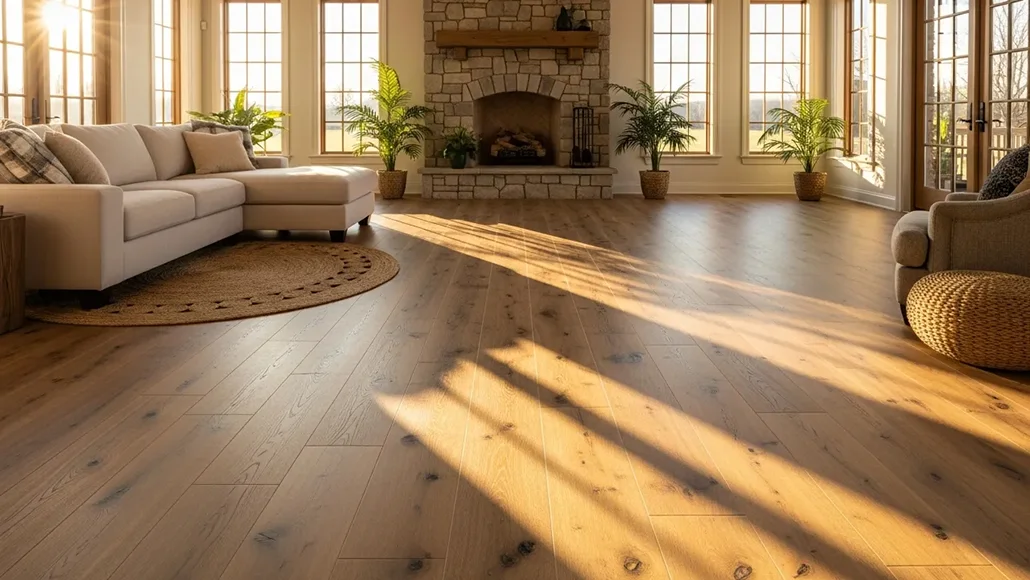
While the structural performance of these floors has increased, so too has their visual fidelity. Current laminate flooring trends are being driven by ultra-high-definition digital printing and synchronized embossing techniques. In the past, laminate was often criticized for its “plastic” appearance and repetitive patterns. Modern high performance wood laminate flooring, however, uses digital imaging that can capture the unique grain, knots, and textures of reclaimed timber or rare exotic hardwoods with staggering accuracy. The embossing process then aligns the physical texture of the surface with the visual image, ensuring that when you touch a “knot” in the wood, you actually feel it. This level of realism makes it nearly impossible for the average observer to distinguish a high-performance laminate from its natural counterpart, providing luxury aesthetics at a fraction of the cost and maintenance.
The Sustainability Profile of Engineered Surfaces
In the context of modern residential construction materials, sustainability is a non-negotiable requirement. High performance wood laminate flooring offers a more eco-friendly alternative to solid hardwood in several ways. First, the use of engineered cores allows for more efficient use of the tree; the high-value “wear layer” of premium wood is thin, while the structural core can be made from rapidly renewable or recycled wood fibers. This maximizes the yield of rare species like Oak, Walnut, or Teak. Additionally, many of these products are now manufactured using low-emission glues and finishes, ensuring that they contribute to a healthy indoor air quality. By choosing these durable floor systems, designers are effectively extending the lifecycle of the material, reducing the frequency of replacement and the subsequent demand on our forest resources.
Hardened Finishes and Commercial Durability
The durability of a floor is largely determined by its top layer. In high performance wood laminate flooring, this layer is often treated with advanced coatings containing aluminum oxide or ceramic particles. These finishes provide an “AC” (Abrasion Class) rating that indicates the floor’s resistance to scratching, staining, and fading. For commercial projects such as boutique hotels, high-end retail stores, and modern office spaces this level of protection is essential. A floor that can withstand the constant grinding of heels and the rolling of heavy carts while maintaining its refined aesthetics is a valuable asset. This intersection of “soft” visual warmth and “hard” mechanical performance is what makes these hybrid solutions the preferred choice for architects who refuse to compromise on either style or substance.
Maintenance Efficiency and Lifecycle Value
One of the primary drivers for the adoption of high performance wood laminate flooring in the residential market is the ease of maintenance. Unlike solid wood, which may require periodic sanding and refinishing, these modern surfaces are designed to be “living-friendly.” Their non-porous top layers resist pet stains, food spills, and the daily wear of a busy household. Most of these systems require nothing more than a simple damp mop and occasional vacuuming to remain in pristine condition. This reduction in maintenance intensity translates to a lower total cost of ownership over the life of the building, providing a significant lifecycle value that appeals to both homeowners and commercial property managers. In a world where time is our most precious resource, a floor that stays beautiful with minimal effort is the ultimate luxury.
The Future of Hybrid Flooring Systems
As we look toward the future, the boundaries between wood, laminate, and stone continue to blur. We are seeing the emergence of “wood-polymer-mineral” hybrids that combine the best properties of each material. These high performance wood laminate flooring systems are virtually indestructible, completely waterproof, and visually stunning. Looking further ahead, we may see the integration of smart technologies directly into the flooring planks, such as embedded heating elements or pressure sensors that can detect a fall in a residential care facility. As digital fabrication continues to evolve, the ability to customize the “wood” pattern to match the specific dimensions and lighting of a room will become a standard offering, turning every floor into a bespoke piece of functional art.
Balancing Tradition and Technology
The success of high performance wood laminate flooring lies in its ability to respect the tradition of craftsmanship while embracing the power of technology. It acknowledges our deep-seated psychological connection to wood as a material of comfort and heritage, but it provides the tools to use that material in ways that were previously impossible. Whether it is an engineered oak floor in a seaside villa or a high-wear laminate in a bustling urban cafe, these solutions provide the foundation for a modern life that is both beautiful and resilient. By choosing the right combination of core stability, surface durability, and visual realism, architects and designers are creating spaces that will stand the test of time, proving that the most advanced technology is the one that allows us to stay connected to the natural world.
Conclusion: A New Standard for the Built Environment
The evolution of high performance wood laminate flooring has set a new benchmark for the construction industry. It has proven that we no longer need to choose between the aesthetic warmth of nature and the practical requirements of the modern world. Through the clever application of engineering, chemistry, and digital design, we have created a category of materials that is truly greater than the sum of its parts. As these durable floor systems continue to gain market share in both residential and commercial sectors, they are not only changing the look of our buildings but also how we live and work within them. The future of the floor is here, and it is a perfect synthesis of natural beauty and industrial strength.
