




















For decades, the flooring and wall-surfacing industries were limited by the physical constraints of traditional manufacturing. Pattern repeats were fixed by the circumference of a printing cylinder, and the palette was restricted to a handful of standard colors and textures. However, the introduction of industrial-scale digital printing technology has shattered these limitations, ushering in a new era of creative freedom and operational efficiency. Today, digital printing decorative surfaces are redefining the aesthetic possibilities of the built environment, allowing architects and designers to create spaces that are truly unique. This shift is not just about visual variety; it represents a fundamental change in how materials are specified, produced, and experienced in contemporary interiors, merging the precision of the digital world with the tactile reality of physical architecture.
The Dawn of the Customization Era in Architecture
In the competitive landscape of modern commerce, branding and identity have become more than just a logo on a wall; they are an immersive experience. Companies no longer want “off-the-shelf” solutions; they want environments that tell their specific story through every square inch of the space. This demand has fueled the rise of customized flooring solutions, where any image, pattern, or logo can be rendered with crystalline clarity directly onto the floor. Whether it is a luxury hotel wanting to replicate a specific historical mosaic with modern durability or a tech company embedding complex geometric data patterns into their lobby floor, digital printing provides the tools for total personalization. This capability has effectively turned the floor into a medium for communication, allowing the horizontal plane to contribute as much to the narrative of a space as the walls or the digital signage.
Precision Imaging and High-Fidelity Replication
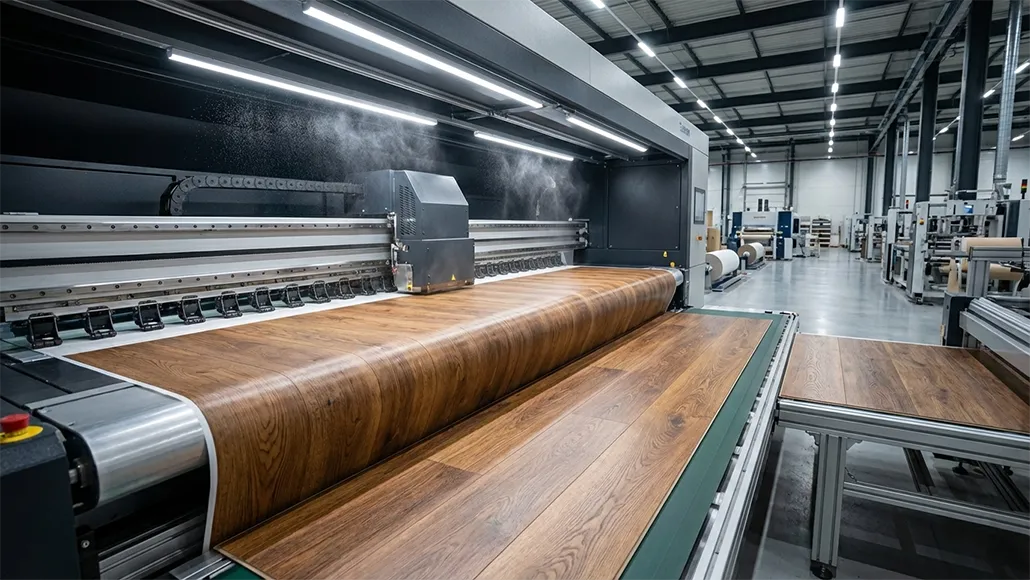
One of the most impressive feats of digital printing technology is its ability to mimic the “imperfect” beauty of nature with staggering accuracy. High-resolution scanners can capture the intricate grain of a thousand-year-old oak plank, the subtle veining of rare Carrara marble, or the weathered texture of oxidized copper. These digital files are then processed using sophisticated software that ensures there is no discernible “repeat” in the pattern across a vast area a feat impossible with traditional rotogravure printing. When applied to high-performance vinyl, laminate, or porcelain, the result is a surface that is visually indistinguishable from the natural original but possesses the durability and maintenance advantages of modern synthetics. This high-fidelity replication allows designers to utilize the look of fragile or prohibitively expensive materials in high-traffic environments where the real versions would quickly fail or exceed the budget.
Direct-to-Substrate Printing Breakthroughs
The technical backbone of this revolution is the development of UV-curable inks and large-format inkjet arrays that can print directly onto a wide range of materials. No longer confined to paper or film overlays, digital printing decorative surfaces can now be applied to wood, metal, glass, and even raw concrete. This direct-to-substrate approach eliminates the risk of delamination and ensures that the image remains crisp and vibrant for the life of the product. The precision of these systems often reaching 1200 DPI or higher allows for the rendering of depth and shadow that creates a three-dimensional effect on a two-dimensional surface, further enhancing the realism of the design. Furthermore, the use of white ink as a base layer allows for vibrant color reproduction on dark or metallic substrates, opening up a whole new palette for industrial and commercial design.
Redefining Aesthetics in Commercial and Residential Spaces
The impact of digital innovation is perhaps most visible in the current interior architecture trends toward “storytelling” surfaces. In hospitality design, for instance, we are seeing floors that feature custom-designed maps of the local area, botanical illustrations of indigenous flora, or abstract art that spans the entire footprint of a ballroom. In residential settings, homeowners are using digital printing to create “signature floors” that reflect their personal style, from vintage-inspired tile patterns to contemporary gradients that flow from one room to another. The ability to produce these designs in small batches or even one-off commissions has democratized high-end design, making customized flooring solutions accessible to a much broader range of projects. We are no longer limited by what a manufacturer decides to stock in a warehouse; we are limited only by the imagination of the designer.
Sustainable Design Through Digital Innovation
Beyond its creative potential, digital printing decorative surfaces offer significant environmental benefits that align with modern green building goals. Traditional analog printing involves the creation of physical plates and the mixing of large quantities of ink, much of which is wasted during setup and cleaning. Digital printing, by contrast, is a “print-on-demand” process that uses only the exact amount of ink required for the design, significantly reducing chemical waste and energy consumption. Furthermore, by allowing for the realistic replication of rare or endangered woods and stones, digital printing reduces the demand for the extraction of these sensitive natural resources. Architects can now specify the “look” of an exotic tropical timber without contributing to deforestation or the carbon-intensive shipping of heavy stone across the globe. This makes digital technology a vital tool for sustainable design, proving that high-style and high-ethics can coexist.
The Revolution of Tactile and 3D Texture Printing
The next frontier of digital printing technology is the move from the visual to the tactile. New “haptic” printing systems can apply layers of clear, high-build varnish in precise patterns, creating a physical texture that matches the visual image. This means that a digitally printed wood plank doesn’t just look like wood it feels like wood, with a grain that you can sense underfoot. This 3D surface design innovation is transforming the way we interact with decorative surfaces, adding a layer of depth and authenticity that was previously unattainable. For safety-critical applications, this technology can also be used to create integrated slip-resistant textures that are tailored to the specific needs of the space, combining form and function in a single digital pass. The ability to “print” texture opens up endless possibilities for sensory design, particularly in spaces for the visually impaired.
Efficiency and the New Supply Chain Model
Digital printing is not just a design tool; it is a powerful driver of economic efficiency in the construction industry. By moving from long production runs to just-in-time manufacturing, flooring companies can drastically reduce their inventory costs and warehouse requirements. This agility allows for faster response times to changing interior architecture trends and the ability to fulfill “rush” orders for custom projects without the need for expensive tooling or setup. For the contractor and the end-user, this means shorter lead times and the ability to order exact quantities, reducing on-site waste. This new supply chain model is essential for the modern fast-track construction schedule, where the ability to deliver a unique, customized product in a matter of days can be the difference between winning and losing a project.
The Future of Interactive and Bio-Responsive Surfaces
As digital printing technology continues to mature, we are seeing the emergence of “smart” decorative surfaces that can react to their environment. Researchers are experimenting with inks that can conduct electricity or change color based on light and temperature. Imagine a lobby floor where the decorative pattern subtly changes to guide visitors toward an exit during an emergency, or a retail floor where the design reacts to the movement of customers. While these interactive digital printing decorative surfaces are still in the early stages of development, they represent the future of integrated building design. The floor is no longer a static element but a dynamic interface that can communicate with the building’s management system and its occupants. As we move toward the integration of AI and the IoT into our surfaces, the possibilities for digital design are truly limitless.
Conclusion: A World Without Limits
The transformation of decorative surfaces through digital printing is a testament to the power of technological convergence. By bringing together the fields of photography, software engineering, chemistry, and industrial manufacturing, we have created a world where the only limit to design is the imagination. Digital printing decorative surfaces have moved from a niche novelty to a mainstream standard, providing the durability, sustainability, and beauty that modern construction demands. As we look to the future, the floors and walls of our buildings will continue to evolve, becoming more personal, more efficient, and more responsive to our needs. In this new digital landscape, the surface is no longer just a finish it is the very soul of the space.
