

























In the demanding world of commercial architecture, the floor is often the most stressed element of a building’s interior. Every day, thousands of footsteps, heavy equipment, and chemical spills test the limits of traditional materials. To meet these challenges, the industry has turned toward advanced surface technologies that offer more than just a decorative finish. These modern commercial flooring solutions are highly engineered systems designed to maximize building performance, ensuring that floors remain functional, safe, and aesthetically pleasing for decades. The focus has shifted from simple material selection to the implementation of complex surface protection systems that address the unique mechanical, biological, and acoustic pressures of public spaces. As facilities become larger and more complex, the science underfoot has become a critical factor in the economic and operational success of any development.
Engineering Resilience for High-Traffic Environments
The primary objective of any commercial floor is to survive the rigors of high traffic flooring without frequent repair or replacement. This requirement has led to the development of ultra-durable flooring materials that utilize cross-linked polymers and crystalline structures. Unlike residential surfaces, commercial-grade floors are built to resist indentation, abrasion, and thermal shock. Through advanced surface technologies, manufacturers can now create finishes that are harder than steel yet flexible enough to accommodate the natural movements of a building. This balance of rigidity and elasticity is crucial for large-scale developments like shopping malls and airport terminals, where the sheer volume of users would quickly degrade inferior materials. For example, high-performance epoxy and polyurethane resins are now formulated with ceramic spheres or aluminum oxide particles to provide a “wear layer” that is virtually impervious to the dragging of heavy pallets or the rhythmic pounding of luggage wheels.
Nanotechnology and Molecular Surface Protection
At the cutting edge of material science is the application of nanotechnology to commercial surfaces. By manipulating materials at the molecular level, scientists have developed surface protection systems that are virtually impenetrable. These nanocoatings create a high-density barrier that prevents moisture, oils, and stains from bonding with the floor. In a commercial setting, this means that even the most aggressive contaminants such as grease in a professional kitchen or industrial chemicals in a laboratory can be easily removed without damaging the underlying structure. These advanced surface technologies not only preserve the visual integrity of the floor but also significantly extend its service life by preventing the microscopic pitting that leads to larger structural failures. Furthermore, nano-silver and other metallic compounds are being integrated into these coatings to provide a permanent, non-leaching barrier against microbial growth, a feature that has become indispensable in the modern era of public health.
Slip Resistance and Public Safety Innovations
Safety is the non-negotiable priority in public space design. Slip-and-fall accidents are a major liability for building owners, making anti slip flooring a critical requirement. Modern advanced surface technologies have introduced micro-texturing techniques that increase friction without compromising ease of cleaning. These surfaces are designed to provide maximum traction even when wet, utilizing specialized aggregates like quartz or glass beads suspended within the wear layer. By carefully calibrating the coefficient of friction, engineers can create floors that are safe for elderly pedestrians in hospitals or hurried commuters in transit hubs. This focus on safety is an essential component of overall building performance, reducing risk and improving the user experience. Innovative testing methods, such as the Pendulum Test Value (PTV), allow facility managers to verify that their surfaces maintain these safety properties even after years of heavy use, ensuring that the “grip” of the floor is a measurable and reliable asset.
The Intersection of Durability and Maintenance Efficiency
The true cost of a floor is not found in its installation but in its lifetime maintenance. Advanced surface technologies are specifically designed to reduce the need for intensive cleaning, waxing, and stripping processes that are both costly and environmentally damaging. “No-wax” finishes and self-polishing resins allow facility managers to maintain a high-gloss appearance with nothing more than routine dry mopping and occasional damp cleaning. This efficiency is a hallmark of modern durable flooring materials, which are engineered to resist the “graying out” effect caused by microscopic scratches. By maintaining their clarity and luster over time, these surfaces ensure that the commercial environment continues to reflect a professional and clean image to the public while significantly lowering the operational budget of the building. In an era where labor costs are rising, the ability of a floor to “clean itself” or require minimal intervention is a massive competitive advantage for property owners.
Antimicrobial Surfaces and Hygiene Management
In the post-pandemic era, the biological performance of a floor has become just as important as its mechanical durability. Advanced surface technologies now include silver-ion and silane-based antimicrobial agents that are integrated directly into the flooring material during manufacturing. These agents actively inhibit the growth of bacteria, fungi, and mold on the surface, providing a continuous layer of protection between professional cleanings. In healthcare facilities, schools, and food processing plants, these commercial flooring solutions are vital for maintaining sterile environments. Because the antimicrobial properties are part of the molecular structure of the wear layer, they do not wash away or wear off, ensuring long-term hygiene performance that protects public health. This technological layer of defense is often combined with seamless installation techniques, such as integral coving, which eliminates corners where dirt and bacteria can hide, further enhancing the hygienic profile of the space.
Acoustic Performance and Structural Integrity
While we often focus on what we see and touch, the acoustic impact of a floor is a major factor in building performance. In large commercial spaces, hard surfaces can create an echo-chamber effect that increases stress and reduces comfort. To combat this, advanced surface technologies are being used to create multi-layered systems with integrated acoustic membranes. These layers are designed to absorb impact sound such as footsteps or rolling carts preventing noise from traveling through the building’s structure. This acoustic engineering is achieved without sacrificing the durability required for high traffic flooring, demonstrating the versatility of modern surface design. By addressing both the visual and auditory environments, these technologies contribute to a more holistic and productive commercial atmosphere, particularly in open-plan offices and educational institutions where concentration is key.
High-Performance Polymers and the Future of Resins
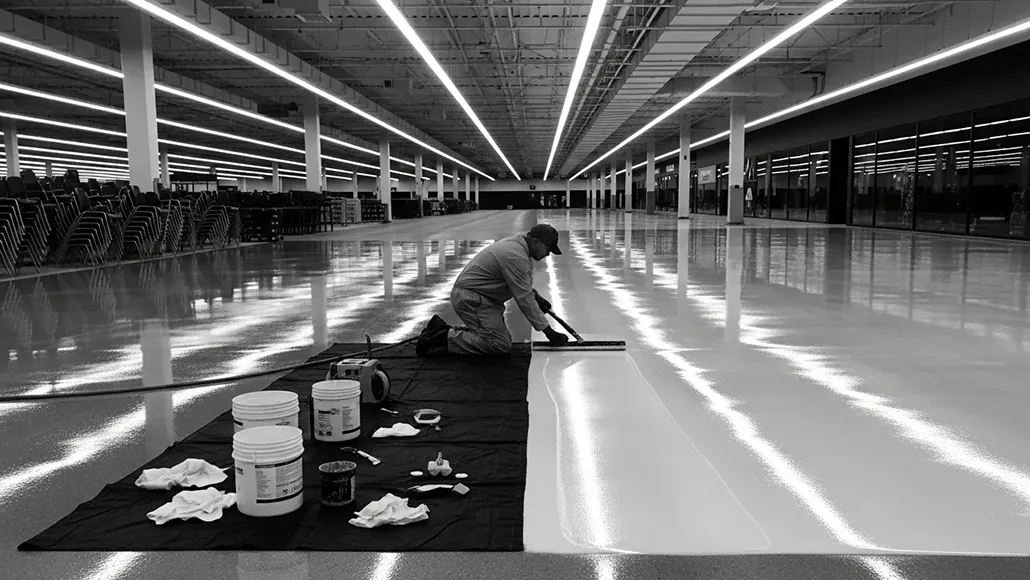
The evolution of resinous flooring has been a primary driver in the advancement of commercial surfaces. Newer formulations, such as Methyl Methacrylate (MMA) and Polyaspartics, offer rapid cure times that allow for “overnight” renovations, minimizing downtime for businesses. These advanced surface technologies are not only fast-setting but also provide superior UV stability and chemical resistance compared to traditional epoxies. In the retail sector, where store layouts change frequently, the ability to rapidly install or repair a high-performance floor is invaluable. Furthermore, these resins can be customized with various aggregates, flakes, and pigments to create bespoke designs that match a brand’s identity while providing the structural integrity needed for millions of footfalls. The development of bio-based resins is also on the rise, aligning these high-performance systems with the broader industry shift toward sustainability.
The Role of Robotics and Digital Inspection
As the materials themselves become more advanced, the methods used to monitor and maintain them are also evolving. Digital imaging and AI are now being used to conduct “floor health audits,” where sensors or robotic cleaners scan the surface for signs of thinning, cracking, or loss of slip resistance. This data-driven approach to maintenance allows for “predictive repairs,” where a facility manager can address a small issue before it becomes a major structural failure. These advanced surface technologies ensure that the investment in high-quality materials is protected throughout the building’s lifecycle. Autonomous floor scrubbers, equipped with precise dosing systems for eco-friendly cleaners, are becoming common in large venues, ensuring that the floor is maintained to a consistent standard with minimal human intervention. This synergy between material science and digital technology represents the next level of facility management excellence.
Conclusion: The Value of Investing in Technology
Ultimately, the adoption of advanced surface technologies in commercial flooring is an investment in the building’s future. While the initial cost of these high-performance systems may be higher than traditional alternatives, the total cost of ownership is significantly lower when accounting for reduced maintenance, extended replacement cycles, and improved safety. By prioritizing durability, hygiene, and performance, developers are creating commercial environments that are not only beautiful but also resilient and efficient. As we move toward more integrated and intelligent buildings, the floor will continue to be a primary site of innovation, proving that the foundation of a successful business literally starts with what is underfoot.
