


















The rapid urbanization of the 21st century has necessitated the development of increasingly complex transportation and utility networks, many of which must be situated deep beneath the earth’s surface. This necessity has driven the evolution of advanced tunnelling equipment, a suite of technologies that has turned the once-impossible dreams of mega infrastructure projects into tangible realities. From the depths of sub-aqueous transit links to the heights of alpine railway passages, the ability to excavate rock and soil with extreme precision is the defining factor of modern civil engineering. The development of these technologies has moved beyond simple excavation, incorporating real-time geological analysis, automated structural reinforcement, and sophisticated environmental controls. As a result, the industry is seeing a paradigm shift in how underground space is utilized and developed across the globe.
Underground construction is inherently one of the most unpredictable and dangerous areas of civil engineering. Unlike surface construction, where conditions are largely visible and manageable, tunnelling involves navigating through a subterranean “black box” of varying soil types, water tables, and geological fault lines. Advanced tunnelling equipment has been developed specifically to address these challenges, providing engineers with the tools to “see” ahead of the excavation face and react to changing conditions with a level of control that was previously unattainable. This transition from a reactive to a proactive approach is what allows for the safe and efficient completion of mega infrastructure projects that span tens of kilometers and traverse some of the world’s most difficult terrains.
The Dominance of the Modern Tunnel Boring Machine (TBM)
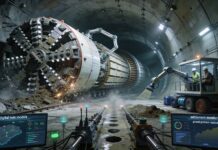
At the heart of any significant underground construction project lies the tunnel boring machine. These massive engineering feats, often referred to as “mechanical moles,” are capable of excavating circular cross-sections through a wide variety of soil and rock strata. Unlike traditional drill-and-blast methods, which are inherently intermittent and vibration-heavy, the TBM offers a continuous and controlled excavation process. Advanced tunnelling equipment in this category now includes variable density machines that can switch between different modes of operation such as Earth Pressure Balance (EPB) or Slurry Shield to handle changing ground conditions without the need for manual intervention. This adaptability is crucial for mega infrastructure projects where the geology can vary significantly over a single project’s lifespan.
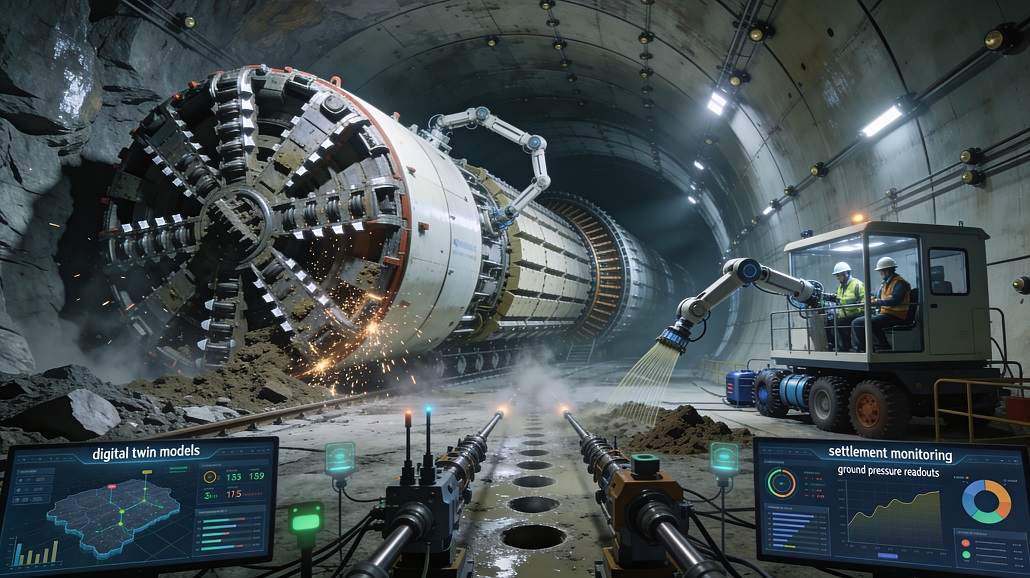
The scale of a modern TBM is truly awe-inspiring, with some machines exceeding 17 meters in diameter and weighing thousands of tons. However, the true innovation lies in the cutting head. Modern rock excavation equipment utilizes high-strength tungsten carbide disc cutters that can chew through the hardest granite at a rate of several centimeters per minute. As the machine moves forward, it simultaneously installs precast concrete segments to form the final tunnel lining, creating a finished structure in a single pass. This integration of excavation and construction is what gives the TBM its unparalleled speed and safety. By maintaining constant pressure at the excavation face, these machines prevent the ground from settling, making it possible to dig tunnels just meters beneath active city streets and historical landmarks.
Innovations in Precision Drilling Technology
While the TBM handles the primary excavation for large-diameter tunnels, specialized drilling technology remains indispensable for smaller-scale tunnels, pilot bores, and the installation of critical utilities. Modern drilling rigs are now equipped with computer-assisted guidance systems that allow for deviations of mere millimeters over hundreds of meters. This level of precision is vital for horizontal directional drilling (HDD) in urban environments where existing underground infrastructure such as fiber optic cables, gas lines, and water mains must be avoided at all costs. Furthermore, the development of sonic and percussive drilling techniques has significantly improved the speed of penetration in hard rock, reducing the overall time required for site investigation and pre-grouting.
These advancements in drilling technology are also playing a critical role in the safety of tunnelling operations. Modern rigs can be used to drill “probe holes” far ahead of the main excavation to detect hidden pockets of high-pressure water or methane gas. If a hazard is detected, the same equipment can be used to inject grout or freezing agents into the ground, stabilizing it before the main tunnel boring machine arrives. This integration of investigation, mitigation, and excavation is a hallmark of modern advanced tunnelling equipment, ensuring that mega infrastructure projects are protected from the geological surprises that have historically led to catastrophic delays and cost overruns.
Robust Ground Support Systems and Structural Stability
The safety of any underground project is directly linked to the efficacy of its ground support systems. As advanced tunnelling equipment removes the material, the surrounding ground must be stabilized immediately to prevent collapse or subsidence. Modern tunnelling rigs often incorporate automated shotcreting arms and robotic bolt-installing systems that work in tandem with the excavation process. These systems are designed to apply support based on real-time feedback from geotechnical sensors, ensuring that the reinforcement is exactly tailored to the specific needs of the section. In soft-ground tunnelling, the use of pressurized face technology maintains the stability of the surface structures above, allowing for the construction of vast subway networks in cities like London, Tokyo, and New York.
The evolution of ground support has also seen the introduction of new materials, such as fiber-reinforced concrete and high-strength resin bolts. These materials offer superior durability and are easier to apply using automated advanced tunnelling equipment. In many modern projects, the primary support is designed to be permanent, eliminating the need for a secondary concrete lining and significantly reducing the overall construction time. This “single-pass” approach is made possible by the precision of modern excavation tools, which create a smooth and stable tunnel profile that requires minimal finishing. The synergy between high-speed excavation and robust support is what allows modern engineers to push the boundaries of what can be built underground.
Rock Excavation Equipment and Geotechnical Efficiency
In projects involving hard rock, the choice of rock excavation equipment can determine the economic viability of the entire venture. Traditional methods are increasingly being supplemented or replaced by high-power roadheaders and hydraulic breakers that offer greater flexibility in tunnel shape and size. These machines are particularly useful for creating caverns, stations, and ventilation shafts where a circular TBM profile is not appropriate. The latest generation of excavation equipment features intelligent load-sensing hydraulics that adjust the impact energy based on the hardness of the rock, reducing energy consumption and mechanical wear. This level of control allows for a more “surgical” approach to excavation, minimizing the over-break and reducing the volume of concrete required for the final lining.
Geotechnical efficiency is also improved through the use of “smart” excavation tools that can analyze the rock as they cut it. Sensors embedded in the cutting tools can measure the hardness and mineralogy of the rock, providing engineers with a detailed map of the geological formations. This data can be used to optimize the choice of cutting tools and adjust the excavation parameters in real-time. In mega infrastructure projects, this level of detail allows for more accurate forecasting of progress and costs, providing stakeholders with greater confidence in the project’s delivery. The ability to turn the excavation process itself into a data-gathering exercise is one of the most significant benefits of modern rock excavation equipment.
The Role of Data in Mega Infrastructure Projects
The successful delivery of mega infrastructure projects is as much about data management as it is about mechanical power. Advanced tunnelling equipment is now a primary source of geotechnical and operational data. Every rotation of the cutting head and every millimeter of forward movement is logged and analyzed by on-site engineers and remote specialists. This data allows for the creation of a “digital twin” of the tunnel, which can be used to predict future performance and identify potential risks before they manifest. The use of cloud-based platforms ensures that all stakeholders have access to real-time progress reports, facilitating better coordination between the different phases of construction.
In an industry where delays can cost millions of dollars a day, the ability to make informed decisions based on accurate data is a significant competitive advantage. For instance, data from a TBM can be used to optimize the logistics of the segment supply chain, ensuring that segments arrive at the machine exactly when they are needed. Similarly, real-time monitoring of ground settlement can be used to adjust the face pressure of the machine, preventing damage to surface buildings. This data-driven approach is transforming tunnelling from an “art” based on experience into a “science” based on empirical evidence, leading to more predictable outcomes for the most challenging mega infrastructure projects in the world.
Environmental Stewardship and Sustainable Tunnelling
As global focus shifts toward sustainability, the tunnelling industry is also looking for ways to reduce its environmental footprint. Advanced tunnelling equipment is playing a key role in this transition. Modern machines are being designed with more efficient electric motors and energy recovery systems that capture the heat generated by the cutting process. Furthermore, there is a growing trend toward “zero-waste” tunnelling, where the excavated material is treated and repurposed on-site for use in concrete production or as backfill. This reduces the need for heavy truck traffic and minimizes the volume of material that must be sent to landfills.
The use of advanced tunnelling equipment also allows for the design of more efficient tunnel routes that minimize the impact on sensitive ecological areas. By going deeper or using more precise drilling technology, engineers can avoid the need for surface-level disruption in parks, wetlands, and residential neighborhoods. This “invisible” infrastructure is essential for the growth of sustainable cities, providing the capacity for mass transit and renewable energy transmission without sacrificing the quality of the urban environment. The future of tunnelling is not just about digging deeper and faster, but about doing so in a way that respects the planet and the communities that live upon it.
Future Perspectives on Underground Construction
As we look to the future, the boundaries of what can be achieved with advanced tunnelling equipment will continue to expand. Concepts such as plasma-based rock disintegration and automated tunnel segment manufacturing are already moving from the laboratory to the field. The push for faster and more cost-effective tunnelling will likely lead to the development of modular, rapidly deployable machines that can be used for shorter tunnels and urban “micro-tunnelling” projects. Moreover, the integration of artificial intelligence will allow for fully autonomous tunnelling, where the machine can navigate and excavate without any human input.
The underground remains one of the final frontiers of civil engineering, and the tools we use to conquer it are becoming more sophisticated, safer, and more efficient with every passing year. Whether it is building hyperloop networks of the future or creating deep-storage facilities for carbon sequestration, advanced tunnelling equipment will be at the heart of the world’s most ambitious projects. The transformation of mega infrastructure projects through these technologies is a testament to human ingenuity and our enduring desire to build a better, more connected world one meter at a time.
