





















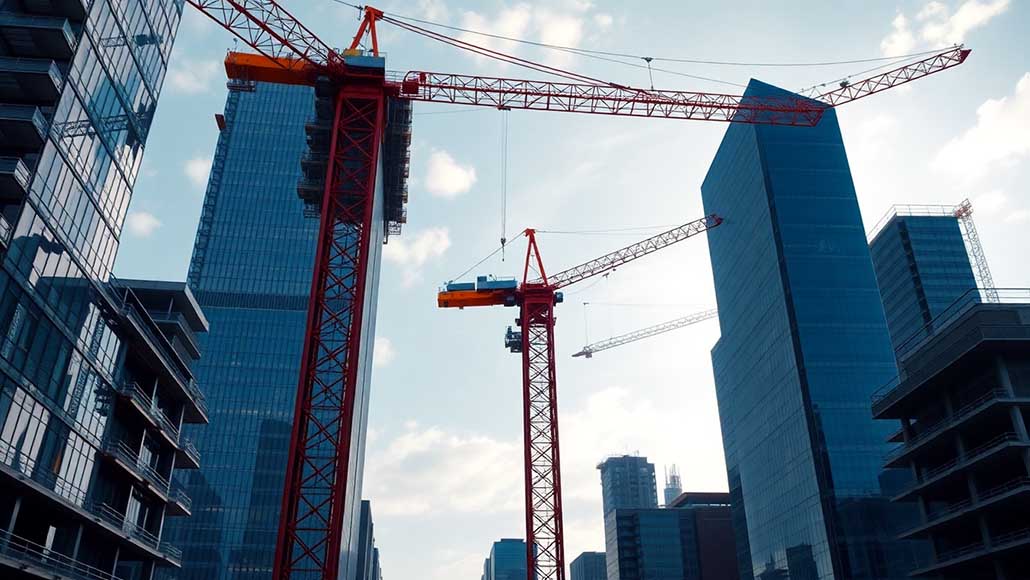


The skyline of modern cities is evolving at an unprecedented pace, driven by the need for taller, more complex, and sustainable infrastructure. One of the most transformative advancements supporting this growth is the emergence of electric-powered cranes. These innovative lifting solutions are redefining construction paradigms, particularly in urban high-rise projects where space constraints, environmental considerations, and safety standards are paramount. As cities aim to reduce carbon footprints and enhance operational efficiencies, electric cranes are increasingly becoming the backbone of modern urban construction.
The Rise of Electric Cranes in Urban Construction
Traditionally, cranes have relied heavily on diesel engines, contributing notably to air pollution and noise pollution in dense urban environments. As environmental regulations tighten and cities seek sustainable development, the building sector is turning towards cleaner options. Electric cranes that run on batteries or through indirect power supplies like overhead wires or fixed charging points are showing promise as a clean, green option.
The shift is especially applicable to high-rise developments in which numerous lifts are made each day in small areas. Electric cranes’ zero-emission and low-noise operation bring unparalleled benefits, creating cleaner, safer, and more efficient working environments. Additionally, electric cranes in urban construction come equipped with automation and smart technology incorporations, enhancing productivity and accuracy on increasingly intricate building sites.
Technological Innovations Powering the Transition
The core of the revolution lies in continuous innovations in battery technology, control systems, and modular design. Modern electric cranes incorporate high-capacity lithium-ion batteries, which provide long working hours and fast charging cycles. Some designs come with swappable battery modules, reducing downtime and enabling continuous use under harsh conditions.
Control systems with integrated artificial intelligence (AI) provide accurate movement, load control, and safety interlocks. Intelligent sensors track operating parameters in real-time, maximizing energy efficiency and anticipating maintenance requirements, which minimizes downtime and improves safety profiles.
In addition, the development of lightweight, high-strength materials has permitted more compact, easier-to-manage cranes to be built that can function in constricted urban environments with high load-carrying capabilities
Environmental and Safety Benefits
One of the key drivers for adopting electric cranes is their profound environmental impact. Reducing greenhouse gas emissions is vital to achieving cities’ sustainability goals globally. Since construction in urban areas contributes significantly to localized pollution, battery-powered cranes are an essential move toward cleaner cities.
Apart from environmental advantages, electric cranes also significantly enhance safety in construction sites. Noise pollution is significantly alleviated, which reduces disturbance to surrounding residents and workers. The lack of exhaust fumes translates into cleaner air, especially in enclosed spaces or indoors, where pollution levels could become dangerous.
In addition, AI and sensor-based systems installed in electric cranes offer greater safety features, such as collision detection, automatic load monitoring, and emergency shutdown. Adopting such technology reduces the risks of human error, a vital benefit in the high-risk arena of high-rise construction.
Economic Impacts and Market Outlook
The economic benefits of electric cranes extend beyond environmental considerations. Although initial capital costs are higher than their diesel counterparts, operational costs are significantly lower due to reduced fuel and maintenance expenses. Lifecycle cost savings and government incentives for green building are boosting adoption rates.
Market forecasts indicate robust growth in electric crane deployment over the next decade, driven by increasing urban infrastructure projects, stricter environmental policies, and technological advancements. The rising demand for high-capacity, automated cranes in megacities will further fuel this trend.
Manufacturers are spending heavily on research and development to make the battery more efficient, structurally longer-lasting, and automatable. Industry forecasters estimate that at the close of this decade, electric-powered cranes may comprise a sizable segment of the world crane market, particularly in industrialized countries and environmentally friendly emerging countries.
Challenges in Adoption
Despite their many advantages, electric-powered cranes confront certain barriers to widespread adoption. One of the significant hurdles is the high initial capital investment, which can be a deterrent for smaller developers or projects with tight budgets. While they make operational costs a compelling proposition in the long run, initial costs are a concern.
Battery technology, while improving quickly, continues to struggle with energy density, charging infrastructure, and safety factors in extreme weather conditions. Fast-charging stations at worksites need to be developed but at the cost of heavy infrastructure investment.
Regulations and building codes also change, with some areas not having full standards for electrification of heavy equipment. This leaves industry participants with uncertainty about certification, safety testing, and compliance with standards.
Finally, the technological environment of autonomous and semi-autonomous electric-powered cranes is yet to evolve. Embedding AI and robotics needs technical know-how and reengineering existing workflows, which makes adoption take longer.
Future Trends and Innovations
The trajectory of electric-powered cranes integration is set toward smarter, more efficient, and autonomous systems. Advances in solid-state battery technology hold the potential to deliver increased energy density, rapid charging, and improved safety over current constraints.
Also, with the convergence of Internet of Things (IoT) and AI, predictive maintenance, real-time performance optimization, and improved safety protocols will be facilitated. electric-powered cranes operating autonomously will become more prevalent, especially in densely populated urban settings where minimizing exposure of the human operator to risk factors is paramount.
Technological breakthroughs in wireless power transfer and supercapacitors would render fixed charging points unnecessary, enabling cranes to charge during operation without a hitch. These breakthroughs will open doors to new possibilities of unlimited operating hours and dynamic project management.
Research funding, public-private collaborations, and policy assistance will play a pivotal role in speeding up these advancements, establishing electric-powered cranes as the norm in city high-rise construction by the early 2030s.
Conclusion
As urban landscapes become taller and more complex, the need for efficient, sustainable lifting solutions grows ever more urgent. Electric-powered cranes represent a compelling solution to the environmental, safety, and practical concerns of urban construction. They can move noiselessly, produce no pollution, and integrate sophisticated automation, which makes them perfect for contemporary high-rise urban building projects.
The continued advancement in battery technology, artificial intelligence, and IoT integrations has the potential to drive the electric-powered cranes adoption faster, leading to cleaner, safer, and more innovative urban construction. Although there are challenges ahead, the coming decade is likely to see an incredible turn toward electrification, raising new standards of efficiency and sustainability in high-rise building construction.
Finally, electric-powered cranes in urban construction are not just a technological leap forward—they signify a fundamental transformation in how cities expand and develop for sustainable urbanisation.