






















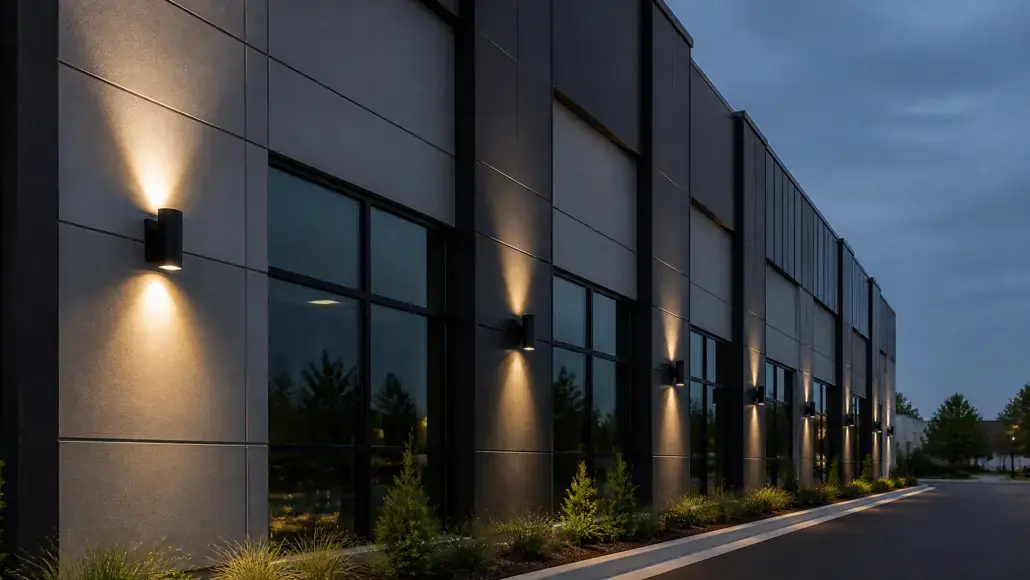


The installation of exterior wall-mounted luminaires on modern commercial buildings requires a sophisticated understanding of facade engineering and structural mechanics. As building envelopes become more complex, utilizing materials such as fiber cement, aluminum composites, and high-performance glass, the methods for attaching lighting fixtures must evolve. The primary challenge is to provide a secure mounting point that does not compromise the weather-tightness or the thermal performance of the building’s insulation layer. This often involves the use of specialized stand-offs and mounting plates that are integrated into the facade system during the early stages of construction.
Load-bearing considerations are essential when specifying fixtures for high-rise or large-scale commercial developments. In addition to the weight of the luminaire itself, the mounting system must be capable of withstanding dynamic loads caused by wind pressure and ice accumulation. For fixtures located in hurricane-prone regions, the structural attachment must meet even more stringent requirements for pull-out strength and vibration resistance. This requires a collaborative effort between the lighting designer and the facade consultant to ensure that the chosen exterior wall-mounted luminaires are compatible with the structural characteristics of the wall system.
The aesthetic integration of the mounting hardware is also a critical factor in the overall design. On high-end commercial properties, designers often seek to minimize the visual impact of brackets and conduits to maintain the clean lines of the architecture. This can be achieved through the use of recessed mounting boxes or by concealing the electrical runs within the structural joints of the facade. Proper coordination with the electrical contractor is necessary to ensure that the conduit pathways are installed accurately and that the junction boxes are positioned correctly to accept the fixtures. Resultantly, the lighting becomes a seamless extension of the building’s form rather than an afterthought.
Weatherproofing and Thermal Management in Outdoor Applications
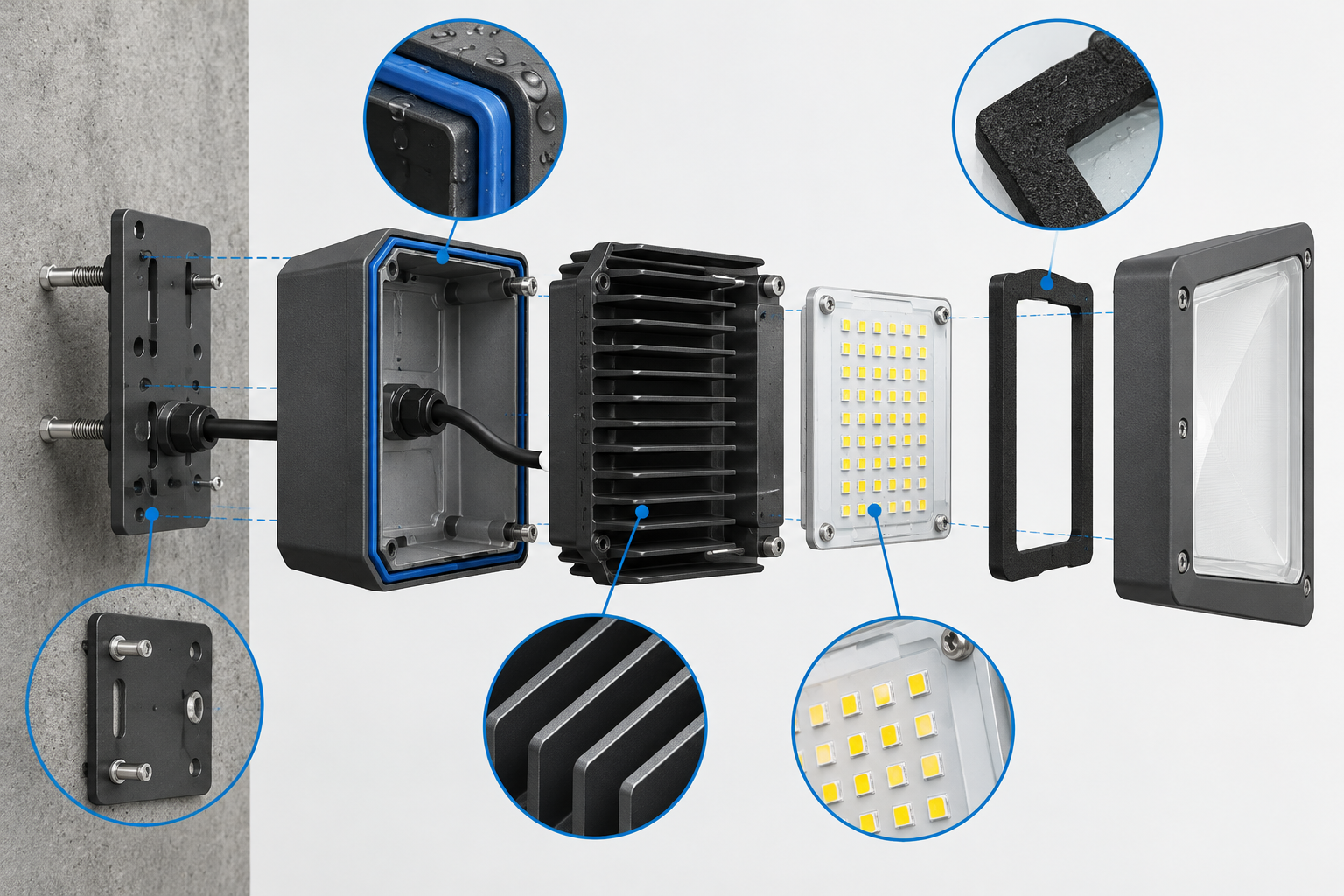
Exterior wall-mounted luminaires are subject to intense environmental stress, including UV radiation, salt spray in coastal areas, and extreme temperature variations. Ensuring the long-term reliability of these fixtures requires a high level of technical precision in both design and manufacturing. One of the most important factors is the sealing of the luminaire to prevent the ingress of moisture and dust. This is typically achieved through the use of high-grade silicone gaskets and precision-machined housing components. An Ingress Protection (IP) rating of IP65 or higher is standard for these applications, providing assurance that the internal electronics are protected even in severe weather conditions.
Thermal management is equally critical for the performance of outdoor LED luminaires. Although LEDs are highly efficient, they still generate significant heat, which must be dissipated to prevent premature failure of the components. In exterior wall-mounted luminaires, the housing itself often serves as a heat sink, utilizing fins or specialized internal geometries to increase the surface area available for heat exchange. The choice of materials for the housing is therefore vital; aluminum is preferred for its excellent thermal conductivity and durability. In addition, the use of thermal interface materials between the LED board and the housing ensures efficient heat transfer.
The design must also account for the effects of condensation, which can occur when warm, moist air inside the fixture is cooled by the exterior environment. To prevent moisture buildup, many high-quality luminaires incorporate breathable vents or “pressure equalization” valves. these components allow air to pass through while blocking liquid water, preventing the pressure differentials that can pull moisture through the seals. Furthermore, the use of corrosion-resistant coatings, such as marine-grade powder paints or anodized finishes, protects the exterior surface of the luminaire from degradation over time. Consequently, these technical features ensure that the lighting remains functional and aesthetically pleasing for the duration of its operational life.
Optic Design and Light Distribution Patterns
The effectiveness of exterior wall-mounted luminaires in commercial applications depends largely on the precision of their optical systems. Unlike interior lighting, which often relies on diffuse illumination, exterior lighting must be carefully controlled to achieve specific goals such as wall washing, grazing, or accentuating architectural features. Grazing, for example, involves placing the light source close to the surface of the wall to highlight its texture and form. This requires an extremely narrow beam angle and precise aiming to avoid creating harsh shadows or unwanted glare.
Modern optical design for exterior luminaires often involves the use of specialized lenses and reflectors that can shape the light into a wide variety of patterns. Asymmetric optics are particularly useful for wall-mounted applications, as they can direct light away from the wall and out into the surrounding space while still providing even illumination on the vertical surface. This is essential for lighting walkways and entrances without wasting energy by shining light where it is not needed. In addition, the use of shielding and baffles can further refine the light distribution and prevent light from entering the sky or the windows of adjacent buildings.
The selection of the appropriate optic for a specific application involves several technical considerations:
- The height and texture of the wall surface being illuminated.
- The distance between the fixtures and the required uniformity of the light.
- The level of ambient light in the surrounding environment.
- Compliance with local “dark sky” regulations to minimize light pollution.
By choosing the right combination of optics and lamp positions, designers can create a nighttime identity for a commercial building that is both dramatic and energy-efficient. Simultaneously, this precision helps in maintaining the comfort and safety of the people using the building and the surrounding urban spaces.
Integration with Building Security and Access Systems
In the commercial sector, exterior wall-mounted luminaires play a vital role in the building’s overall security strategy. Well-lit perimeters and entrances act as a deterrent to unauthorized access and provide the necessary illumination for security cameras to capture high-quality footage. Modern lighting systems are increasingly being integrated with other security components, such as motion sensors and access control systems. For example, the lighting can be programmed to increase in intensity when motion is detected, drawing attention to the area and providing better visibility for security personnel.
The use of intelligent control protocols, such as DALI or Zigbee, allows for the centralized management of the exterior lighting. This enables building managers to monitor the status of every fixture and receive alerts in the event of a failure. Additionally, the lighting can be scheduled to operate based on the building’s occupancy patterns or in response to specific security levels. During after-hours, the lighting can be dimmed to save energy while still providing enough illumination for surveillance. In the event of an alarm, the entire system can be flashed or turned to full brightness to aid in emergency response.
Connectivity is another important aspect of modern security-integrated lighting. By connecting the luminaires to the building’s local area network (LAN), data from sensors can be used to inform other building systems. For example, data from occupancy sensors in the exterior lighting could be used to adjust the operation of the building’s HVAC system or to provide real-time information on the number of people in the area. However, this level of integration requires careful consideration of cybersecurity to protect the building’s networks from unauthorized access. Robust encryption and regular software updates are essential for maintaining the integrity of the integrated system. Additionally, the coordination with streetscape lighting products in the surrounding area can ensure a comprehensive security coverage for both the building and the public realm.
Maintenance Protocols for High Altitude Installations
Maintaining exterior wall-mounted luminaires on large commercial buildings presents unique challenges, especially when the fixtures are located at significant heights. Ensuring the safety of maintenance personnel and minimizing the disruption to building operations requires a well-developed plan and the use of specialized equipment. This plan should be considered during the design phase of the project, with the goal of making the fixtures as accessible as possible. For example, placing fixtures near balconies or windows can allow for easier servicing from the interior of the building.
When interior access is not possible, the use of exterior maintenance platforms, such as swing stages or boom lifts, is necessary. The building’s roof should be equipped with certified anchor points and davit systems to support these platforms. In addition, the design of the luminaires themselves can simplify the maintenance process. Features such as tool-less entry and modular component replacement allow technicians to perform repairs quickly and efficiently, reducing the amount of time they spend at height. Using high-quality, long-life LEDs also reduces the frequency of maintenance visits, lowering the total cost of ownership for the building owner.
A proactive maintenance schedule is essential for ensuring the continued performance of the exterior lighting. This schedule should include:
- Regular visual inspections to identify any signs of physical damage or corrosion.
- Cleaning of the optical surfaces to remove dirt and pollutants that can reduce light output.
- Testing of the control system and sensors to ensure they are functioning correctly.
- Measurement of the light levels to verify that the system still meets the design requirements.
By following these protocols, building managers can protect their investment and ensure that the building remains a safe and attractive part of the urban environment. Consequently, the combination of high-quality hardware and rigorous maintenance is the key to the long-term success of exterior wall-mounted luminaires in the commercial construction industry.