







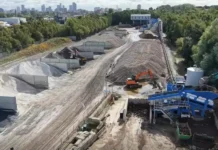








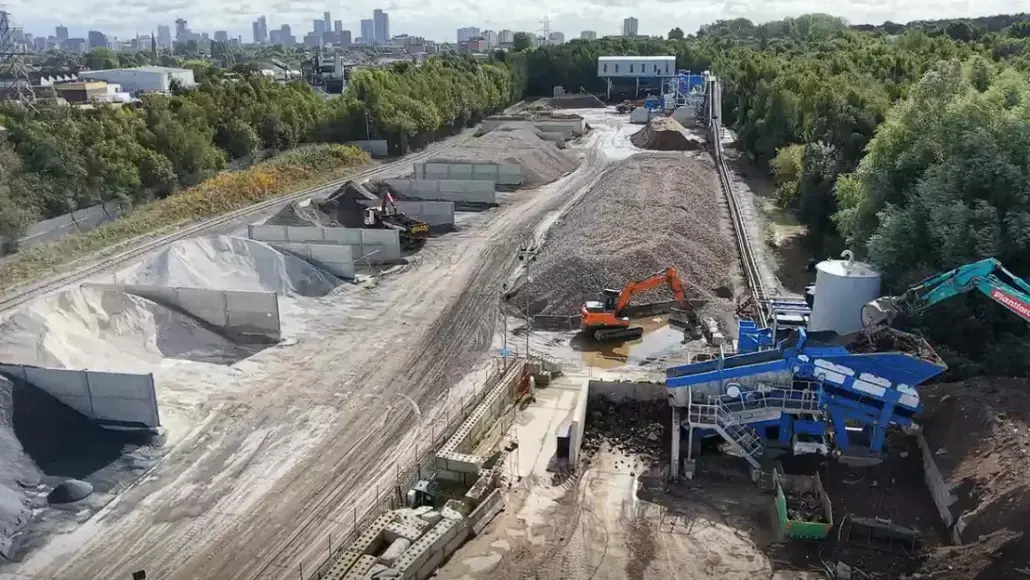

Heidelberg Materials UK has expanded its Agecroft recycling operation in Swinton, Manchester, with investment in a new wash plant and rail siding to increase the recovery of construction, demolition and excavation (CD&E) waste and improve the supply of aggregates.
The facility now houses the UK’s largest wash plant, which can process up to 450,000 tonnes of excavated waste, primarily soils, annually. The investment strengthens the site’s capacity to produce recycled aggregates for construction projects while supporting the company’s efforts to conserve natural resources and promote the circular economy. Agecroft also supplies customers with a range of primary and recycled products for construction and utility projects, with strict protocols in place to prevent material contamination.
The new wash plant separates, washes and processes excavated waste from construction, demolition and industrial sites, creating a consistent source of high-quality recycled aggregates. Its drainage and water recovery system captures and recirculates almost 100% of the water used during processing, helping minimise the facility’s environmental impact.
The installation is the second of its kind Heidelberg Materials has invested in, following the introduction of the same type of plant at its Bristol-based B&A Group site last year. By recovering and processing waste on-site, the Agecroft operation can convert soil and construction waste into materials suitable for reuse, while diverting more waste from landfill and responding to demand for sustainable construction products.
The company has also constructed a rail siding at Agecroft to receive primary aggregate deliveries from its Horton quarry in the Yorkshire Dales National Park. The rail connection is intended to reduce the carbon impact of supplying the key Manchester market by limiting vehicle movements on the wider road network and cutting associated CO₂ emissions. The combination of primary aggregate deliveries by rail and expanded recycling capacity allows the facility to serve construction and utility projects with both primary and recycled materials.
The development forms part of Heidelberg Materials UK’s wider approach to resource conservation and circular material use. Commenting on the investment, James Whitelaw, Managing Director Aggregates, Asphalt and Recycling North at Heidelberg Materials UK, said: “This significant investment is part of our strategy to conserve natural resources and promote the circular economy,”
“The new bespoke wash plant enables on-site recovery and washing of material, turning soil and construction waste into recycled aggregates, helping meet increasing demand for more sustainable construction products, while diverting more material from landfill.
“In addition, the rail link allows the site to supply primary aggregates to the area, while reducing vehicle movements on the wider road network and cutting associated CO₂ emissions.”